AIToday

Nokia Stock Surges 130% on AI Radio Network Bet

Yahoo Finance AI1h ago
Nokia Stock Surges 130% on AI Radio Network Bet

Key takeaway

Nokia, once dominant in mobile phones, has become a major AI stock after rallying 130% in the past year on demand for its artificial intelligence radio access networks (AI-RAN) technology. AI-RAN helps break through latency limits in AI data centers and enables real-time inference at scale—a capability that Nvidia says will "revolutionize telecommunications." With Nvidia backing a $1 billion(約1600億円) investment, Nokia planning customer trials this year with 10 committed partners, and Dell'Oro Group projecting $35 billion(約5.6兆円) in cumulative AI-RAN spending over five years, the company is positioned to capture a large share of telecom infrastructure upgrades driven by AI.

Summaries like this, in your inbox every morning.

Sign up free →

3 Key Points

  • What happened

    Nokia, the former smartphone maker, has rallied 130% over the past year as investors bet on its artificial intelligence radio access networks (AI-RAN) technology, which helps tech giants handle real-time AI inference at scale. Nvidia announced a $1 billion(約1600億円) investment in Nokia in October as part of a partnership to support telecom upgrades to AI-native 5G-advanced and 6G networks. Nokia said it is on track to launch customer trials later this year, with 10 customers publicly committed.

  • Why it matters

    Nokia's small AI and cloud segment grew 49% in Q1, significantly outpacing the company's overall 4% year-over-year revenue growth. AI-RAN addresses a critical need: inference demand is growing faster than model training demand, and the technology enables real-time AI workloads that existing data centers struggle to handle. Nvidia CEO Jensen Huang called AI-RAN "a generational platform shift," suggesting mainstream adoption could be near.

  • What to watch

    Market research firm Dell'Oro Group anticipates cumulative AI-RAN spending will reach $35 billion(約5.6兆円) in five years, implying rapid revenue growth ahead. Telecom giants are among Nokia's committed customers. If adoption accelerates, AI-RAN could also lift Nokia's margins, which have hovered below 3% for several quarters—a potential catalyst for profitability.

In Depth

Nokia, the Finnish telecommunications equipment maker that once dominated the mobile phone industry, has emerged as an unlikely beneficiary of the AI infrastructure boom. Over the past year, its stock has surged 130%, but the drivers have nothing to do with consumer devices. Instead, the rally has been fueled by investor enthusiasm for the company's artificial intelligence radio access networks (AI-RAN) technology, a solution designed to help tech giants handle the explosive growth in real-time AI inference workloads.

AI-RAN addresses a critical architectural problem in the current AI ecosystem. Traditional AI data centers excel at training large language models, but inference—the step where an AI model produces answers for users—increasingly requires low-latency, distributed computing close to the edge. Nokia's technology helps break through latency limitations and enables the creation of micro-data centers that can scale real-time AI inference. In its Q1 report, Nokia's management highlighted that AI inference demand is growing faster than model training demand, and these real-time workloads require AI-RAN to operate effectively.

The company's financial results show the magnitude of the opportunity. Nokia's overall business grew only 4% year-over-year in Q1, but its AI and cloud segment grew 49%—a more than tenfold difference. Demand for optical networking hardware destined for AI data centers has contributed to the stock's rally, but management and investors believe AI-RAN is the "golden opportunity" that will drive future growth. To date, the technology has not yet generated material revenue; Nokia said it is on track to launch customer trials later this year, with 10 customers publicly committed to participate.

In October, Nvidia—the dominant chipmaker powering the AI boom—announced a $1 billion(約1600億円) investment in Nokia as part of a strategic partnership to support the telecom sector's upgrade to AI-native 5G-advanced and 6G networks. Jensen Huang, Nvidia's CEO, declared: "AI-RAN will revolutionize telecommunications—a generational platform shift that empowers the United States to regain global leadership in this vital infrastructure technology. Together with Nokia and America's telecom ecosystem, we're igniting this revolution." The backing from Nvidia, whose influence over the AI infrastructure build-out rivals that of any company, substantially raises the credibility of AI-RAN as a transformational technology.

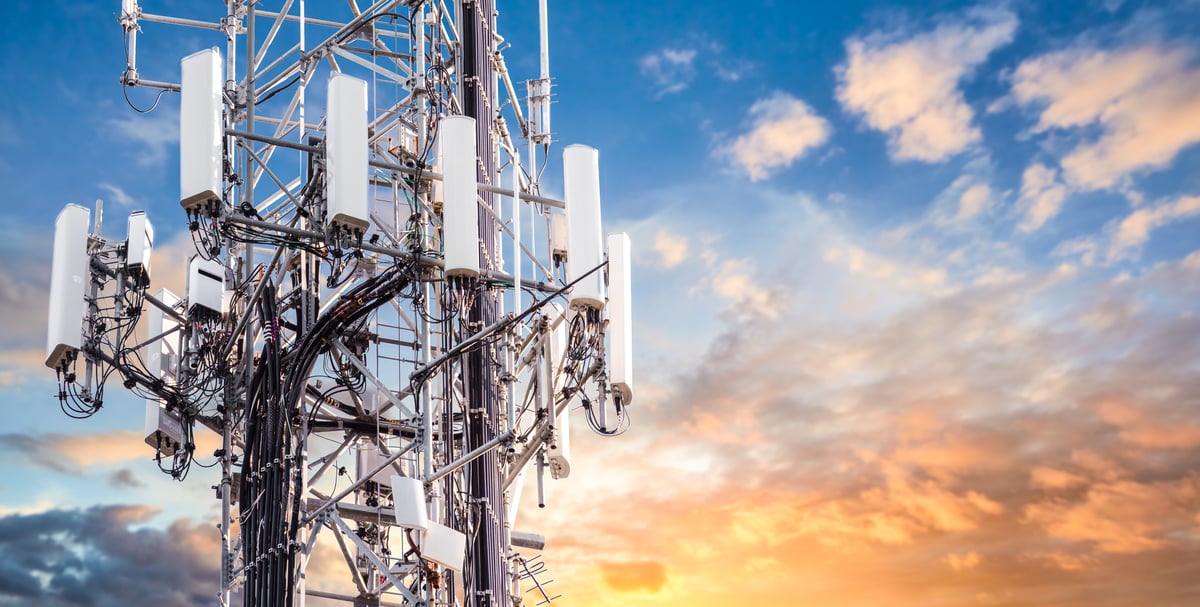
The market opportunity is substantial. Market research firm Dell'Oro Group projects that cumulative AI-RAN spending will reach $35 billion(約5.6兆円) over five years, implying rapid growth as adoption spreads. Telecom giants—the natural customers for technology that upgrades and optimizes existing cell towers—are among the 10 companies committed to Nokia's customer trials. If adoption accelerates, the revenue boost could also significantly improve Nokia's margins, which have remained below 3% for several consecutive quarters. For a company that has struggled with profitability in its core telecom business, a new product category with strong pricing power and broad market demand could prove transformational.

Context & Analysis

Nokia's transformation from a smartphone-focused company to an AI infrastructure player reflects a broader shift in how the tech industry is organizing around artificial intelligence. The company's Q1 results reveal the gap between its legacy business and its AI opportunity: overall revenue grew only 4% year-over-year, while its AI and cloud segment grew 49%, highlighting where investor interest and growth momentum lie. The 130% stock rally over the past year has run ahead of actual earnings, suggesting investors are pricing in a future where AI-RAN becomes a critical part of telecom infrastructure upgrades.

Nvidia's October investment of $1 billion(約1600億円) is significant not just for the capital but for the public endorsement. Jensen Huang's statement that AI-RAN will "revolutionize telecommunications" and enable the United States to "regain global leadership in this vital infrastructure technology" carries weight given Nvidia's central role in the AI hardware build-out. The partnership signals that a major player in AI infrastructure sees real-time inference at the edge (rather than centralized data centers) as the next phase of the AI buildout.

The financial opportunity is grounded in concrete demand signals: Dell'Oro Group's projection of $35 billion(約5.6兆円) in cumulative AI-RAN spending over five years implies that rapid scaling is expected. For Nokia specifically, this could address a long-standing weakness—margins below 3% for several quarters—by creating higher-margin revenue from a new product category. The path from 10 committed trial customers to commercial adoption remains the key variable, but Nvidia's involvement and the scarcity of alternatives for real-time AI workloads suggest the adoption curve could be steep once trials prove successful.

FAQ

What is AI-RAN and why does it matter?
AI-RAN (artificial intelligence radio access networks) helps tech giants break through latency limitations of AI data centers and enables the creation of micro-data centers that scale real-time AI inference. Management noted that AI inference demand is growing faster than AI model training demand, and these workloads require AI-RAN to operate effectively in real-time scenarios.
When will Nokia start generating revenue from AI-RAN?
Nokia said it is on track to launch customer trials later this year, with 10 customers publicly committed to working with it on them. Telecom giants are among those customers, and backing from Nvidia could speed up adoption and commercialization.
How large is the potential market for AI-RAN?
Market research firm Dell'Oro Group anticipates that cumulative AI-RAN spending will reach $35 billion(約5.6兆円) in five years. Since AI-RAN is designed to upgrade and optimize existing cell towers, there is a large market opportunity.

Get the latest AI Stocks & Markets news every morning

AI-summarized, only the topics you pick — one digest a day via Email, Slack, or Discord.

Free · takes 30 seconds · unsubscribe anytime

Discussion

No comments yet. Be the first to share your thoughts!

Log in to join the discussion

Related Articles

Stay ahead with AI news

Get curated AI news from 200+ sources delivered daily to your inbox. Free to use.

Get Started Free

Free · takes 30 seconds · unsubscribe anytime

1 minute a day. The AI essentials.

200+ sources · Email / LINE / Slack

Get it free →