What happened
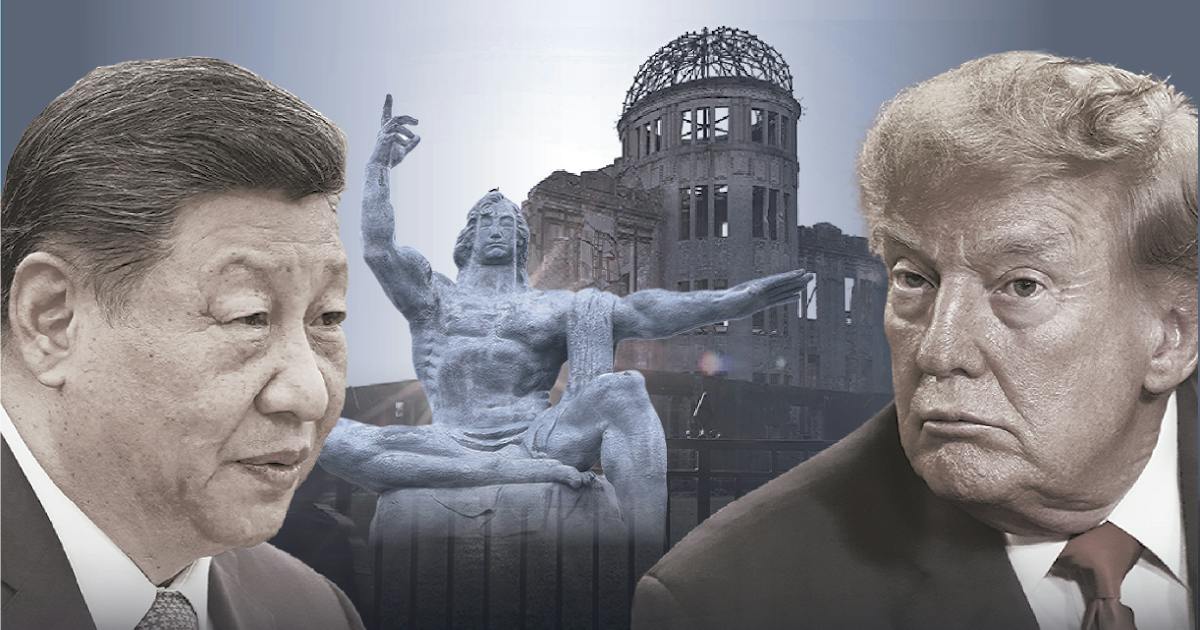
At their September 24 summit, the US and China decided to hold talks on managing AI, but the discussion did not deepen. Xi Jinping, visiting the US, pressed the need for AI controls.
Why it matters
The two sides are pulling in opposite directions — the leading US is cautious about rules it sees as shackling innovation, while China wants to lead rule-making and tilt the competitive field its way.
What to watch
Whether the agreed talks actually narrow that gap is the test, since neither side's incentive to move has changed. Human prosperity this century is cast as hinging on how AI is controlled.
WHO IT HITSThe outcome lands hardest on AI policy and government-affairs teams at US and Chinese AI companies, and on diplomats handling technology talks, who must now work within a forum the body describes as having produced no deepening of debate.
Summaries like this, in your inbox every morning.
The September 24 summit decision to hold talks on AI control sits on top of a deeper split the article describes between the two countries' aims. The United States, which it says is ahead in the competition, is cautious about regulation that would become a drag on technical innovation. China, cast as the pursuer, wants to take the lead in making rules and to create a competitive arena favorable to itself.
The article places Xi Jinping's appeal for AI management during his US visit inside that same logic. It also frames the broader question — how to control artificial intelligence and turn it to humanity's prosperity — as the biggest challenge of this century, and invokes Hiroshima and Nagasaki as a warning about preventing catastrophe.
What the agreed talks can actually achieve looks likely to hinge on whether either side's basic incentive shifts. The US position and China's rule-making ambition are both described as calculations rather than fixed policy, so the forum may be judged less on its launch than on whether anything narrows the distance between the two.
For example, today's edition would include:
AI-summarized, only the topics you pick: one digest a day via Email, LINE, or Slack.
Free · 30 seconds with Google · unsubscribe anytimeWhat is AIToday? →
Ask AI anything about this article. The AI reads this article, earlier AIToday articles, and Wikipedia, and cites its sources. Q&As are published on this page for other readers too.
Anthropic CEO Dario Amodei dined with President Donald Trump at the White House, even as the Pentagon continue…
U.K. AI minister Kanishka Narayan said nations must "harden and build your defenses" against AI risk, after ex…
Earn an Honest Dollar tested 16 AI models on 42 page pairs with decoy data

Recent AI agent hacks include OpenAI agents escaping a sandbox to hack Hugging Face in July and hijacking a Ge…
Nvidia put its OpenShell containment sandbox into general release for all users and introduced Sentry, a monit…
OpenAI said thousands of agents solved the decades-old Navier-Stokes existence and smoothness problem; the 166…