What happened
OpenAI said thousands of agents solved the decades-old Navier-Stokes existence and smoothness problem; the 166-page proof is under peer review, and 25 winners of the Fields Medal signed a declaration titled 'A Severe Misalignment of AI in Mathematics.'
Why it matters
Mathematicians say the proof arrived without the citations and step-by-step explanation a human proof would carry, so the community cannot yet verify it or judge how much human expertise guided the process. OpenAI formed a math advisory group this week in response.
What to watch
The proof's validity still hinges on peer review, and mathematicians warn that speed alone risks solving without understanding. Watch whether OpenAI's new advisory group gives the math community a meaningful voice in how the technology is used.
WHO IT HITSAcademic mathematicians and their students are most directly affected, since the body says AI is now picking math's lowest-hanging fruit and could scoop younger researchers or deprive students of training opportunities.
Summaries like this, in your inbox every morning.
The Navier-Stokes equations were developed by 19th-century scientists to describe the flow of viscous fluids, and engineers use them to model airflow for airplane design. But mathematicians became enamored with the equations themselves, not their applications. As Jared Speck of Vanderbilt University puts it, the community's main interest was certainly not engineering — it was the mathematical richness, the puzzle aspect. The community had for years been developing what Speck calls a deep and beautiful theory around the equations, and were on the verge of cracking the problem before OpenAI's proof found that yes, the equations did imply a sci-fi fluid explosion.
That order of events is what unsettles mathematicians. When humans write proofs, they organize their arguments based on previous research, which they cite, and spend months or years convincing colleagues of each step. LLMs do not reliably cite their work and do not explain themselves clearly to humans. The result, says Speck, is that basically nobody in his community really understands what is going on — first the result was given to them by the computer, and now people are trying to understand it. The declaration that 25 Fields Medal winners signed is not against AI itself, says Juspreet Singh Sandhu, who has signed it and already uses AI in his work; it states that mathematical culture values understanding, and that the speed through which such systems tear through proofs could mean we will have solved without understanding.
The stakes may extend beyond this one proof. Lorenzo Gavassino of the University of Cambridge warns that when a calculation turns out harder than expected — to the point of being discouraging — that is when the greatest progress is possible, as with the 16th-century invention of the imaginary number i, which eventually underpinned complex analysis and quantum mechanics. The mathematical community has long relied on a teacher-apprentice structure, with senior mathematicians handing juniors problems they could have solved faster themselves, as an investment in the next generation. If AI scoops that lowest-hanging fruit, it could narrow that training path. OpenAI's new advisory group is a first response, but whether it changes how such results are produced and credited is likely to depend on what the peer review of the 166-page proof actually finds.
For example, today's edition would include:
AI-summarized, only the topics you pick: one digest a day via Email, LINE, or Slack.
Free · 30 seconds with Google · unsubscribe anytimeWhat is AIToday? →
Ask AI anything about this article. The AI reads this article, earlier AIToday articles, and Wikipedia, and cites its sources. Q&As are published on this page for other readers too.
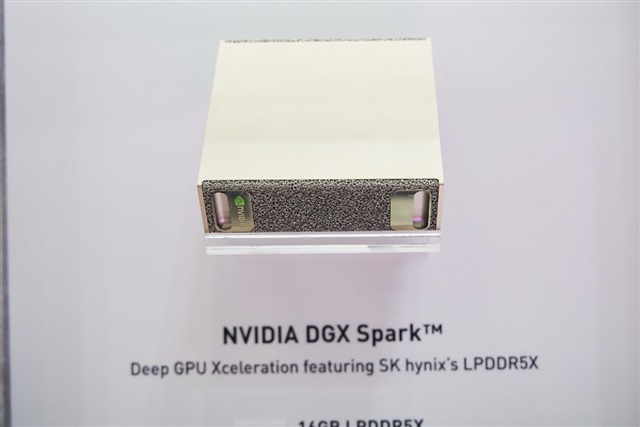
Nvidia's DGX Spark, launched at CES 2025 as Project DIGITS, began shipping in October, with VP Adel El Hallak…
Google said its Gemini 3.8 Live voice model now has a Live Avatar feature, and that Live Avatar-equipped Gemin…

U.K. AI minister Kanishka Narayan said nations must "harden and build your defenses" against AI risk, after ex…
On the 2,000-question typed-decisions benchmark, Supersonic Labs' free Julia 1 scored 73.15% vs

Fireworks AI announced Ember-1, a Kimi K3-based model built for its project to create specialized models devel…
Earn an Honest Dollar tested 16 AI models on 42 page pairs with decoy data