What happened
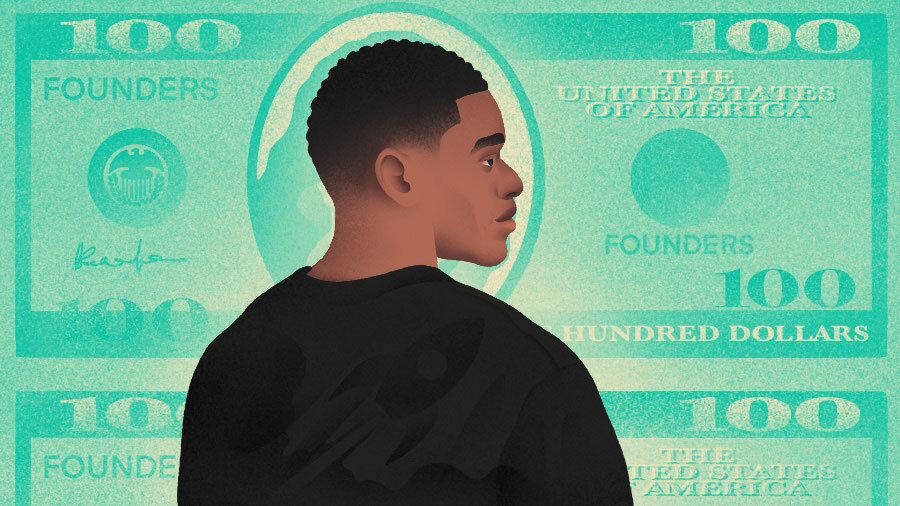
As AI lowers the cost of building software startups, the funding challenge for Black founders has shifted from getting a first check to raising sufficient seed capital to reach Series A. Black-founded startups received just $942 million(約1500億円) in venture funding in 2025, only 0.32% of all U.S. venture capital—a dramatic decline from $5.2 billion(約8300億円) in 2021.
Why it matters
Series A investors now demand proof of execution (recurring revenue, customer retention, capital efficiency) rather than ideas. Founders without fully funded seed rounds get trapped in continuous fundraising instead of focusing on customers and growth. In the AI economy, where product cycles move faster, this lost time can determine whether a startup becomes a category leader or falls behind.
What to watch
Black-founded startups raised approximately $643 million(約1000億円) by late May 2026, the strongest quarter since mid-2022—though this improvement was driven largely by a handful of unusually large financings, including a $350 million(約560億円) AI round. The real test is whether oversubscribed seed rounds become the norm for Black founders, giving them the operating flexibility to reach Series A milestones.
Summaries like this, in your inbox every morning.
The article identifies a critical shift in how AI is reshaping venture capital dynamics for Black founders. While AI has democratized the startup launch phase by reducing the cost of building initial products, it has simultaneously intensified the challenge of scaling those companies. The traditional venture pathway—from seed to Series A—has lengthened and become more demanding. Series A investors now prioritize disciplined execution metrics (recurring revenue, customer retention, capital efficiency, repeatable growth) over bold ideas and rapid expansion, a fundamental change in how the market evaluates readiness for institutional capital.
For Black founders, this shift is particularly acute. The article cites stark numbers: $942 million(約1500億円) in venture funding for Black-founded startups in 2025 (0.32% of all U.S. venture capital) represents one of the lowest funding shares in years and a sharp reversal from the $5.2 billion(約8300億円) raised in 2021. Critically, the issue is not simply the overall scarcity of capital but rather the structure of how that capital is distributed. Many Black founders secure partial seed rounds—enough to build a product but not enough to execute toward Series A milestones without constant fundraising. This creates what the article describes as a "cycle of continuous fundraising," where founders spend months chasing additional capital instead of focusing on customer acquisition, product development, and hiring.
In an AI-driven market where product cycles move faster than ever, the lost time spent fundraising becomes a competitive disadvantage. The authors argue that oversubscribed seed rounds—which provide founders with sufficient operating flexibility to weather market changes and pursue growth intentionally—have become a strategic advantage rather than merely a vanity metric. The path forward, they suggest, lies not in generic increased investment in Black founders but in ensuring those founders receive enough capital in their seed rounds to actually compete and reach the execution milestones that unlock future institutional capital.
For example, today's edition would include:
AI-summarized, only the topics you pick — one digest a day via Email, LINE, or Slack.
Free · 30 seconds with Google · unsubscribe anytimeWhat is AIToday? →
Ask AI anything about this article. Q&As are published on this page for other readers too.
Identity Digital spun out Known Systems AI Inc., based on its Innovation Labs unit and DNSid, a 'birth certifi…

Qualcomm and MediaTek announced on the same day that they are entering the Googlebook supply chain, as preorde…
Brahma AI raised $150 million through preferred shares, with $100 million from Multiples Alternate Asset Manag…

Singapore's electronics exports rose 132% from a year ago in August, with personal computer shipments up 238%…

A Bloomberg gauge of 30 Chinese technology stocks with the biggest overseas revenue exposure returned 36% this…
Anthropic released Claude Opus 5.5 today and cut its price 20%, with input at $4 per million tokens and output…