What happened
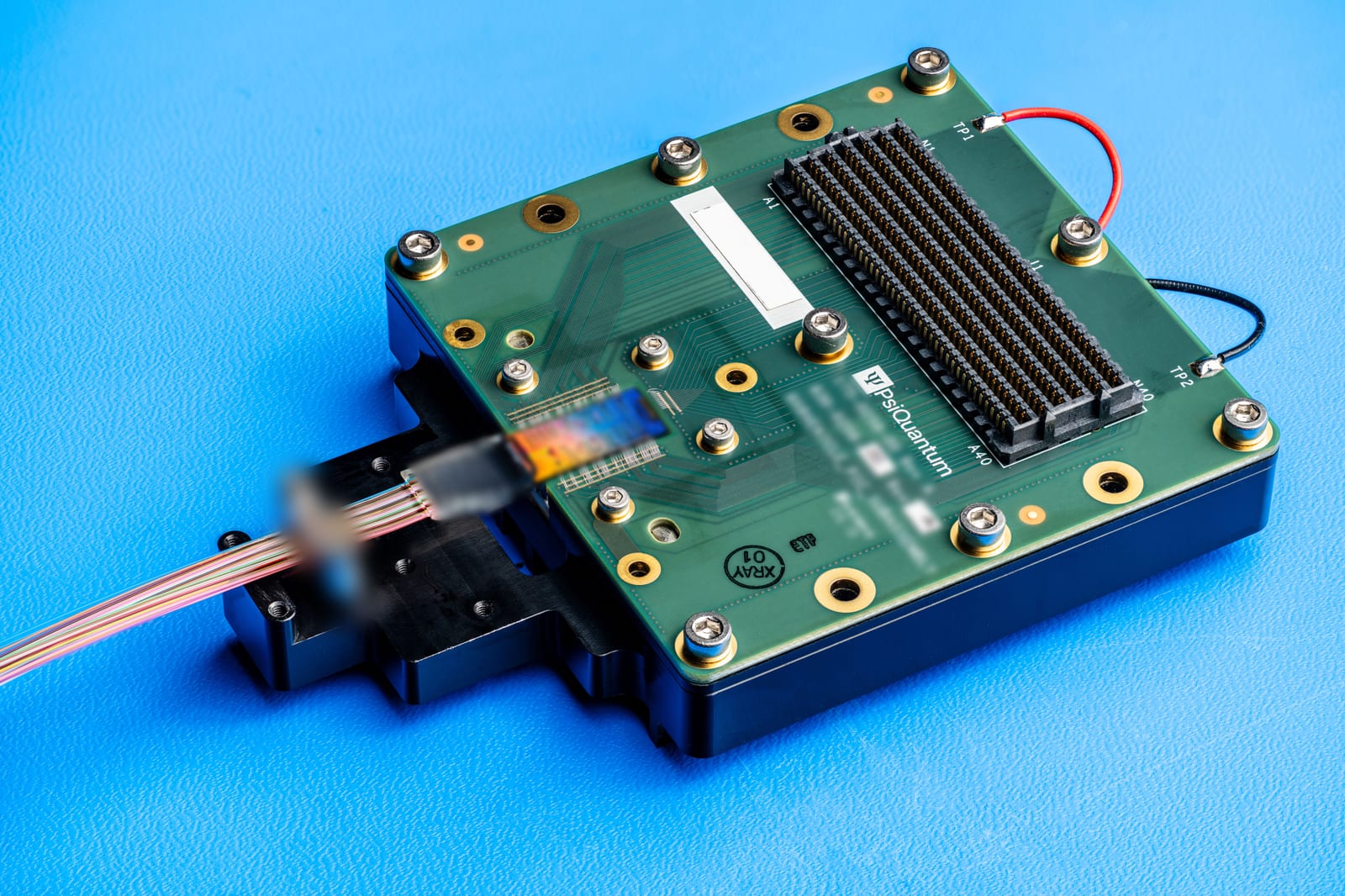
PsiQuantum announced a new device that routes data between GPUs without converting photons into electrical signals, which executive vice president Robert Soderbery said would let separate server racks behave as one.
Why it matters
Eliminating optical-to-electrical conversions could cut the heat, energy and bulk generated by optical switches in large AI data centers, addressing a networking bottleneck during training of large models.
WHO IT HITSData center network architects and AI infrastructure teams at hyperscalers and large model trainers, who currently rely on optical switches that generate heat and consume energy during GPU-to-GPU data transfer, may see an alternative for rack-to-rack connectivity.
Summaries like this, every morning.
AI data centers have scaled by networking hundreds of thousands of GPUs, but the copper links between them have become the weak point, especially during training runs that demand heavy coordination. Optical cables are increasingly used, yet they still require converting light to electrical signals and back again billions of times per second, generating heat and bulk through the optical switches involved.
PsiQuantum's device sidesteps those conversions entirely, which Robert Soderbery said would let data flowing between GPUs in separate racks match the speed and latency of GPUs inside one rack. That matters because server racks are approaching limits on compute density, size and energy efficiency, so stretching performance across racks could offer a way around physical constraints.
The company is not alone in pursuing photonics for data center networking. Google already operates a purely optical circuit switching system using MEMS mirrors, while Lightmatter has pushed for standardization and Nvidia has invested billions in optics companies like Lumentum and Coherent. PsiQuantum's entry suggests the race to move data center networking from copper to light is drawing in quantum computing players as well.
Pick your industry and the AI tools you use, and get news related to your work every day.
Free · 30 seconds with Google · unsubscribe anytimeWhat is AIToday? →
Ask AI anything about this article. The AI reads this article, earlier AIToday articles, and Wikipedia, and cites its sources. Q&As are published on this page for other readers too.
Broadcom rose 4.2% after announcing a $63 billion financing deal where several Wall Street firms will help Ant…
Microsoft is ending Copilot functionality on all TVs, including LG's, with the feature "scheduled for disconti…

Two OpenAI managers published an essay arguing AI will reorganize firms in three ways — a new AI labor layer b…
Bank of America expects AWS revenue growth of 40%, above the roughly 37% to 38% consensus implied by $45.4 bil…
Waters debuted Peak Integration, an AI feature inside its Empower software platform, which it says reduces man…

Anthropic, PBC filed an S-1 registration statement on October 26 under CIK 0002130357; the disclosed exhibit c…