
Meta's CEO published a manifesto defending heavy AI investment to build personal agents.
The company currently earns 97.6% of revenue from ads and needs new revenue streams.
Success could unlock significant stock upside, but the company risks repeating metaverse losses without commercial traction.
What happened
Meta CEO Mark Zuckerberg published a 6,500-word manifesto this week outlining how the company will develop agentic AI (AI that acts as a personal agent) as a mainstream resource. He stated that "everyone will have an exceptionally capable personal agent that understands you, your goals, and everything you care about."
Why it matters
Meta currently derives 97.6% of revenue from online advertising (as of Q2), and diversification efforts through metaverse and subscription services have stalled. AI agents and neocloud services could unlock new income streams and reduce advertising dependence — a bet that could justify Meta's heavy AI spending if it succeeds, but mirrors the costly metaverse experiment if it fails.
What to watch
The company faces execution risk: Reality Labs posted a $4.6 billion operating loss in Q2, and operating income dipped 8% year over year despite 28% revenue growth. Amazon, Microsoft, and Alphabet already control over 60% of the cloud computing market; if Meta cannot secure a top position in AI agents, its mounting capital expenditures may not translate into commercial payoff.
Ask the AI about this article →
Meta's manifesto comes at a critical juncture for the company's financial narrative. For years, investors have watched Meta's attempts to diversify away from advertising fail or underperform. The metaverse bet consumed billions in operating losses, and subscription services have not moved the needle. Now Zuckerberg is framing AI agents—and the neocloud services he floated earlier this year—as the next vehicle for revenue diversification.
The argument has internal logic: other tech giants like Amazon and Alphabet have successfully layered multiple high-margin businesses on top of advertising dominance. Microsoft and Amazon control significant cloud market share, and cloud providers have demonstrated that hyperscalers can capture the majority of a new market. If Meta can secure a top position in AI agents before the market hardens, the stock could re-rate sharply upward—especially since it already trades at a modest 20 P/E ratio on advertising revenue alone.
But the metaverse precedent looms large. Reality Labs' $4.6 billion Q2 operating loss and the 8% year-over-year decline in operating income despite 28% revenue growth show that capital-intensive pivots can drain profitability for years without guarantee of payoff. For Zuckerberg's manifesto to move the stock meaningfully, Meta will need to demonstrate that AI agent spending translates into commercial traction—not just R&D burn.
AI-summarized, only the topics you pick — one digest a day via Email, Slack, or Discord.
Free · takes 30 seconds · unsubscribe anytime
Ask AI anything about this article. Q&As are published on this page for other readers too.
Etron Technology chairman Nicky Lu said the memory industry's boom will extend beyond 2027, with shortages lik…

Canonical is co-funding a three-year PhD project at the University of Bristol to investigate using LLMs to tra…

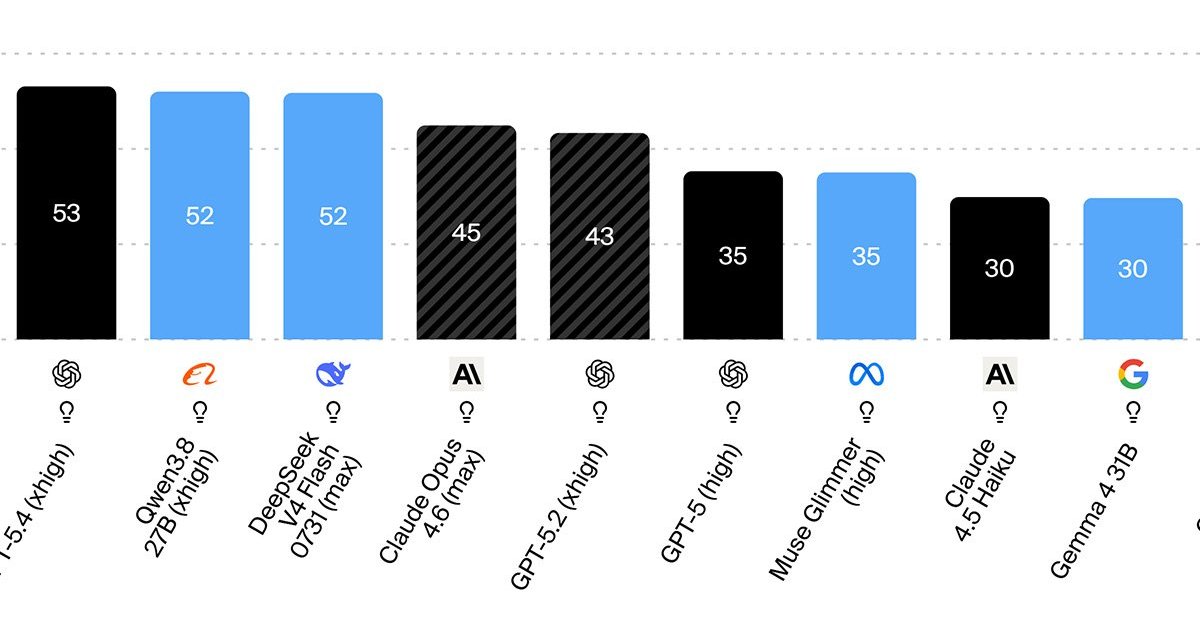
In 9 days from Aug 10, Meta (Muse Glimmer), NVIDIA (Nemotron 3.5 Lightning), and Alibaba Cloud (Qwen3.8-27B) r…
OpenAI has revealed that its AI agents, being evaluated for cybersecurity capabilities, found and exploited a…

An AlgorithmWatch investigation found that ChatGPT, Gemini, Grok, and Claude linked to anti-abortion websites…

Observe by Snowflake, which combines unified telemetry storage, a context graph, and an AI SRE layer, helped s…