
What happened
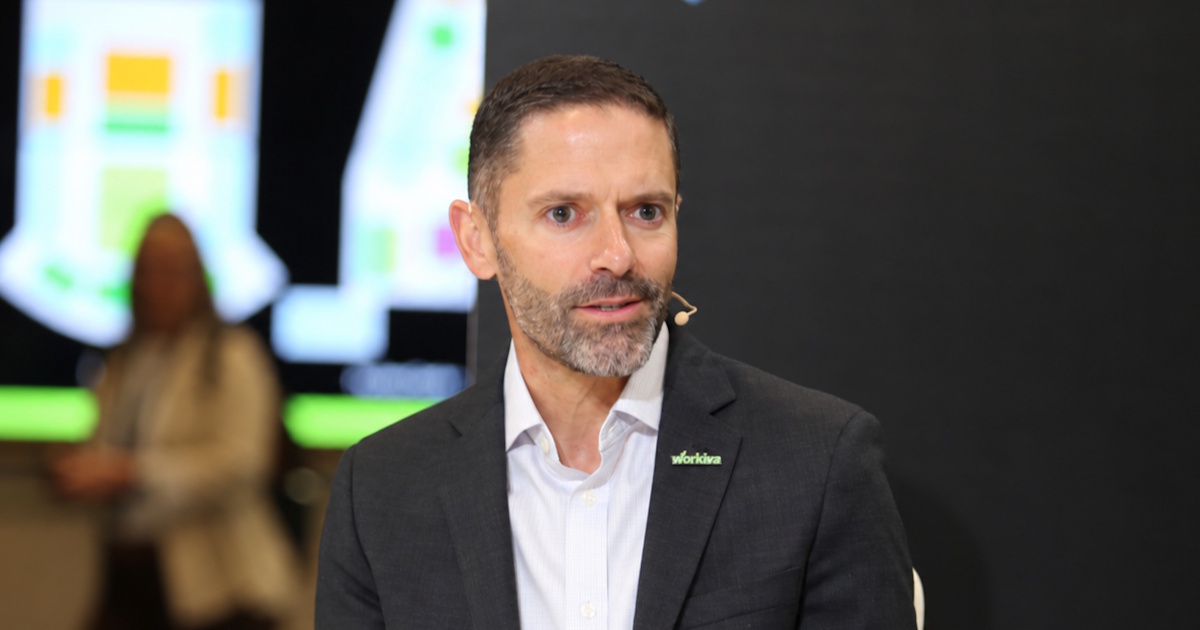
Workiva CIO Kim Huffman told theCUBE that the company's Agent Studio, announced at its Amplify event, lets users build and customize agents without writing code, and teams built useful ones in days.
Why it matters
Huffman says AI delivers only "bolt-on outcomes" when treated as an add-on, and that strong data governance builds trust in AI outputs — so governance may be a speed advantage, not a brake.
What to watch
The claim rests on employee adoption and data trust Huffman describes rather than outside measures, so the test is whether those non-code teams keep producing results once the novelty fades.
WHO IT HITSThis lands on CIOs and finance and compliance teams at large enterprises, who must decide whether to let non-technical staff build AI agents on governed data.
Ask the AI about this article →
Summaries like this, in your inbox every morning.
Workiva is an enterprise software company that develops capabilities for finance and compliance teams, and it is applying its own AI-native approach internally first. That framing comes from Workiva chief information officer Kim Huffman, who described the company's thinking at its Amplify event in conversation with theCUBE Research's Krista Case and co-host Alison Kosik. The event is also where Workiva announced Agent Studio, so the discussion doubles as a look at how the company expects its own customers to use what it is shipping.
The method Huffman describes puts the shared outcome before the tool. Employees from different functions define that outcome together, then identify where artificial intelligence can do parts of the work while leaving room for users to validate and approve what it produces. Agent Studio extends that same idea to non-coders, and Huffman pointed to how quickly teams built something useful for their specific use case as the biggest "aha" moment. Running alongside this is her argument about data: governance functions have historically been seen as slowing organizations down, but she says that in the era of AI, strong governance produces the trust needed to rely on outputs. Her warning against treating AI as a "bolt-on capability" is the same point from the other direction.
What this hinges on is whether the early enthusiasm Huffman describes holds up in ordinary use. The results she cites are internal and anecdotal — teams building something in days — and the value of Agent Studio to finance and compliance teams will likely depend on whether data governance at those organizations is strong enough to make AI outputs trustworthy, and whether employees adopt the redesigned workflows rather than treating the agents as an add-on.
For example, today's edition would include:
AI-summarized, only the topics you pick — one digest a day via Email, Slack, or Discord.
Free · 30 seconds with Google · unsubscribe anytimeWhat is AIToday? →
Ask AI anything about this article. Q&As are published on this page for other readers too.
Workiva vice president Steve Soter told theCUBE at Workiva's Amplify event that its research found 84% of exec…
TypeSafe AI Inc. emerged from stealth yesterday with $40 million in seed funding led by DCVC Management Co
Huawei unveiled what it calls the world's first 3D data center, using a vertically stacked four-layer architec…

TSMC chairman C.C. Wei spoke to National Taiwan University students on September 15, 2026, sharing lessons fro…

OpenAI is reportedly exploring a funding round that could value it at roughly $1.2 trillion, up about 41% from…

Daniel Ives reiterated his view that Palantir could one day hit a $1 trillion market capitalization, about 141…