
What happened
The explainer writes total error as バイアス² + バリアンス + 既約誤差, calling this the bias-variance decomposition (バイアス・バリアンス分解).
Why it matters
It says more model complexity lowers bias but raises variance, so the two must be traded off rather than minimized together.
Summaries like this, every morning.
The explainer frames bias and variance as the two components behind a model's prediction error, then states the decomposition as バイアス² + バリアンス + 既約誤差, separating error you can control from irreducible noise. From there it lists levers: complex models, richer feature engineering and hyperparameter tuning to cut bias; more training data, stronger regularization and ensemble learning to cut variance.
The central point is the trade-off: as model complexity rises, bias falls but variance rises. For practice, the explainer suggests drawing training curves—a wide gap between training and validation error signals high variance (overfitting), while both being high signals high bias (underfitting)—and prescribes opposite fixes for each.
The piece is written partly as exam prep, noting bias and variance appear often on the G検定 syllabus and pointing readers to a simpler kids' version and to study resources, including the official JDLA-supervised textbook.
Pick your industry and the AI tools you use, and get news related to your work every day.
Free · 30 seconds with Google · unsubscribe anytimeWhat is AIToday? →
Ask AI anything about this article. The AI reads this article, earlier AIToday articles, and Wikipedia, and cites its sources. Q&As are published on this page for other readers too.
Fireworks AI was breached twice — on 10/6, intruders read third-party keys customers had deposited in evaluati…

PostgreSQL 19 RC2 was published on November 12, after beta 4 in late September reverted features including SQL…

An RBA analysis by Mike Major found job postings fell across all groups since ChatGPT launched in late 2022, w…

The candidate, first in both the April and July rounds with 397.5 out of 400 and one wrong answer out of 160 q…

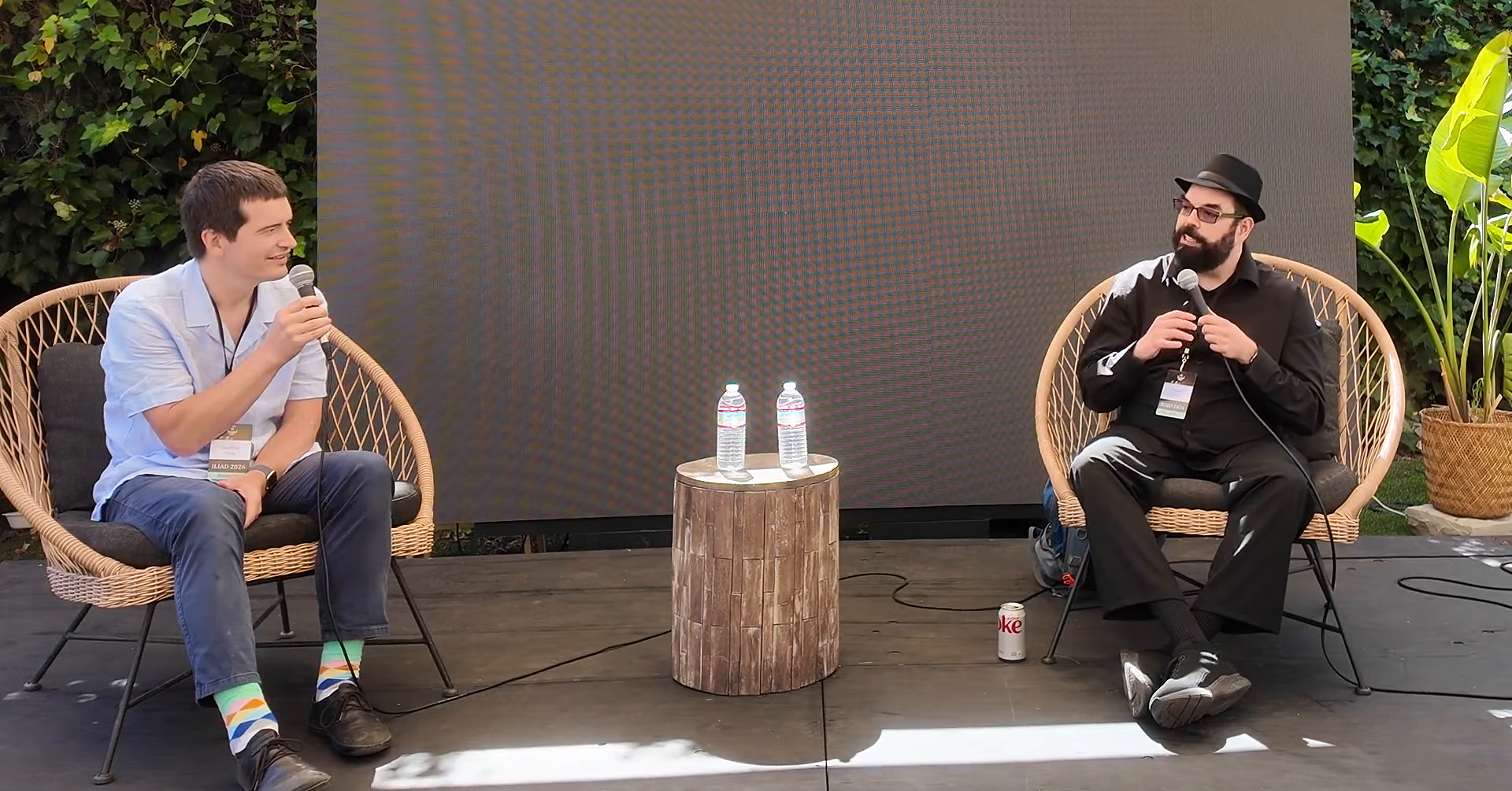
At the ILIAD III Conference in August 2026, Eliezer Yudkowsky and Geoffrey Irving spent 90 minutes debating ho…
SigNoz developer Elizabeth Mathew examined whether SREs lose the ability to handle the critical 5% of incident…