What happened
AWS published a guide to pair OpenCode, an open-source terminal coding agent, with open weight models on Amazon Bedrock such as Moonshot AI Kimi K3, OpenAI GPT-OSS 120B, and NVIDIA Nemotron 3 Super 120B.
Why it matters
Developers can keep code and prompts inside their own AWS account with pay-per-token billing instead of per-seat fees, and switch models by changing one API parameter, which may lower costs at scale.
What to watch
Bedrock says a global cross-Region inference profile costs approximately 10% less than a geographic profile, so the cost case hinges on whether data residency rules let teams use the global profile.
WHO IT HITSEnterprise platform and DevOps teams that run internal coding assistants are the clearest fit: they can point developers at open weight models through Bedrock under existing IAM, CloudTrail, and compliance controls, instead of using third-party coding APIs or self-hosting GPUs.
Summaries like this, in your inbox every morning.
The post arrives as AWS argues the constraints of mainstream coding assistants have become a real friction point: sending proprietary code to a third-party API, locking into one model provider, or paying per-seat regardless of usage. OpenCode, built in Go, reads and edits files, runs shell commands, and understands project structure through Language Server Protocol diagnostics, connecting to over 75 LLM providers including Bedrock.
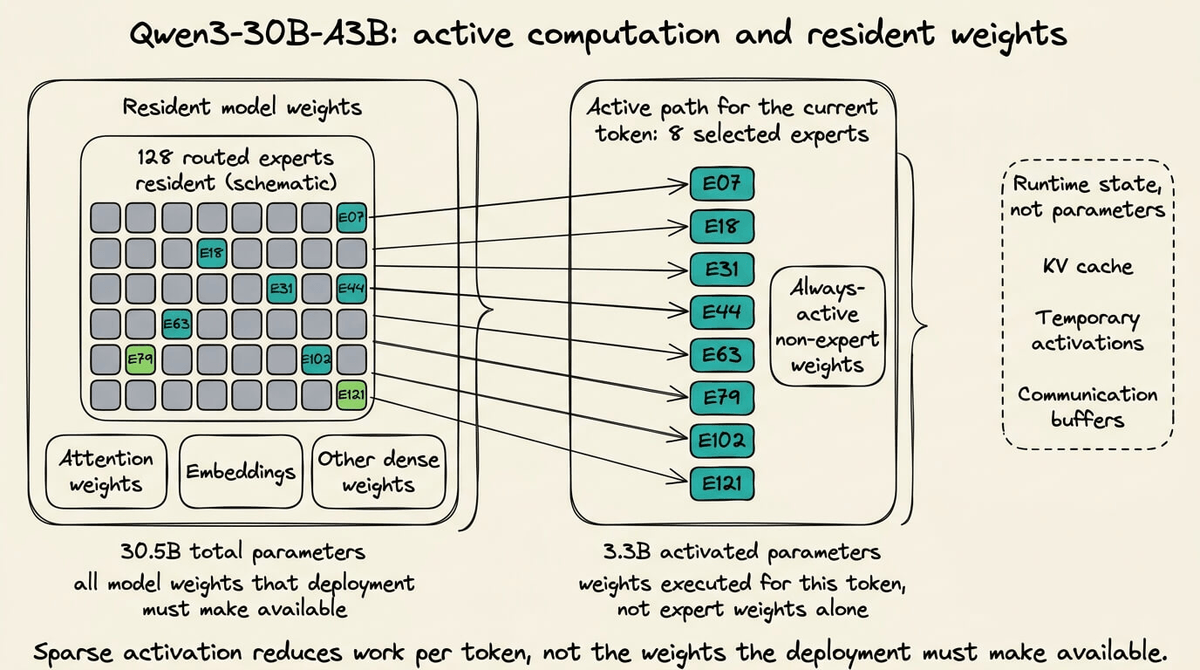
The pitch rests on a division of labor between models rather than a single best one. In the sample configuration, planning and architecture tasks route to Kimi K3, which reasons on every turn and supports a 1M-token context, while code generation goes to Nemotron 3 Super 120B, whose Mixture-of-Experts design activates only 12B of 120B parameters per token. GPT-OSS 120B serves as a default for multi-file implementations. The article points readers to the Artificial Analysis Coding Index and Bedrock Evaluations to compare models on their own prompts, and cites CrowdStrike's fine-tuned NVIDIA Nemotron reaching 96% valid query accuracy against GPT-4o at 61% and Claude Sonnet 4.5 at 94%. Ethara.AI, an AWS customer, runs this in production with an orchestration layer that routes requests by capability. The open question is whether cost and residency settings line up: Flex tier promises 50 percent lower cost for batch work, but the cheaper global profile and strict data residency may pull in opposite directions for regulated teams.
For example, today's edition would include:
AI-summarized, only the topics you pick — one digest a day via Email, LINE, or Slack.
Free · 30 seconds with Google · unsubscribe anytimeWhat is AIToday? →
Ask AI anything about this article. Q&As are published on this page for other readers too.
Rabbit Inc. unveiled OS3, a cloud personal AI agent installed via a single command on up to five machines, wor…
At Snapdragon Summit 2026, Qualcomm CEO Cristiano Amon hosted Google SVP Rick Osterloh to discuss the past yea…

Redis launched LangCache, a managed semantic cache that stores full question-response pairs outside the model…
ChatGPT Voice now runs on OpenAI's new GPT-6 Astra, Sol, and Luna models and can access plugins like email, ca…

YouTube is adding a storytelling assistant to YouTube Studio that checks a channel's past results, suggests pa…

GitHub rebuilt the pull request view in its Copilot app and tested it on an open source pull request with 2,20…