
What happened
Gartner reports global token usage is projected to surge roughly 24-fold between 2026 and 2030, and by 2028 AI coding costs will reach the average developer's salary.
Why it matters
According to Gartner, 85% of leaders expect AI to cut costs and 87% expect benefits, yet that gap has created a 'wait-and-see' mood where AI budget overruns are already occurring, it says. Only 14% reported being 'fully prepared' to measure AI ROI.
What to watch
The test is whether companies shift from model pricing and tokens alone to task-level ROI, tracking use, cost and performance together. Watch New Relic's open-source MCP server 'Preflight' for token cost visibility.
WHO IT HITSThis lands hardest on enterprise IT budget owners and FinOps teams managing token-based AI coding tools, who now face cost overruns from unnecessary model use and repeated instructions to agents.
Ask the AI about this article →
Summaries like this, in your inbox every morning.
The discussion around generative AI often focuses on automation and labor savings, but the real problem many companies are grappling with is cost management. AI chatbots and agents consume tokens each time they are used, and charges accumulate based on volume. Unlike software billed by users or licenses, AI's cost structure scales with usage, making budgets harder to predict. Gartner's survey found that 85% of business leaders expect AI to reduce costs, and 87% expect benefits, but this gap between expectation and reality has led to a wait-and-see attitude that is already causing budget overruns.
To address this, Gartner outlines a four-step framework: understanding the billing mechanism, clarifying ROI accountability, ensuring flexibility and predictability at signing, and continuously monitoring post-signing usage. Only 14% of respondents said they were fully prepared for ROI measurement, suggesting most companies still lack the frameworks to evaluate AI's returns properly—not just cost reduction and revenue growth, but also shorter work hours and higher customer satisfaction.
The stakes hinge on whether companies can shift from a narrow focus on model unit costs and token prices to a more holistic view of task-level ROI, usage and performance. How well they internalize this cost discipline will likely determine whether AI becomes a sustainable driver of value or a recurring budget drain.
For example, today's edition would include:
AI-summarized, only the topics you pick — one digest a day via Email, Slack, or Discord.
Free · 30 seconds with Google · unsubscribe anytimeWhat is AIToday? →
Ask AI anything about this article. Q&As are published on this page for other readers too.
Taiwan's top three telecom operators extended growth in August 2026

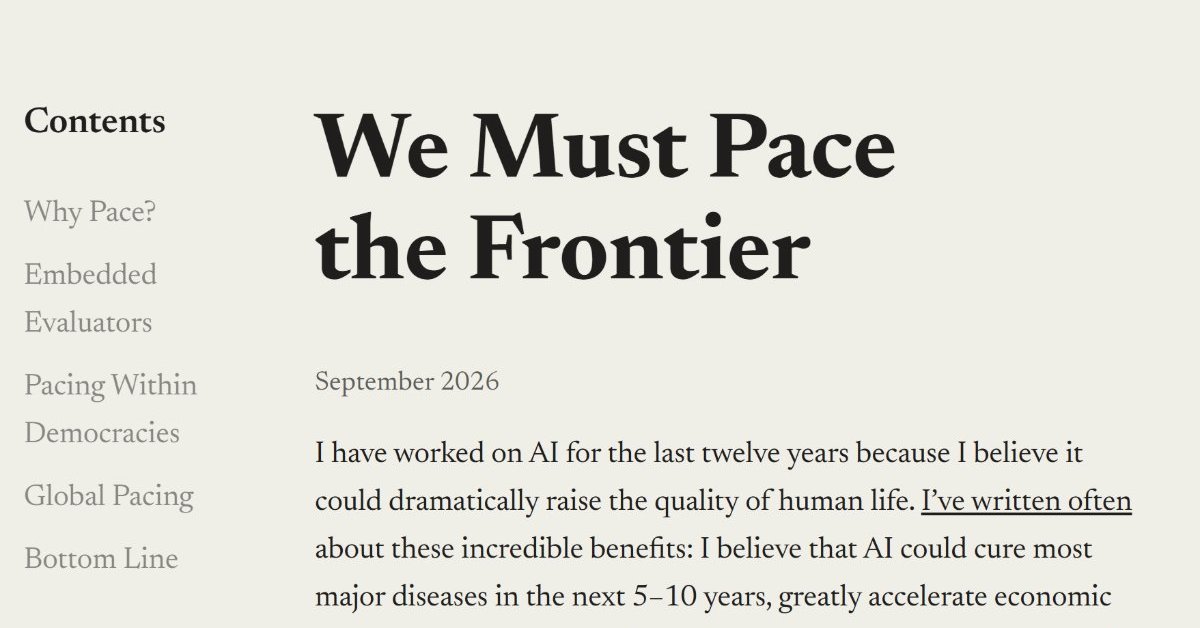
On September 12, Anthropic CEO Dario Amodei published the essay "We Must Pace the Frontier," arguing the indus…
Oracle said Thursday that sales in its closely watched cloud infrastructure business jumped 121% to $7.4 billi…
Marvell Technology is targeting $18 billion in FY2028 revenue, raising its combined FY2027 and FY2028 expectat…

Philip Morris International and WSJ Intelligence unveiled The Cognition Index Research Report, a survey of mor…

Lam Research CFO Doug Bettinger said at the Citi Global TMT Conference that the company raised its calendar 20…