What happened
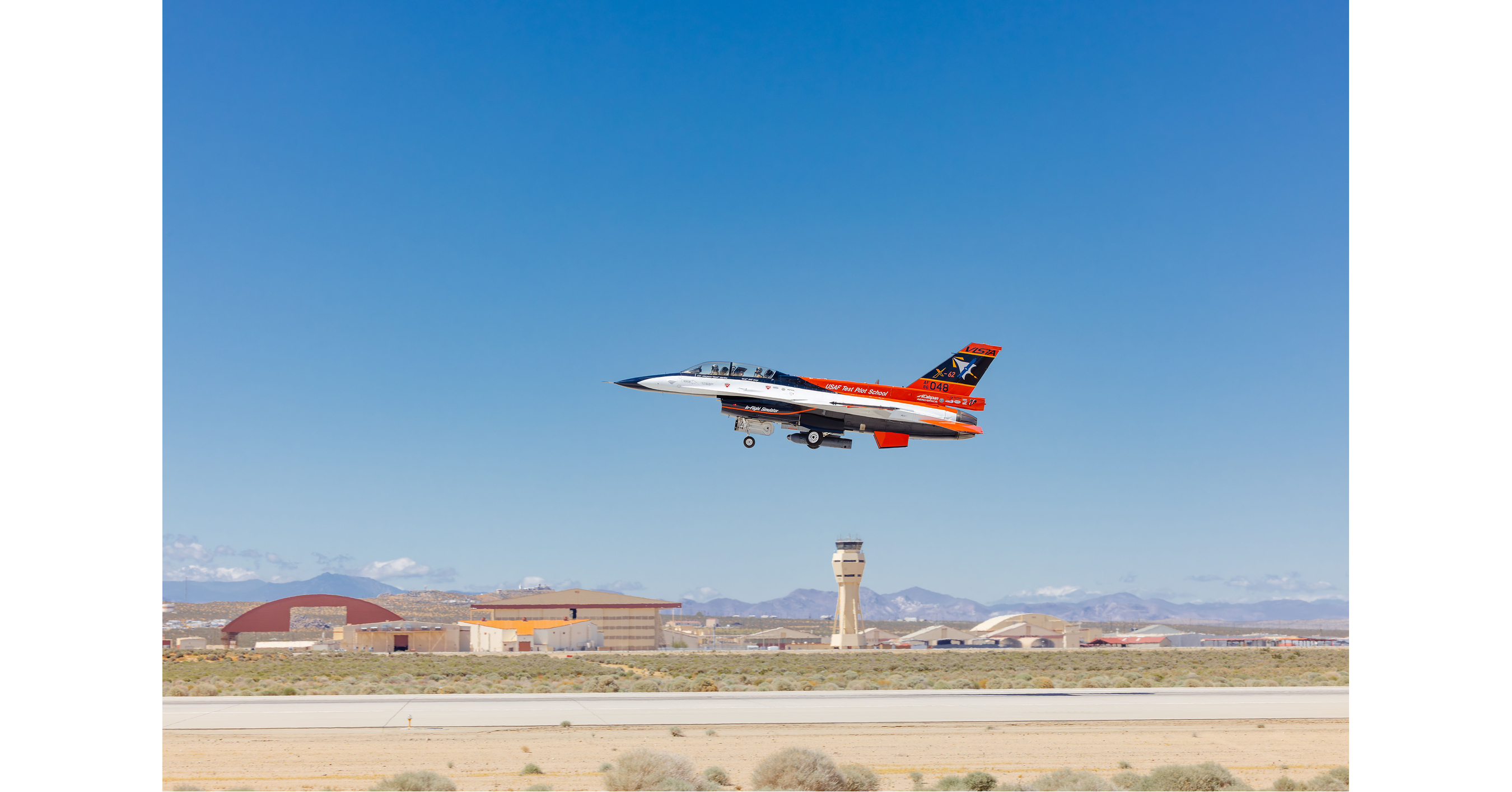
Lockheed Martin Skunk Works, working with the U.S. Air Force Test Pilot School, flew the X-62 VISTA aircraft on eight test flights where an AI agent used real sensor data from the onboard Legion Pod to autonomously execute 27 air intercepts against a live T-38 target jet.
Why it matters
The test marks the first time AI controlling a fighter aircraft has closed the loop from real-time sensor input to autonomous tactical action in live flight—moving beyond simulation to operational conditions. This demonstrates that AI can handle classified infrared targeting feeds and execute combat maneuvers reliably, a critical step toward AI-augmented air combat systems that could enhance pilot effectiveness and survivability by offloading complex tasks.
What to watch
Skunk Works plans to use this proven framework to advance the X-62's Mission Systems Upgrade, which will integrate combat systems, sensors, and airborne AI agents into a next-generation mesh network; full integration and ground testing of the AI agents occurred in just three months.
Summaries like this, in your inbox every morning.
This test represents a watershed moment in military AI development: the transition from controlled laboratory environments to real-world sensor-to-action loops aboard an operational combat aircraft. The X-62 VISTA has long served as Lockheed Martin's flying testbed for advanced concepts, and the partnership with the Air Force Test Pilot School provided the rigorous validation framework necessary to move autonomous systems from theory to live flight. The use of classified infrared targeting data—the actual sensor environment pilots will encounter in operational scenarios—distinguishes this work from earlier simulated trials and signals confidence in the AI's reliability and security under real combat conditions.
The speed of integration—three months from full ground testing to eight successful flight trials—underscores the maturity of Skunk Works' autonomy architecture. By delegating tactical maneuvering tasks to AI while pilots retain focus on higher-order decision-making and survivability, the system appears designed to amplify human effectiveness rather than replace it. The planned Mission Systems Upgrade, which aims to weave combat systems, sensors, and multiple AI agents into a mesh network, suggests the long-term vision is not isolated autonomous systems but coordinated networks operating across distributed platforms.
Pick your industry and the AI tools you use, and get news related to your work every day.
Free · 30 seconds with Google · unsubscribe anytimeWhat is AIToday? →
Ask AI anything about this article. The AI reads this article, earlier AIToday articles, and Wikipedia, and cites its sources. Q&As are published on this page for other readers too.
ElevenLabs completed a $300 million employee tender at a $22 billion valuation, and co-founder Mati Staniszews…

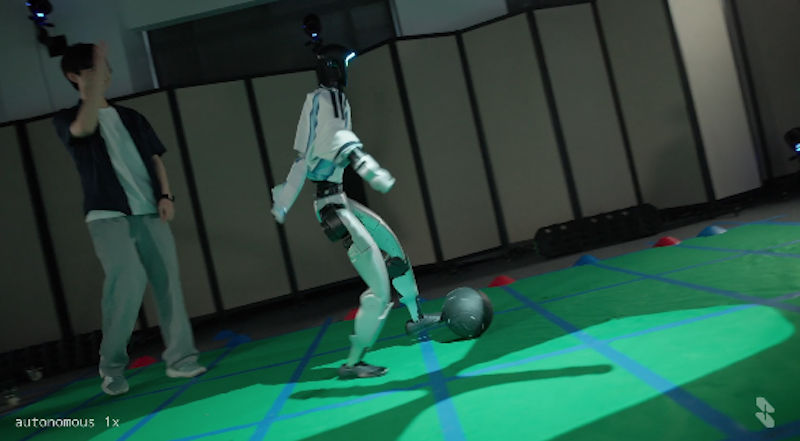
Skild AI used Nvidia Isaac Sim to give its S1 model one objective — score a goal — and let it compete against…
On October 15, OpenAI announced the Rosalind Academic Plan, giving approved US university labs free access to…

JR Central announced the S0系 on October 16, its first full model change since the N700S, with commercial servi…

A Qiita article compared automated red-teaming methods for LLM apps — GCG, PAIR, and TAP — using mock implemen…

Liquid AI released d1-ultra on October 15, 2026, an upgraded open-weights decision model that averaged 76.7 ac…