What happened
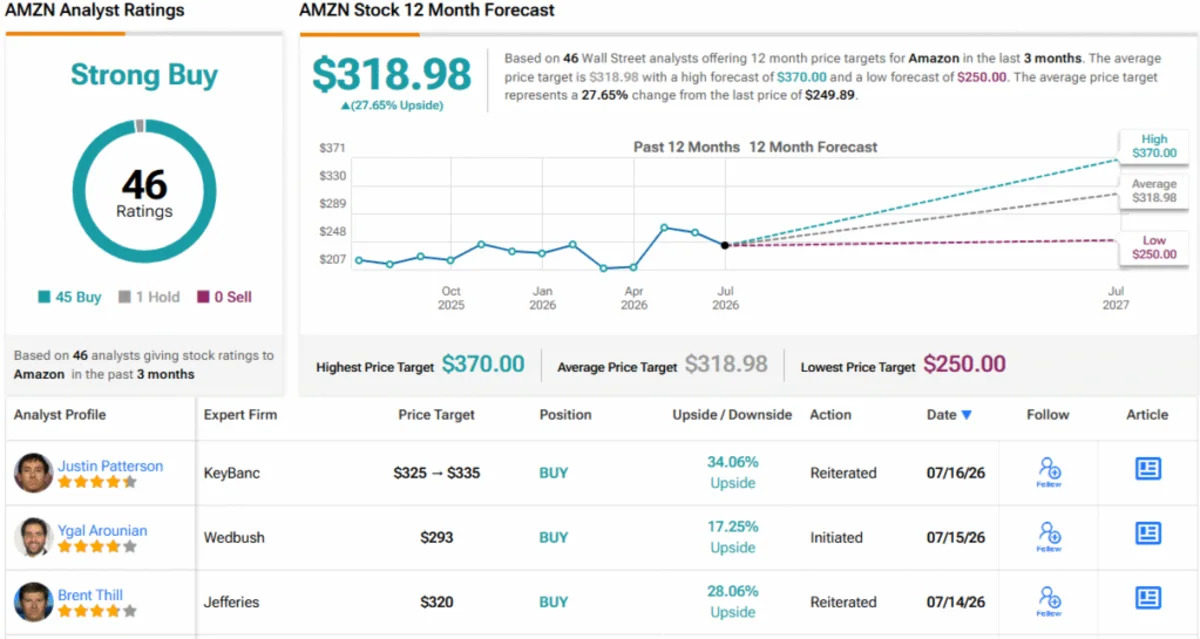
Wedbush analyst Ygal Arounian compared Amazon and Meta Platforms as AI hyperscaler investments, positioning AI as the single most impactful factor reshaping the internet ecosystem and determining which company represents the better buy for investors.
Why it matters
Both Amazon and Meta are spending record sums on AI infrastructure—Amazon spent more than $131 billion(約21兆円) in capital expenditures last year (exceeding its ~$100 billion(約16兆円) guidance), while Meta spent more than $72 billion(約12兆円) (exceeding its $60 billion(約9.6兆円) to $65 billion(約10兆円) guidance)—to power AI models and roll out new features. Arounian's thesis holds that AI is enabling stronger growth potential, better products, and an enhanced user experience that should accelerate adoption and monetization opportunities across the internet.
What to watch
The article sets up a detailed comparison of Amazon and Meta as AI leaders but does not disclose Wedbush's final pick or rating within the excerpt provided.
Summaries like this, in your inbox every morning.
The article frames AI not as an emerging technology but as a dominant force already reshaping major consumer and business behaviors—how people search, shop, create content, and work. Both Amazon and Meta have responded by investing unprecedented sums in computing infrastructure to power AI models and deploy new features across their platforms. Notably, both companies exceeded their initial capital expenditure guidance, indicating either stronger-than-expected AI demand or a strategic decision to accelerate buildout beyond original plans.
Wedbush analyst Ygal Arounian's central thesis is that AI is now the single most impactful swing factor for the internet ecosystem as a whole. Rather than disrupting every aspect of online commerce and content, Arounian expects AI to amplify existing trends—stronger growth, better products, improved user experience—and unlock new monetization opportunities. This framing positions Amazon and Meta not as companies gambling on AI, but as investors in infrastructure that enables the next wave of user adoption. The analyst's choice to compare Amazon and Meta directly reflects their parallel roles as dominant hyperscalers (large cloud and infrastructure providers) racing to control the computing power that AI demand requires.
Pick your industry and the AI tools you use, and get news related to your work every day.
Free · 30 seconds with Google · unsubscribe anytimeWhat is AIToday? →
Ask AI anything about this article. The AI reads this article, earlier AIToday articles, and Wikipedia, and cites its sources. Q&As are published on this page for other readers too.
Chunghwa Telecom president Rong-shy Lin said the shift from conversational AI to autonomous AI agents is resha…

CoreWeave fell 5% in premarket trading Friday and was on track to finish the week down 15%, after rebounding f…

Apple and Meta said they would jointly release a new open-weight AI model designed to run on high-end Macs, ai…

Investors put $38.5 billion into Asian startups in Q3, per Crunchbase data

A longtime Anthropic investor told Fortune he expects shares priced around $1.8 trillion, below the company's…

In Q2, billionaires or their funds sold six 'Magnificent Seven' AI stocks


