What happened
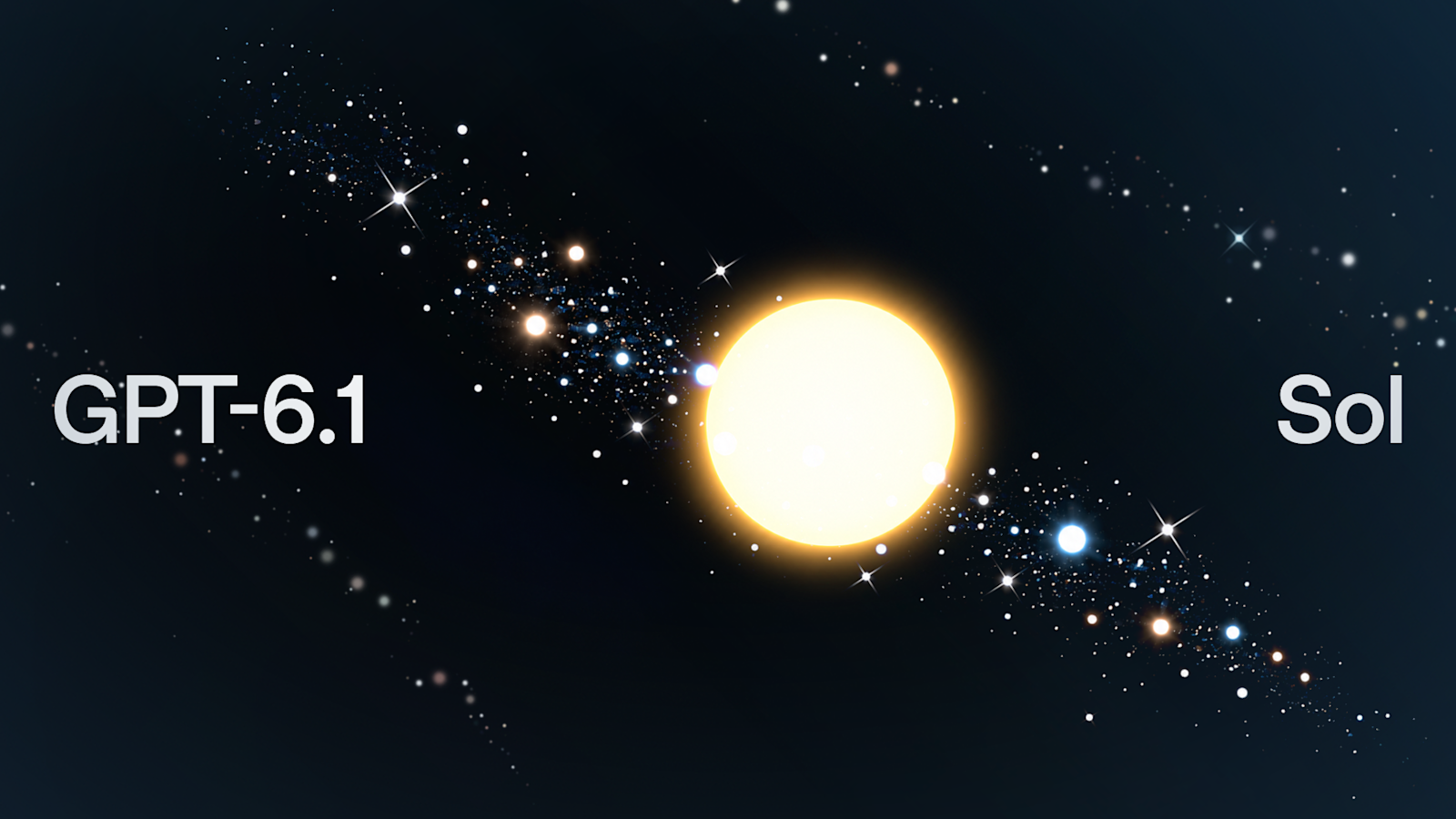
OpenAI launched GPT-6.1 Sol, nearly matching GPT-6 Astra's intelligence on agentic coding, computer use, and professional work at one-fifth of Astra's standard token prices. Cached input costs $0.10 per million tokens.
Why it matters
This gives developers a lower-cost way to run capable agents that reuse context across requests, since cached input is $0.10 per million tokens.
What to watch
The real test is whether it can approach GPT-6 Astra's performance in live deployments, since Astra still achieves the highest score among models tested on Terminal-Bench Science 0.1 at 68.1%. In the coming days OpenAI will offer GPT-6.1 Sol Ultrafast.
WHO IT HITSDevelopers building agentic coding, computer-use, and multi-step business workflow applications will now have a cheaper option that reuses context across requests, which could lower per-task inference costs.
Summaries like this, in your inbox every morning.
GPT-6.1 Sol is positioned as a middle option between the existing GPT-6 Sol and the higher-end GPT-6 Astra, offering near-Astra capability at a fraction of the price. The release emphasizes cost efficiency alongside capability gains, particularly for agentic tasks that reuse context across requests. According to OpenAI, GPT-6.1 Sol outperforms Opus 5.5 with fallbacks on GDP.pdf at less than half the cost per task, and beats Opus 5.5 by 2.2 percentage points on AutomationBench at medium reasoning effort at roughly a third of the cost. It also makes progress on computer-use tasks, coming within 2.1 percentage points of Astra's score on OSWorld 2.0's offline set at roughly one-seventh the cost per task.
The update also addresses factual accuracy. On difficult prompts flagged by users, GPT-6.1 Sol reduces the share of responses containing a factual error from 11.4% to 7.7% at low reasoning effort compared with GPT-6 Sol. Across tested reasoning settings, its error rate remains within 1.9 percentage points of Astra's at less than one-fifth the cost per task. OpenAI notes these error-inducing conversations are not representative of typical usage.
The outcome hinges on whether developers adopt the new model for production agents, and how quickly OpenAI expands its availability. For now, the main trade-off is intelligence versus cost: Astra remains the top choice for the hardest scientific research tasks, while GPT-6.1 Sol aims to be the practical default for everyday agentic workflows. The forthcoming GPT-6.1 Sol Ultrafast, which promises up to 8x faster token generation in Codex, may further shift that calculus once it arrives.
Pick your industry and the AI tools you use, and get news related to your work every day.
Free · 30 seconds with Google · unsubscribe anytimeWhat is AIToday? →
Ask AI anything about this article. The AI reads this article, earlier AIToday articles, and Wikipedia, and cites its sources. Q&As are published on this page for other readers too.
DeepSeek is bringing more of the software it uses to develop its AI models to Huawei Technologies' Ascend 950…
Nvidia released the Open Agent Safety Platform on September 28, days after CEO Jensen Huang called warnings fr…
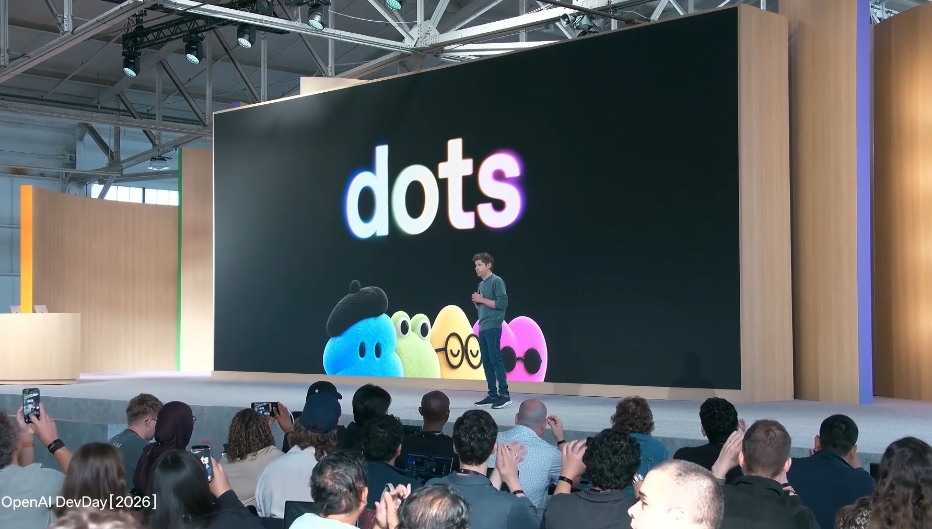
OpenAI launched Dots — agents on GPT-6 Astra, each running on its own cloud computer and connecting to 4,000+…

OpenAI released Dots, an always-on agent running autonomously in the cloud on GPT-6 Astra, connecting to over…
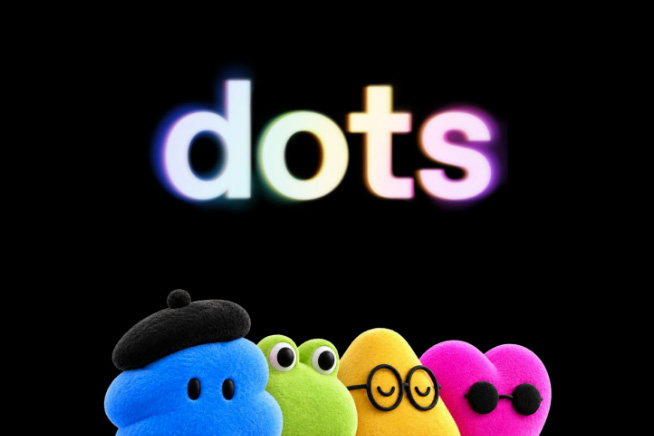
OpenAI announced dots, an always-on agent running GPT-6 Astra with its own cloud computer and browser, able to…
Anthropic published a September 29, 2026 review finding Z.ai's downloadable GLM-5.3 built working exploits in…