
What happened
Arm estimates agentic AI could raise data-center CPU demand from roughly 30 million cores to about 120 million cores per gigawatt, and sees a market opportunity above $100 billion by 2030.
Why it matters
Arm's fourfold demand estimate implies its architecture-licensing business could scale with that buildout, though converting the boom into earnings depends on architecture share and partner economics.
What to watch
The valuation leaves little room for error — at $327.74, Arm trades 68.92% above its GF Value estimate of $194.02, so actual server shipments and monetization need to do the heavy lifting.
WHO IT HITSThis lands on data-center operators and their infrastructure planners, who may need to provision far more general-purpose compute capacity per gigawatt to run autonomous agents. Arm's existing architecture licensees and its direct-silicon partners also face a shifting mix as the company pushes its own AGI CPU platform.
Summaries like this, in your inbox every morning.
The move extends a run that began with Muse, as Wall Street shifts attention from accelerators to the general-purpose processors that coordinate AI workloads. Inference still needs accelerators, but autonomous agents also need enormous amounts of general-purpose compute to organize, route and execute their work. Arm's estimate that agentic AI could lift data-center CPU demand from roughly 30 million cores to around 120 million cores per gigawatt is the arithmetic behind that attention.
The company is also testing a broader role for itself. Management sees a market opportunity topping $100 billion by 2030, while Arm pushes beyond its traditional architecture-licensing model through its own AGI CPU platform.
At $327.74, the shares trade 68.92% above Arm's GF Value estimate of $194.02, which means the market is already pricing in a lot of future growth. A fourfold jump in required CPU cores will not automatically produce fourfold royalty revenue. Whether Arm converts the workload boom into earnings hinges on architecture share, favorable chip mix, partner economics and its direct-silicon strategy — actual server shipments and monetization are likely to be the real test.
For example, today's edition would include:
AI-summarized, only the topics you pick — one digest a day via Email, LINE, or Slack.
Free · 30 seconds with Google · unsubscribe anytimeWhat is AIToday? →
Ask AI anything about this article. Q&As are published on this page for other readers too.
DeepSeek CEO Liang Wenfeng told investors the startup aims to rely on Huawei chips to train its models
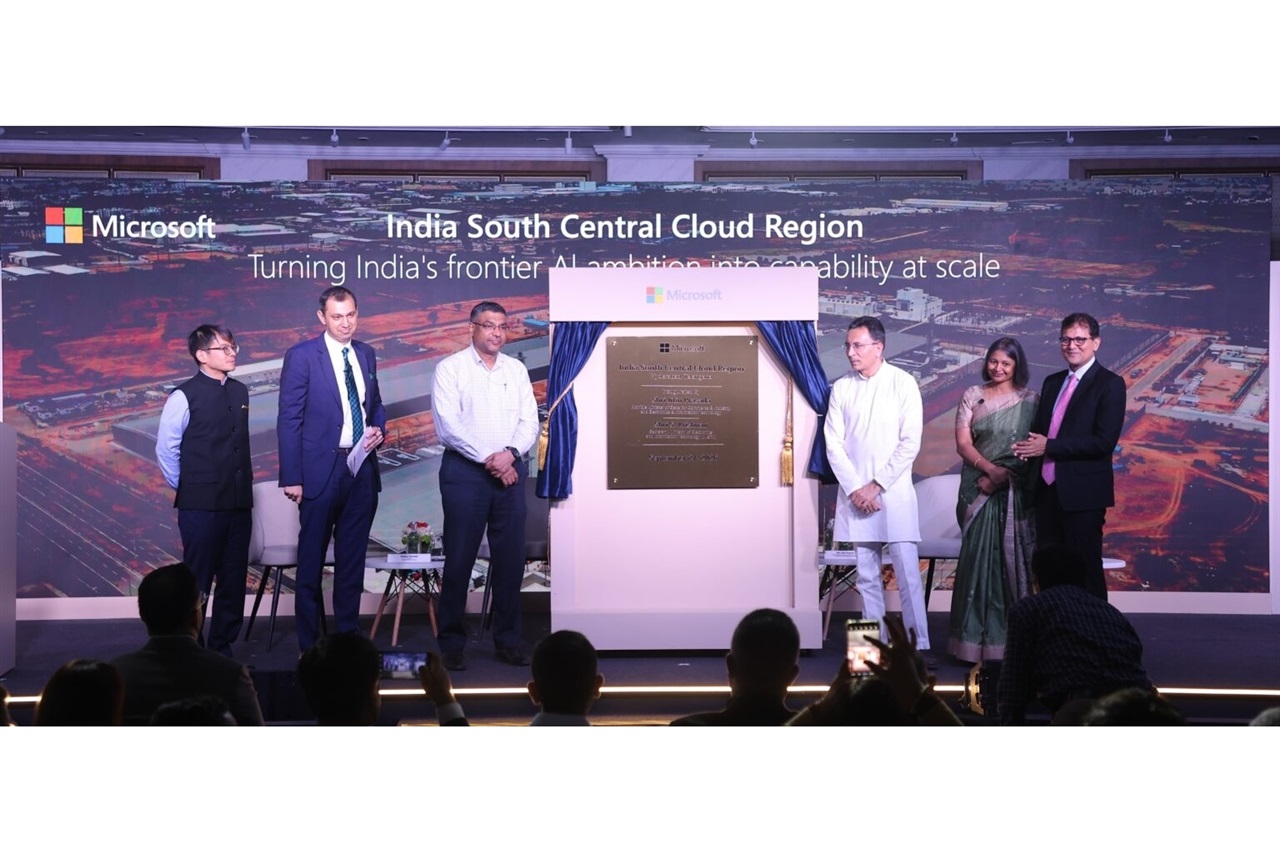
Microsoft opened a cloud region in Hyderabad, turning part of its US$20.5 billion India commitment into operat…
Shopify is partnering with Meta so Muse, Meta's AI shopping agent, can complete purchases at Shopify merchants…

Simon Willison released llm-typesafe 0.1a0, an LLM plugin adding support for TypeSafe AI's Jev model, installe…

NVIDIA released Isaac ROS 5.0, adding agentic workflows, Isaac Skills for setup and manipulation, and support…
Anthropic launched Claude Opus 5.5, saying it matches Claude Fable 5.1 on most tasks while costing about 40 pe…