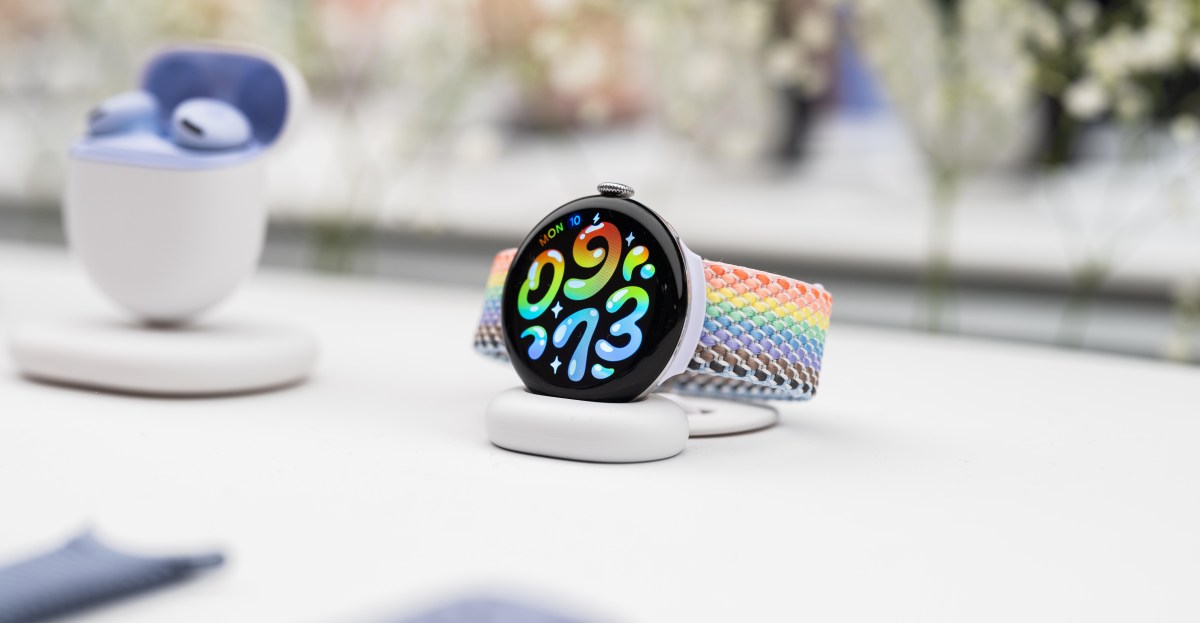
Google's Pixel Watch 5 emphasizes AI-powered health features over hardware upgrades, introducing Breathing Emergency Detection, Blood Pressure Trends, and Insulin Resistance Trends—the latter validated in a peer-reviewed study.
Most hardware improvements are minor (a faster processor, small battery bump, and new finishes), but the software refresh deepens Gemini integration with offline functionality and proactive suggestions.
Key health features roll out in September and will extend to older Pixel Watch models and Fitbit Air.
What happened
Google launched the Pixel Watch 5 at $399, a $50 price increase from last year. The watch adds Breathing Emergency Detection (which calls emergency services if blood oxygen drops to roughly 83 percent for an extended period), Blood Pressure Trends, and Insulin Resistance Trends. Gemini on the wrist now works offline for simple tasks and makes proactive suggestions. The watch also generates AI watchfaces and improves GPS accuracy using satellite data and 3D building models. Health features like Blood Pressure Trends and Insulin Resistance Trends roll out in September and will also come to Pixel Watch 3 and later, plus Fitbit Air.
Why it matters
The Insulin Resistance Trends feature is novel—Google validated the algorithm against blood draws in a peer-reviewed Nature study, and the watch flags sustained metabolic stress over a month. This matters because insulin resistance often remains asymptomatic for years and may not show up in routine tests, making a wearable alert potentially significant for early detection. Blood Pressure Trends and sleep breathing quality monitoring extend Google's health tracking beyond fitness, positioning the watch as a health assistant rather than a fitness device alone. However, none of these are diagnostic tools; they flag trends for wellness purposes.
What to watch
Breathing Emergency Detection launches in Europe at launch; FDA clearance is pending in the US. Blood Pressure Trends and Insulin Resistance Trends arrive in September. The Pixel Watch 5 is available for preorder starting today and arrives August 20th; the Steph Curry Special Edition hits shelves September 3rd. These features require a Google Health Premium subscription to feed into the AI coach.
Google unveiled the Pixel Watch 5 with a focus on AI and health rather than hardware innovation. The watch carries a $399 price tag, representing a $50 increase from the previous generation, attributed to what the article calls "RAMageddon"—a broader industry trend of component cost increases. Hardware additions are modest: a slightly faster Qualcomm processor, a small battery bump, and new finish options including a satin pyrite case and Steph Curry Special Edition.
The real story unfolds in software. Gemini on the wearable now functions offline for basic tasks like starting timers and launching apps, though the article notes these functions are notably slower offline. The AI also becomes more proactive, offering suggestions based on context—for example, displaying a Google Calendar check option when receiving a text asking about availability. WearOS 7 integrates pinch and wrist-flick controls more deeply into the interface. Google also added AI-generated watchface creation; the author tested a request for "fat cats and an elegant font" and received a watchface with plump, cat-shaped clock numbers.
On the health side, Breathing Emergency Detection emerges as the flagship feature. It extends last year's Loss of Pulse detection by monitoring blood oxygen saturation (SpO2). When SpO2 drops to roughly 83 percent for an extended period, the watch triggers automatic calls to emergency services and designated emergency contacts. To prevent false alarms, the feature uses a combination of heart rate, motion, and altitude sensors and disables itself after 30 minutes of sleep to account for sleep apnea or side-sleeping patterns. The feature launches in Europe immediately but remains pending FDA clearance in the US.
Two additional health features—Blood Pressure Trends and Insulin Resistance Trends—arrive in September and will roll out to Pixel Watch 3 and later, as well as Fitbit Air. Neither provides direct diagnostic measurements. Blood Pressure Trends uses the optical heart rate sensor and motion data to estimate whether blood pressure is trending higher or lower by modeling pulse wave shape and speed; it requires at least a week of data and flags trends monthly. Insulin Resistance Trends flags sustained metabolic stress based on heart rhythm, sleep quality, and daily movements. Google validated the algorithm against blood draws and published findings in a peer-reviewed Nature study. Both features function as "check engine light"-type wellness warnings rather than screening or diagnostic tools.
Google also upgraded GPS performance, claiming the Pixel Watch 5 will outperform the Garmin Fenix 8 and Apple Watch Ultra 3 by using satellite data, weather station information, and 3D building models from Google Maps to correct GPS data through AI post-processing—a direct competitive shot at Apple and Garmin. Strength training plans generated by AI are now available directly on the wrist without requiring a phone. All health features integrate with the Google Health app's AI coach, which requires a Google Health Premium subscription. The Pixel Watch 5 is available for preorder starting today and arrives August 20th; the Steph Curry Special Edition launches September 3rd.
The Pixel Watch 5's $50 price increase reflects a familiar pattern in consumer electronics: hardware gains have plateaued, so manufacturers justify cost through software and services. Google's bet here is clear—the company is pivoting the wearable from a fitness tracker into a health assistant, leveraging its AI expertise (Gemini) and depth of health data integration (via Fitbit Air and the Google Health app). The Breathing Emergency Detection feature, while present on Pixel Watch 4 as well, positions the watch as a potential life-saving device; its pending FDA clearance suggests Google views this seriously as a medical-grade feature.
The Insulin Resistance Trends feature is the most novel addition. Google's validation against blood draws and publication in Nature signals an attempt to ground this feature in clinical evidence, differentiating it from generic health tracking. However, the company is careful to position it as a trend monitor, not a diagnostic tool—a legal and ethical safeguard, but also an acknowledgment of its current limitations. The rollout delay to September and restriction to Pixel Watch 3 and later (plus Fitbit Air) suggests Google is phasing availability to manage expectations and gather real-world performance data before broader adoption.
AI-summarized, only the topics you pick — one digest a day via Email, Slack, or Discord.
Free · takes 30 seconds · unsubscribe anytime
Ask AI anything about this article. Q&As are published on this page for other readers too.

The AI news that matters, in one minute each morning.
Sign up free
