What happened
Stripe acquired OpenRouter for over $7B, signaling major investor confidence in model routing—the technology that automatically selects which AI model to use for each task. Glean, an enterprise AI platform co-founded by ex-Google Distinguished Engineer Arvind Jain, has become a leading example of this trend, reaching $300 million in annual recurring revenue this year, a three-fold increase over 15 months.
Why it matters
Model routing addresses a pressing cost problem for enterprises. Glean co-founder Tony Gentilcore claimed Glean is 4x more cost-effective than Claude Code, averaging $0.45 per task versus $1.84 for Claude Cowork. As advanced AI models like Opus and the latest GPT versions have become "sometimes double or quadruple the rates" of previous models, and users run much longer tasks, per-user AI costs have surged 10–20× year-over-year, making intelligent routing economically essential for large organizations.
What to watch
Enterprise adoption of open-weight models (like Kimi K3 and Qwen3.8-Max) has surged dramatically in the past three months, driven by cost concerns—moving from "minuscule" usage last year to becoming "a key part of their AI strategy" in most enterprises today. Jain emphasized that organizations now refuse to rely on a single or two model providers, and "nobody thinks that they can survive without open source."
Summaries like this, in your inbox every morning.
Model routing has emerged as a critical piece of enterprise AI infrastructure precisely because AI costs have spiraled beyond control. When advanced models like Opus and the latest GPT versions cost double or quadruple the rates of their predecessors, and users apply them to much longer tasks, per-user spending multiplies by 10–20× year-over-year. For enterprises deploying AI across thousands of employees, that arithmetic becomes untenable—hence the excitement around Stripe's acquisition of OpenRouter and Glean's meteoric rise to $300 million ARR in just 15 months.
What makes Glean's approach distinctive is its ability to match task complexity to model capability and cost. Waldo, its agentic search model, acts as an intelligent filter that assembles necessary context before routing to a frontier model, reducing both latency by 50% and token consumption by 25%. This means a cheaper model loaded with relevant data can outperform an expensive frontier model burdened with irrelevant information. Behind the scenes, Glean runs continuous A/B testing on a small fraction of real traffic, using AI-based judges to validate routing decisions and improve the system over time.
A dramatic shift has occurred in the past three months: open-weight models, which were nearly unused in enterprises as recently as last year and carried perceived stigma for being developed outside the US, have suddenly become mainstream. Cost pressure alone has driven this reversal—open-source models are "an order of magnitude cheaper," and enterprises have concluded they cannot survive on one or two proprietary model providers. This pluralistic, cost-conscious approach to model selection is now central to enterprise AI strategy, and Glean's scale—with penetration across 7,000 employees at Zillow and company-wide adoption at Booking.com—gives it an unmatched vantage point to observe which models users select first and when they upgrade, feeding invaluable signal back into the routing algorithm.
Pick your industry and the AI tools you use, and get news related to your work every day.
Free · 30 seconds with Google · unsubscribe anytimeWhat is AIToday? →
Ask AI anything about this article. The AI reads this article, earlier AIToday articles, and Wikipedia, and cites its sources. Q&As are published on this page for other readers too.
Vercel data published Thursday shows TypeSafe AI's Jev, a lightweight decision model for choosing among predet…

Reflection AI introduced Beam, an open-weight model for agentic coding and long-horizon tasks, with 501 billio…

Apple and Meta said they would jointly release a new open-weight AI model designed to run on high-end Macs, ai…

Liquid AI released d1-ultra on October 15, 2026, an upgraded open-weights decision model that averaged 76.7 ac…
NVIDIA released Nemotron 3.5 Super VL, an open-weight model with 120 billion parameters that handles text, ima…

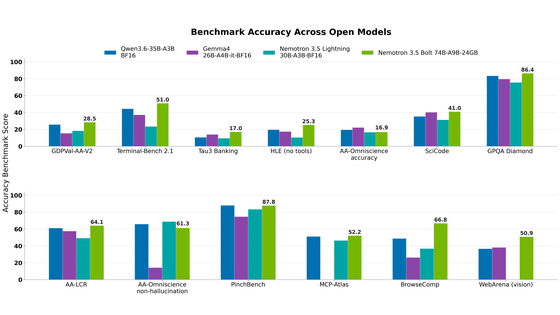
NVIDIA released Nemotron 3.5 Bolt 74B-A9B 24GB, an AI model for local agents that hits over 80 tokens per seco…