What happened
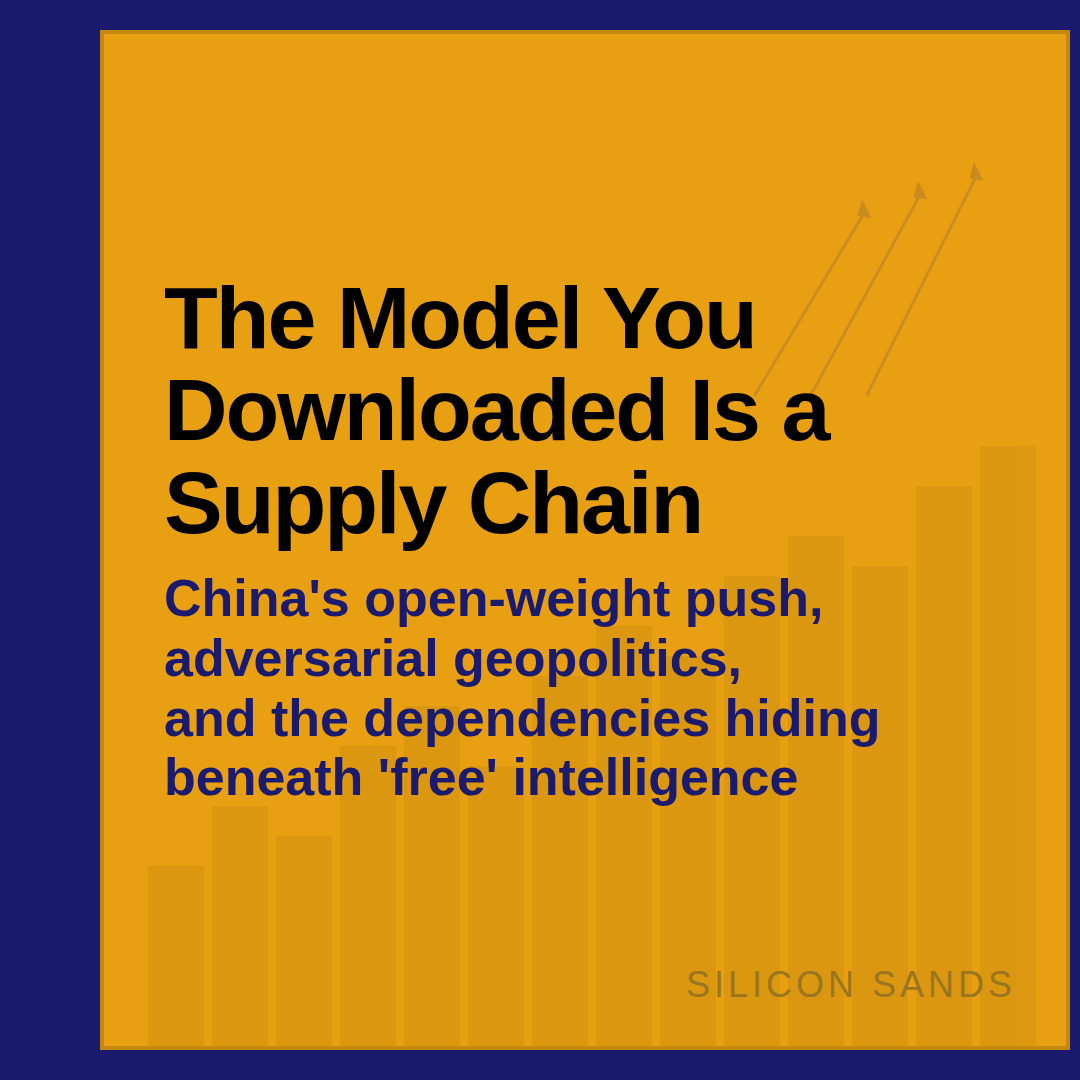
Two governments weaponized AI model access this summer. In June 2026, a U.S. Commerce order blocked foreign-national access to Anthropic's Fable 5 and Mythos 5, forcing Anthropic to suspend both globally for 18 days because nationality verification was impossible. Meanwhile, China launched the World Artificial Intelligence Cooperation Organization in Shanghai in July, positioning open-weights models as a shared public good and offering them as its geopolitical counter to U.S.-led frameworks. Chinese models now account for 41 percent of Hugging Face downloads versus 36.5 percent for U.S. models.
Why it matters
Model access is no longer just a technical choice—it's now a political variable on both sides of the Pacific. Any company whose product breaks when a model family disappears is carrying unpriced risk. The real cost isn't the free download; it's the dependency that accumulates in adapters, prompts, retrieval indices, and operator habit. A forced model swap could take weeks or longer, and most companies don't know how long because they've never tested it. Buyers are shifting from capability to provenance: NIST and Google Cloud now treat AI supply chain integrity, datasets, weights, and lineage as board-level procurement requirements.
What to watch
The Fable 5 suspension lasted 18 days. Companies should measure replacement time—how many days it takes to move a production workflow off its current model family with acceptable quality—under stress. Enterprise buyers are converging on five artifacts as proof: a model bill of materials, version-pinned evaluation records, tool-permission maps, changelogs with rollback, and tested migration runbooks. Teams that can demonstrate portability and publish replacement times will win deals against competitors with better demos.
Summaries like this, in your inbox every morning.
Until summer 2026, the AI competition map had one landmark: chips and who could buy them. Export controls on semiconductors told the whole story. But the contest has moved up the stack, and model access is now the pivot point. The U.S. and China are no longer competing only on capability; they are competing on who controls the distribution and governance of AI models as a strategic asset. China's move to launch the World Artificial Intelligence Cooperation Organization, with open-weights at its center, is explicitly designed to offer an alternative to U.S.-led frameworks that bundle models, semiconductors, and critical minerals. The U.S. response—telling AI Opportunity Statement signers they must choose between American and Chinese blocs—makes clear that model access has become a statecraft lever, not a licensing question.
The immediate consequence is supply chain fragmentation. Chinese models now account for 41 percent of Hugging Face downloads, and Hugging Face CEO Clément Delangue stated in August that Chinese labs are dominating open models and could reach the frontier within a year. Downloads are a leading indicator of which toolchains, formats, and defaults the next cohort of builders learns first—and that effect compounds. For companies, this means the models they choose today shape their lock-in and their political exposure tomorrow. The 18-day Fable 5 suspension proved that a government can take a model offline globally with no advance notice and no verification workaround. Most companies have no continuity plan for such an outage because they have never measured how long a model swap would take.
Pick your industry and the AI tools you use, and get news related to your work every day.
Free · 30 seconds with Google · unsubscribe anytimeWhat is AIToday? →
Ask AI anything about this article. The AI reads this article, earlier AIToday articles, and Wikipedia, and cites its sources. Q&As are published on this page for other readers too.
In Q2, billionaires or their funds sold six 'Magnificent Seven' AI stocks

Nvidia was rising early Friday, even as the wider chip sector kept falling, Barron's reported
ElevenLabs completed a $300 million employee tender at a $22 billion valuation, and co-founder Mati Staniszews…
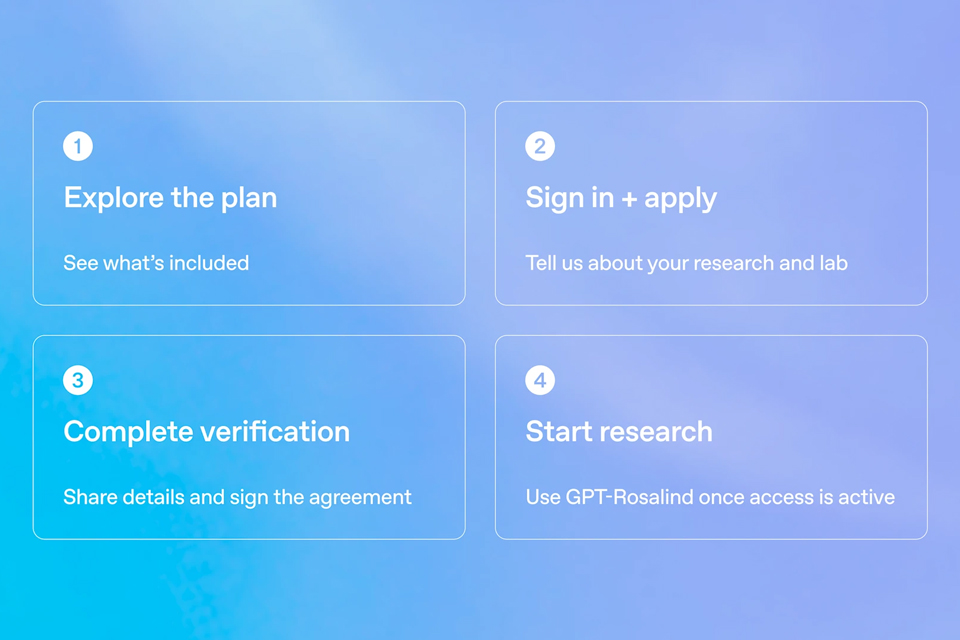
On October 15, OpenAI announced the Rosalind Academic Plan, giving approved US university labs free access to…
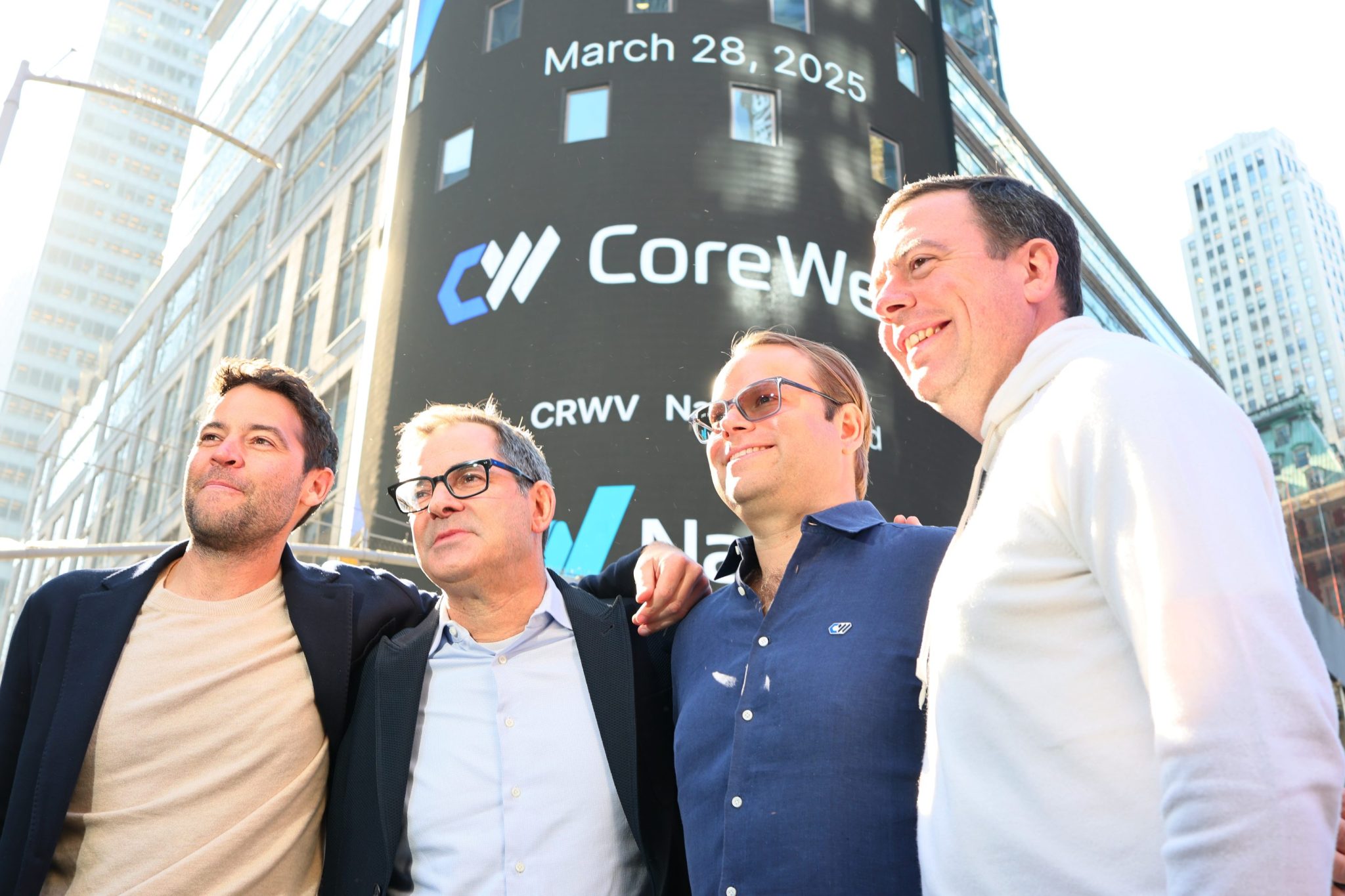
Neostellar Capital principal Evan Schlossman said CoreWeave's $103.7 billion in remaining performance obligati…
A Qiita article compared automated red-teaming methods for LLM apps — GCG, PAIR, and TAP — using mock implemen…