
What happened
Goldman Sachs Global Institute co-head Jared Cohen argues that the world will be redesigned for machine intelligence, with AI agents and robots replacing humans as primary actors in physical and digital spaces.
Why it matters
This shift could transform infrastructure — from parking lots (22% of land in big cities) to retail design (Walmart is cutting holes in walls for Zipline drones) — and pressure classical software pricing models as 'headless software' gains ground.
What to watch
Zipline's partnership with Uber (announced in August) and CloudKitchens' move to retrofit facilities for robotic food prep signal how quickly purpose-built infrastructure for bots may spread beyond individual pilots.
Summaries like this, in your inbox every morning.
The article, authored by a Goldman Sachs Global Institute co-head, frames AI's rise as an infrastructural shift comparable to steel, cars, or the internet. It argues that as machine intelligence advances — citing Anthropic CEO Dario Amodei's 'country of geniuses in a data center' and Elon Musk's prediction that AI could exceed human intelligence in about five years — our built environment will be reconfigured for bots, both digital and physical.
Concrete examples ground the thesis. Zipline's drone delivery, born from blood plasma delivery in Rwanda, now partners with Walmart and Uber, with physical changes like wall cutouts in a Supercenter. Travis Kalanick's CloudKitchens is retrofitting facilities for robotic food prep, and humanoid robots may be outnumbered by utilitarian machines optimized for tasks like making '1,000 pancakes an hour.'
The software stack is also shifting: AI agents, powered by LLMs, favor APIs over human interfaces, pushing toward 'headless software' and usage-based pricing. The article suggests that classical human-centric software's value may shrink as SaaS becomes data repositories for agent workflows. While no specific timeline or size is given, it implies a gradual but inevitable transformation, with the caveat that changes won't happen overnight.
Pick your industry and the AI tools you use, and get news related to your work every day.
Free · 30 seconds with Google · unsubscribe anytimeWhat is AIToday? →
Ask AI anything about this article. The AI reads this article, earlier AIToday articles, and Wikipedia, and cites its sources. Q&As are published on this page for other readers too.
In Q2, billionaires or their funds sold six 'Magnificent Seven' AI stocks
Nvidia was rising early Friday, even as the wider chip sector kept falling, Barron's reported
ElevenLabs completed a $300 million employee tender at a $22 billion valuation, and co-founder Mati Staniszews…

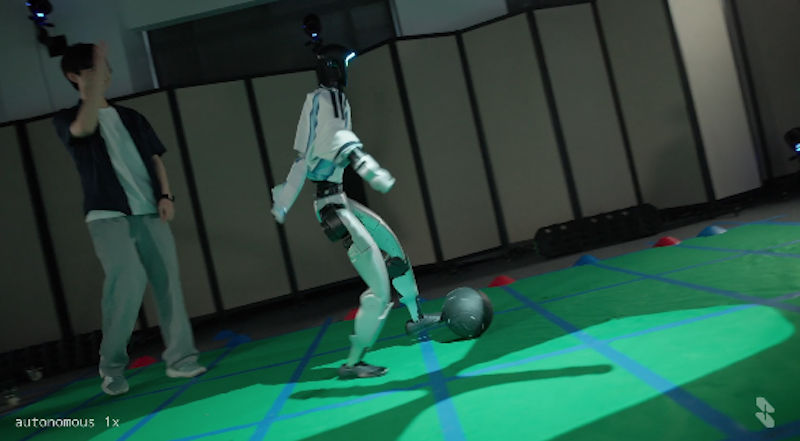
Skild AI used Nvidia Isaac Sim to give its S1 model one objective — score a goal — and let it compete against…
On October 15, OpenAI announced the Rosalind Academic Plan, giving approved US university labs free access to…

JR Central announced the S0系 on October 16, its first full model change since the N700S, with commercial servi…