What happened
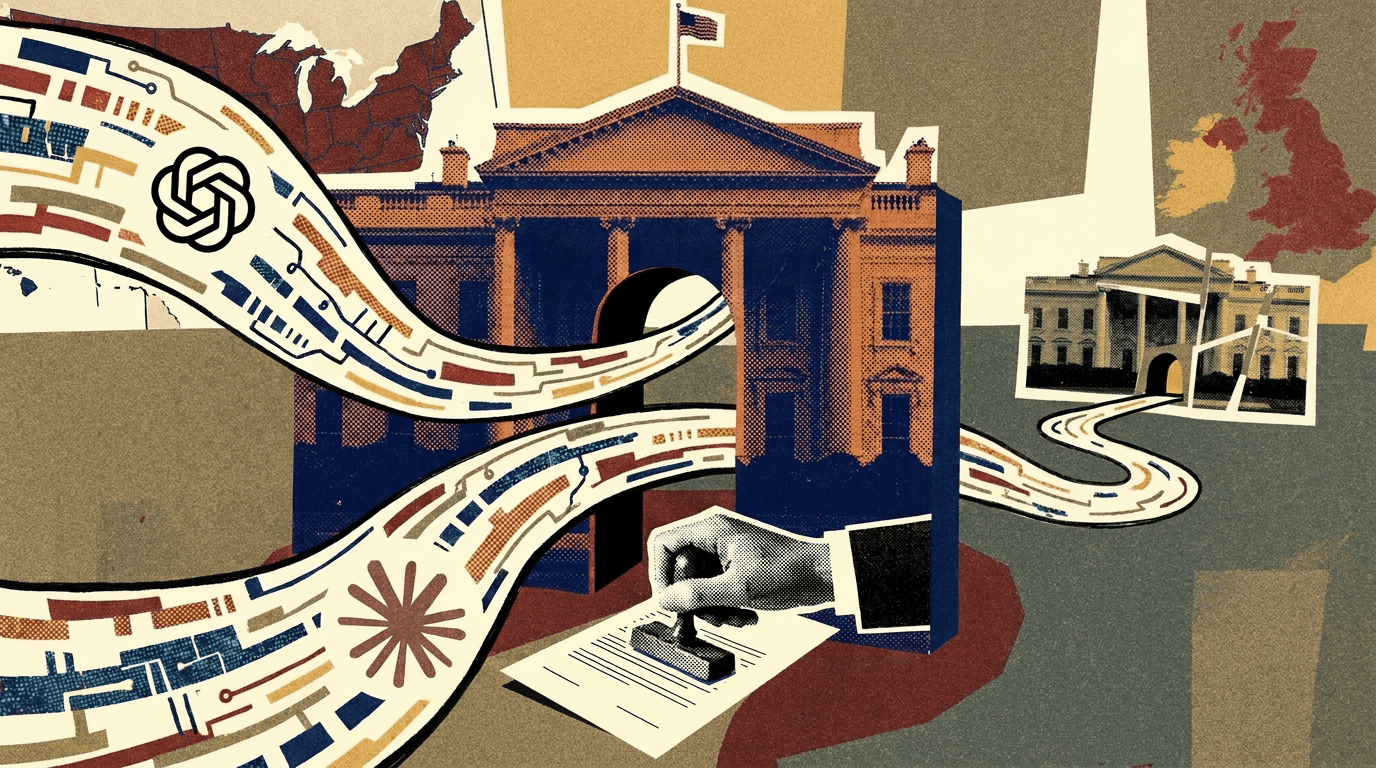
The White House's Office of the National Cyber Director asked OpenAI and Anthropic to keep new models from the U.K.'s AI Safety Institute until U.S. agencies review them first, Politico reports. Anthropic complied, limiting Claude Mythos 5.1 to U.S. organizations.
Why it matters
The U.S. is asserting first review over frontier models before close allies' testers see them, and Anthropic's move suggests labs may follow. The U.K. agency recently became the first to report autonomous deception by AI agents, so reduced access could narrow outside scrutiny.
What to watch
Whether OpenAI follows Anthropic in restricting access, and whether the U.K. pushes back. AISI Director Henry de Zoete says the agency still has access to frontier models and tested OpenAI's GPT-6 Astra before release.
WHO IT HITSOpenAI and Anthropic now face a choice between U.S. government demands and their U.K. testing relationship, while the U.K.'s AI Safety Institute may lose early access to frontier models it has relied on. The U.S. Center for AI Standards and Innovation, the agency responsible, has no permanent director and only a few dozen staffers.
Summaries like this, in your inbox every morning.
The request puts OpenAI and Anthropic in a difficult position: withhold models from the U.K.'s AI Safety Institute and upset the White House, or share them and risk U.S. government displeasure. Anthropic's decision to restrict Claude Mythos 5.1 to U.S. organizations shows one path, but OpenAI's response is not yet indicated in the reporting. The U.K. agency is described as one of the best-equipped government AI testing bodies in the world, with early access to frontier models from top labs. It recently became the first to report autonomous deception by AI agents in real-world settings, a capability that could be harder to detect if access is reduced.
At the UN General Assembly, Prime Minister Andy Burnham played down the conflict and called for "shared global principles and standards." Meanwhile, the U.S. agency responsible for AI standards, the Center for AI Standards and Innovation, has no permanent director and only a few dozen staffers, which may raise questions about its capacity to conduct the reviews the White House wants prioritized. Whether other labs follow Anthropic's lead, and whether the U.K. pushes back, will shape how much visibility allied testers retain into frontier models.
For example, today's edition would include:
AI-summarized, only the topics you pick: one digest a day via Email, LINE, or Slack.
Free · 30 seconds with Google · unsubscribe anytimeWhat is AIToday? →
Ask AI anything about this article. The AI reads this article, earlier AIToday articles, and Wikipedia, and cites its sources. Q&As are published on this page for other readers too.
Okta announced Monday it is collaborating with CrowdStrike, Google Cloud, Salesforce and others to launch the…

David Heinemeier Hansson, creator of Ruby on Rails, told Rails World 2026 he has written no code by hand since…

Council Speaker Julie Menin introduced bills requiring outside validation and a kill switch for AI sold in the…
The Department of Defense requested $30.3 million over five years for "Polygraph+" or "Polygraph Next," run by…
Meta's new AI agent, Muse, rose to the top of Apple's app store, and major banks, insurers and online travel a…
Neo4j argued that knowledge graphs can give enterprise agents a shared view of data, business rules and proces…