
What happened
Snowflake created an internal semantic layer—a standardized data interface that sits between raw tables and downstream consumers (dashboards, AI agents, business intelligence tools)—to provide consistent definitions and context. In July 2025 alone, over 400 internal users ran more than 5,400 queries through the product data science agent using this semantic layer; across all teams, more than 5,600 employees ran over 320,000 queries via the broader semantic layer in sales, HR, support and other areas.
Why it matters
Without a shared semantic layer, the same business question (e.g., "What is an active customer?") yields conflicting answers from different data tables and metric definitions. By curating one authoritative semantic view, Snowflake ensures that both humans and AI agents query the same trusted data, eliminating the need for data scientists to manually reconcile discrepancies. In AtScale's benchmark testing, adding semantic context increased text-to-SQL accuracy from 20% to more than 90% across 40 business questions.
What to watch
Snowflake's semantic views are materialized (pre-aggregated) automatically to reduce query latency and token usage for AI agents. The semantic views are version-controlled and tested like production software, and are interoperable with Apache Ossie (incubating), a vendor-neutral open standard—meaning businesses can use their semantic models across platforms and tools.
Summaries like this, in your inbox every morning.
Snowflake's challenge was not scarcity of data—the company collects petabytes of internal telemetry across every query, warehouse, and user click—but clarity. When millions of data sources exist without shared definitions, the raw volume becomes a liability: different teams, dashboards, and tools derive conflicting answers from the same underlying facts. The company recognized that this alignment problem compounds when AI agents enter the picture. Because new metrics and data sources are built rapidly, information gaps emerge even for skilled analysts; if an AI agent reports one number while a legacy dashboard shows another, no stakeholder knows which to trust. The semantic layer resolves this by creating a single "golden layer"—a standardized interface that translates governed business language into physical database schemas, sitting between downstream consumers and raw tables.
Snowflake's internal adoption metrics illustrate the scale and velocity the semantic layer now supports: in a single month (July 2025), over 5,600 employees across sales, HR, support, and product teams ran more than 320,000 queries through the unified semantic layer. The company discovered concrete performance gains: in AtScale's benchmark testing, adding semantic context to text-to-SQL tasks increased accuracy from 20% to more than 90% on 40 business questions. For AI agents specifically, semantic views deliver two compounding returns—faster execution (agents avoid sampling and joining raw tables at query time) and lower token usage (pre-aggregated metrics and declared dimension-metric materializations reduce repeated computation). Snowflake's implementation treats the semantic layer as production software: views are version-controlled with dbt, undergo peer review and CI/CD, and are evaluated against real user questions logged in system logs. The company also leveraged Snowflake Cortex Agent's custom routing instructions and Cortex Sense to intelligently direct queries to the correct semantic view, and built automated materializations (pre-aggregated slices) that Snowflake maintains in the background rather than requiring manual pipeline management.
Pick your industry and the AI tools you use, and get news related to your work every day.
Free · 30 seconds with Google · unsubscribe anytimeWhat is AIToday? →
Ask AI anything about this article. The AI reads this article, earlier AIToday articles, and Wikipedia, and cites its sources. Q&As are published on this page for other readers too.
Supermicro Computer appointed Mark Long as chief financial officer, bringing an experienced technology finance…

Holtek Semiconductor unveiled its 2026 product roadmap on October 15, focusing on four core areas: smart prote…

TSMC reported about NT$763.1b in Q3 net profit and confirmed that demand for advanced processors is running ah…

Nvidia-backed CoreWeave steadied Thursday after a sharp slump, as investors worried about the debt financing b…
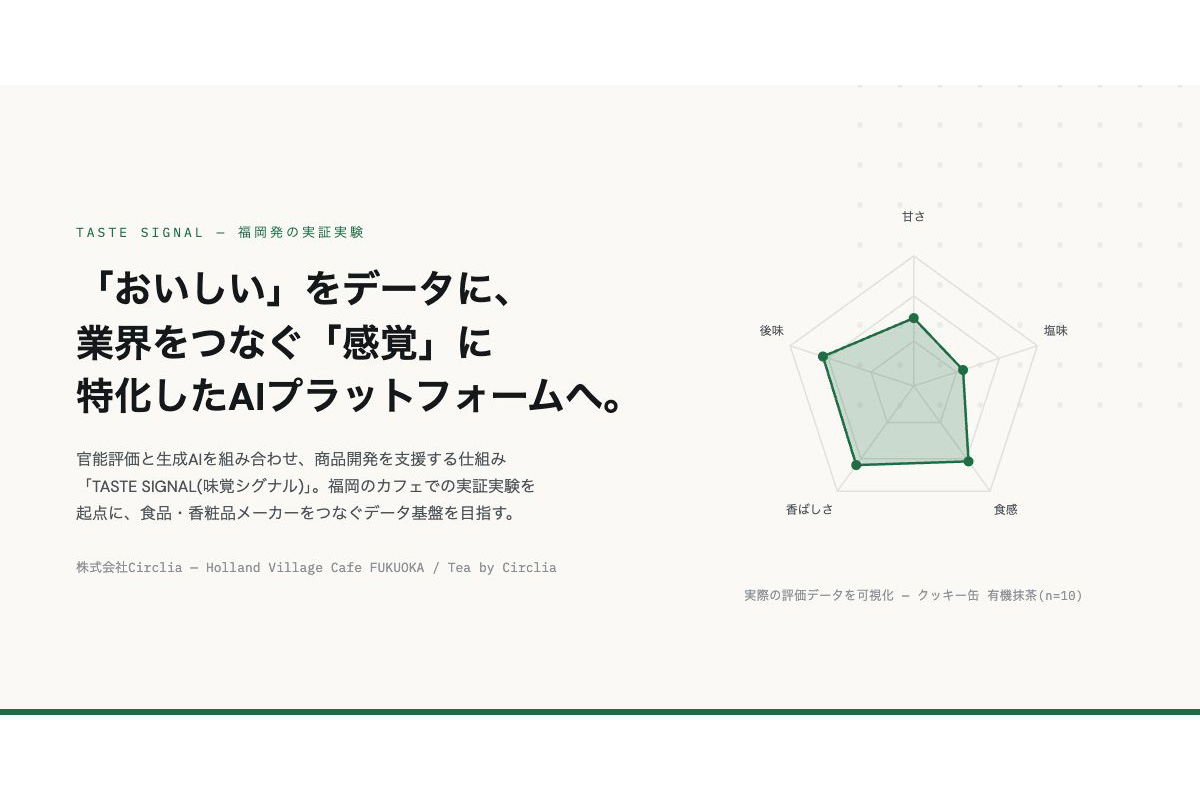
Circlia started a proof-of-concept for TASTE SIGNAL: visitors to Holland Village Cafe FUKUOKA taste cookies an…
Weathernews said on October 15 it implemented its own AI weather-forecasting model, AI-Nowcast, in its Weather…