What happened
The 2026 UK Business Data Survey shows just 12% of AI-using manufacturers have fully integrated AI into business systems, against 39% of adopters in Information & Communication.
Why it matters
Using standalone AI tools is not the same as running a smart factory, so most manufacturers appear to be missing the connected, data-driven advantage that full integration is meant to deliver.
What to watch
Progress hinges on bridging legacy MES and ERP systems with modern cloud AI and on cleaning fragmented plant data. Watch whether vendors such as SOFTECH can shorten that integration work.
WHO IT HITSManufacturing operations and IT leaders evaluating AI pilots will face pressure to move from isolated tools to integrated systems, while industrial software vendors and integrators stand to win the projects that bridge the OT/IT divide.
Summaries like this, in your inbox every morning.
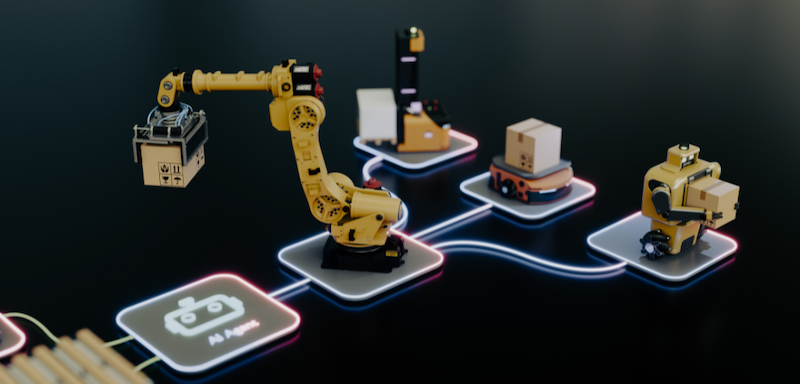
The article frames manufacturing's low integration rate against a decade of heavy automation: the International Federation of Robotics reports the global factory robot workforce has more than doubled in the last decade, so robots on the line are nothing new. What is new is the demand that those machines, sensors, and business systems share one continuous flow of data. The article draws a sharp line between an automated factory, which executes pre-programmed instructions in rigid, siloed workflows, and a smart factory, where AI sits as an intelligence layer across Operational Technology and Information Technology.
The obstacles it lists are structural rather than technological. Legacy MES and ERP platforms were not designed to communicate with cloud-native AI applications, and connecting the OT world of PLCs and industrial protocols to the IT world of APIs and databases requires specialized expertise. Factory data is also fragmented across sensors, machines, quality stations, and manual logs, meaning AI models can be fed poor-quality information and produce unreliable output. Because a control-system failure can halt production, cause financial losses, or create safety risks, manufacturers are described as understandably cautious about deploying insufficiently tested software into core operations.
The article's suggested path runs through partners such as SOFTECH that can build the integration and data layers, with the promised payoff in predictive maintenance, AI vision inspection, and more flexible production scheduling. Whether that promise materializes appears to hinge on how quickly the legacy-to-cloud gap can be closed without disrupting live production, and on whether integration projects can demonstrate measurable ROI — a test that will fall first on the manufacturers now running isolated AI pilots and the vendors bidding to connect them.
Pick your industry and the AI tools you use, and get news related to your work every day.
Free · 30 seconds with Google · unsubscribe anytimeWhat is AIToday? →
Ask AI anything about this article. The AI reads this article, earlier AIToday articles, and Wikipedia, and cites its sources. Q&As are published on this page for other readers too.
Arceus Legal disclosed a $17 million round led by Greycroft LP, with Craft Ventures Management and South Park…

Meta's rapid rollout of its Muse AI agent is serving as an early test of how agentic AI reshapes server infras…

In the Loop host Ejaaz Ahamadeen broke down what Anthropic's (ANTH.PVT) leaked S-1 filing actually covers, and…

Anthropic launched Claude for Government for US federal and state civilian agencies

Halluminate raised $30 million in a Series A led by Oak HC/FT, bringing total funding to $38.5 million, and CE…
Emails obtained by The New York Times show two employees told OpenAI executives that AI models were not proper…