What happened
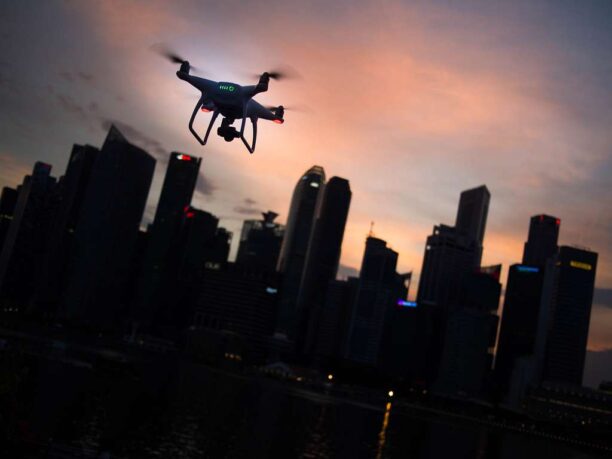
Utopia Compression, a Los Angeles company with over two decades of defense work, is marketing AI-based passive sensing, navigation and autonomy software to commercial drone operators, after defense vetting by the U.S. Air Force and U.S. Navy.
Why it matters
The technology is described as radar-free and sensor-agnostic, which its customer success lead says makes the transition to commercial UAV and advanced air mobility customers straightforward.
What to watch
The company hopes to help enable a universal BVLOS standard, which its customer success lead says is lacking and has been a major impediment to commercial drone scaling.
WHO IT HITSCommercial drone operators working on BVLOS, counter-UAS and ISR missions, as well as public safety agencies testing the software, are the most directly affected.
Summaries like this, in your inbox every morning.
Utopia Compression has spent more than two decades serving the defense sector, and that history shapes how it is now approaching commercial drones. Its technology was vetted by defense customers including the U.S. Air Force and the U.S. Navy, and its maritime surveillance solutions have been licensed to Teledyne FLIR for about a dozen years. The company's entrance into the commercial UAV market follows experimental tests of aerial capabilities such as swarm with other companies over the past year or so.
The company's product line reflects the challenges it is targeting. Co-NAVIGATE addresses GPS-denied urban navigation for last-mile delivery through sensor fusion and smart landmarks. AETHER is a detect-and-avoid system for BVLOS and advanced air mobility operations, while CO AIR coordinates interactions between ground and aerial vehicles. SwarmSync is designed to augment UAS swarm capabilities across civilian applications. A senior R&D engineer noted that as drones shrink, radar-like active sensors struggle to identify them at a good distance, which is where passive sensing may prove useful.
Utopia Compression is speaking with commercial counter-UAS vendors and public safety agencies testing its software for BVLOS and counter-UAS operations. Its customer success lead said the transition is straightforward because the systems are sensor-agnostic and can use either the company's payload or the customer's. The company's push is tied to a broader goal of helping enable a universal BVLOS standard, which it identifies as a major impediment to commercial drone industry scaling. How quickly the commercial market adopts these defense-derived tools may hinge on whether that standard advances.
Pick your industry and the AI tools you use, and get news related to your work every day.
Free · 30 seconds with Google · unsubscribe anytimeWhat is AIToday? →
Ask AI anything about this article. The AI reads this article, earlier AIToday articles, and Wikipedia, and cites its sources. Q&As are published on this page for other readers too.
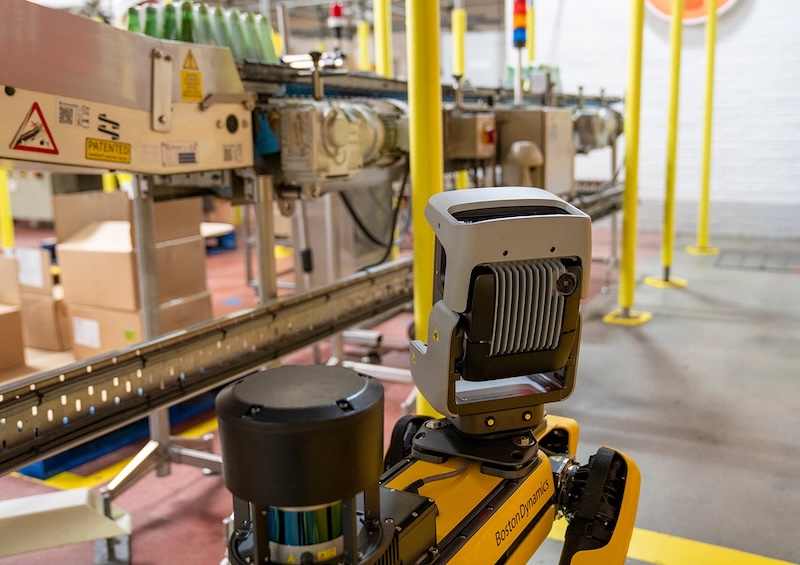
Boston Dynamics released Spot 5.2, expanding Orbit fleet software with a Model Context Protocol layer that let…
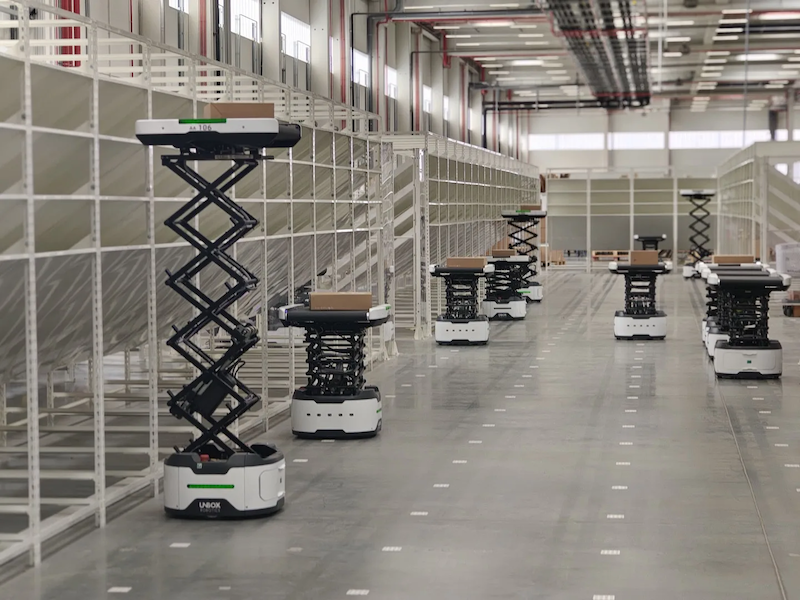
Writing for Robotics and Automation News, Unbox Robotics CEO Pramod Ghadge said reverse logistics needs AI dec…
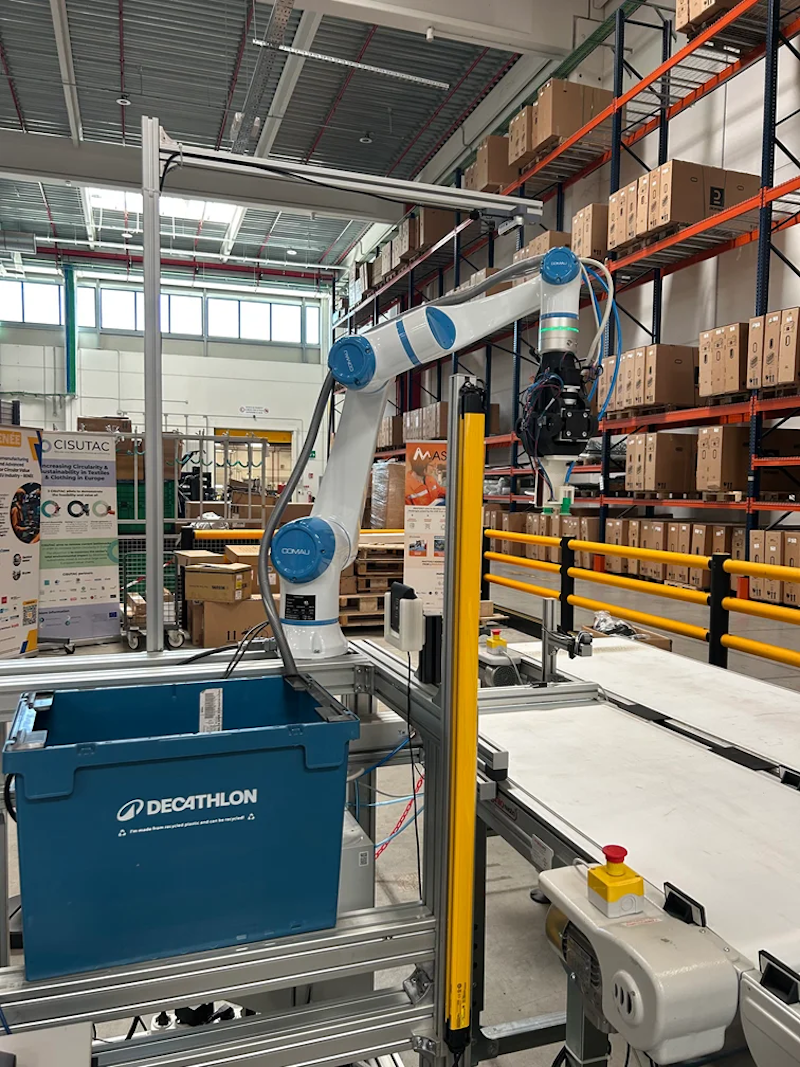
Comau designed and validated an order preparation solution tested within Decathlon's e-commerce fulfillment op…
Defense Secretary Pete Hegseth said the US will create an "Autonomous Combat Force" under a four-star officer…

Anthropic fed a database of roughly 900 occupations and about 19,000 tasks into its Claude AI, which sorted th…

Carbon Robotics announced the Large Plant Model in February 2026, trained on 150 million-plus plant images, cu…