What happened
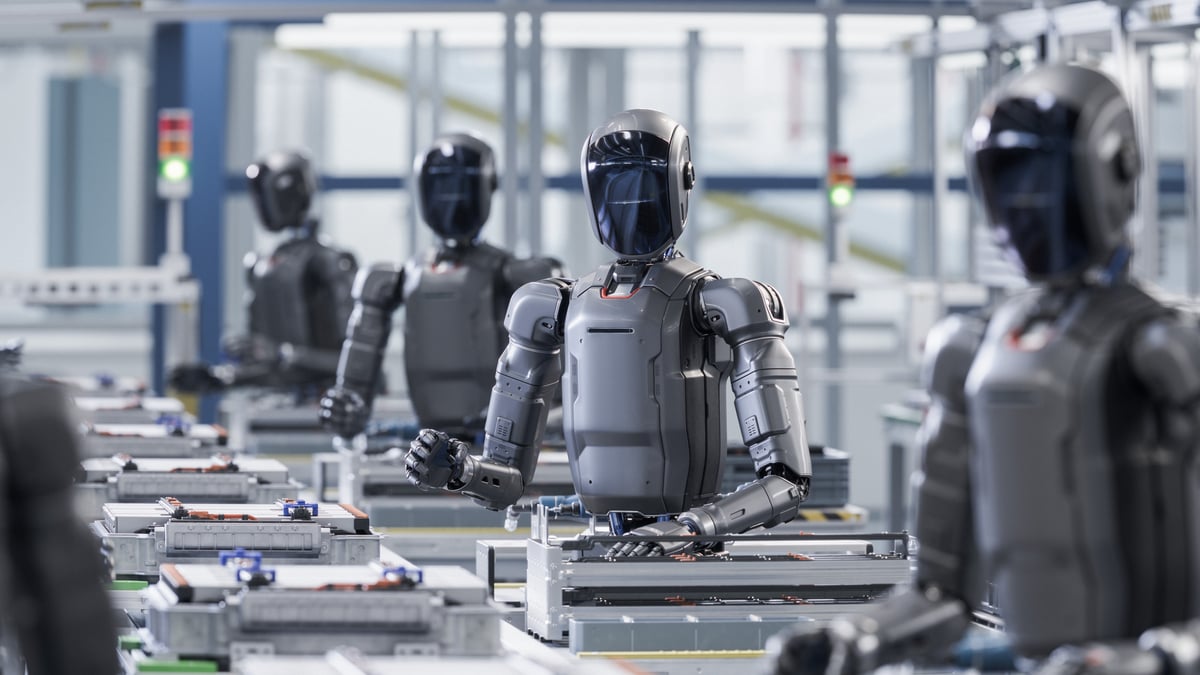
A Yahoo Finance contributor argued Texas Instruments, the analog chipmaker, will see huge demand as AI-powered robots like Tesla's Optimus take off. The stock yields around 2.2%, roughly twice the S&P 500.
Why it matters
Analog chips turn real-world inputs into digital signals, and robots are how AI touches the physical world — so the contributor sees chip demand rising with robot adoption, not just AI software.
What to watch
Texas Instruments is mid-investment-cycle building production capacity, which has pressured profitability and cash flow and left the payout ratio at 85%. Watch whether leverage stays manageable at a debt-to-equity ratio of around 0.8x.
WHO IT HITSDividend-focused retail investors and income-oriented portfolio managers looking for technology exposure are the audience this argument targets, since the case rests on Texas Instruments' above-market yield and its role supplying analog chips to robot makers.
Summaries like this, in your inbox every morning.
The argument here starts from a simple chain: artificial intelligence is advancing quickly, robots are how that intelligence reaches the physical world, and every robot needs more than just a powerful AI brain. The contributor points to Tesla's humanoid Optimus robot as the clearest example of where this is heading, while noting that companies like Nvidia have so far been the poster children of the AI trade because they make the high-powered chips behind complex AI programs.
What the piece adds is a second layer of hardware that rarely gets attention. Analog chips have existed for decades and sit inside everything from cellphones to robots, and their job of converting real-world stimuli into digital signals makes them a necessary ingredient once AI-driven machines operate under uncontrolled, varying conditions rather than repeating a single factory task. That is the basis for the claim that Texas Instruments, described as one of the world's largest and most respected analog chipmakers, could be a beneficiary.
The dividend side of the case is what makes it appeal to a particular kind of investor. The contributor frames Texas Instruments as a technology stock with an unusually high yield, supported by a long record of annual dividend increases, while acknowledging that the analog chip market is cyclical and that a heavy capacity-building phase has weighed on profitability and cash flow. Whether the robotics demand the contributor expects actually materializes on a timeline that rewards today's investors is the open question, and the near-term test is likely to be how the company's capacity spending and payout ratio evolve from here.
For example, today's edition would include:
AI-summarized, only the topics you pick: one digest a day via Email, LINE, or Slack.
Free · 30 seconds with Google · unsubscribe anytimeWhat is AIToday? →
Ask AI anything about this article. The AI reads this article, earlier AIToday articles, and Wikipedia, and cites its sources. Q&As are published on this page for other readers too.
Meta's Muse AI agent went viral after its release, and Bank of America analyst Ebrahim Poonawala wrote to clie…

A Microsoft VP says SaaS is not dying but evolving into the context, data and governance layer for AI agents

Cloudflare CEO Matthew Prince said automated traffic passed human traffic online in May, after his team initia…

Anthropic moved its planned IPO from October to November, still reportedly seeking $100 billion at a $2 trilli…

An undervalued-stock screen highlighted Adobe (ADBE) and Broadcom (AVGO) as AI-driven picks, flagging Adobe's…

Air Force Secretary Troy Meink named General Atomics' FQ-42A "Vengeance" and Anduril's FQ-44A "Fury," with 150…