
What happened
Preferred Networks and Tenstorrent said on October 20 they have started joint development of a generative-AI processor system, with Tenstorrent handling the CPU and PFN the AI processor.
Why it matters
The two companies are splitting the two core chips of the system between them, so the work combines Tenstorrent's CPU side with PFN's AI processor side.
What to watch
The project is set to run until fiscal 2031, after which the two aim to commercialize the results.
WHO IT HITSData-center hardware buyers and AI infrastructure teams gain another potential source of high-memory-bandwidth AI processors, should the joint work reach commercialization after fiscal 2031.
Summaries like this, in your inbox every morning.
Tenstorrent brings a track record in chip design and an open-source instruction set: it develops processors based on RISC-V and already ships the Blackhole AI processor and the Ascalon RISC-V CPU. In Japan, it is also working with Rapidus on a 2nm logic edge AI accelerator.
PFN's side of the work draws on its own processor line. Its MN-Core is optimized for matrix arithmetic, and the company says it has taken the top spot in the supercomputer energy-efficiency ranking three times. The next-generation L1000, announced in November 2024, is designed around wide memory bandwidth to speed LLM inference, and PFN has said a workstation with L1000 can reach roughly 500 to 1,000 tokens per second on a 70B-parameter model. The L1000's planned availability has slipped from 2026 to 2027.
The high-memory-bandwidth AI processor field already has early movers in Cerebras and Groq. Cerebras works with OpenAI and is part of the inference base for ChatGPT's Ultrafast mode, while Nvidia has acquired a non-exclusive license to Groq's technology for $20 billion, with Groq's chips to be offered as part of the next-generation Vera Rubin AI supercomputer. Photonics-electronics convergence, which uses light rather than electricity where possible to move data with lower power consumption and higher capacity, is presented as key to computing efficiently across multiple nodes.
Pick your industry and the AI tools you use, and get news related to your work every day.
Free · 30 seconds with Google · unsubscribe anytimeWhat is AIToday? →
Ask AI anything about this article. The AI reads this article, earlier AIToday articles, and Wikipedia, and cites its sources. Q&As are published on this page for other readers too.
ASI Inc., formerly Air Space Intelligence, raised a $325 million Series C led by Spark Capital, valuing it at…

Google released TorchTPU, a version of the PyTorch framework that lets developers run existing AI apps and mod…
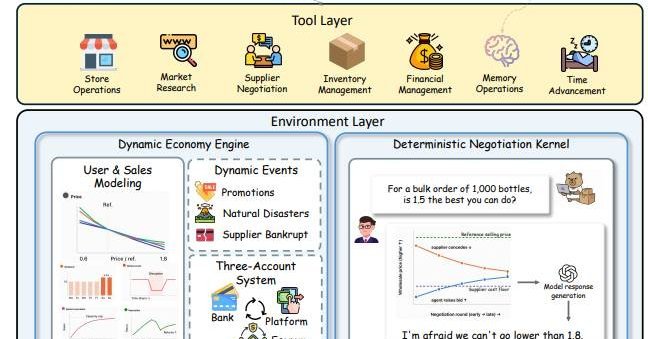
In a benchmark called E-Commerce Bench, 18 AI models ran up to four simulated shops for 365 days, using 18 too…
ITmedia's AI Plus released a 14-page booklet on using Gemini Notebook's (formerly NotebookLM) Studio feature…

Axon stock is down 54% from its 2025 peak and 30% year-to-date, even as the iShares Expanded Tech-Software Sec…

IBM Research's ALTK-Evolve turns each customer-service agent trial into short action rules and injects them in…