
85% of organizations say they want to be agentic within the next three years, but 76% say their current operations and infrastructure cannot support that change, citing a lack of readiness across people, processes, and workflows.
Ema and HFS Research coined the term 'agentic business transformation' (ABT) to describe the enterprise-wide redesign needed—spanning technology stack, workforce structure, and outcome-focused metrics—rather than simply layering AI agents (autonomous systems that can execute tasks and make decisions with limited human input) onto existing operations.
In early deployments across customer service, HR, and sales, AI agents are estimated to accelerate business processes by as much as 30% to 50% and reduce low-value work time by 25% to 40% when deployed at scale, but one Ema enterprise customer tripled measured ROI within two quarters after switching from activity metrics (e.g., cost per query) to outcome metrics (e.g., percentage of contracts reviewed without human escalation).
Ask the AI about this article →
For example, today's edition would include:
AI-summarized, only the topics you pick — one digest a day via Email, Slack, or Discord.
Free · takes 30 seconds · unsubscribe anytimeWhat is AIToday? →
Ask AI anything about this article. Q&As are published on this page for other readers too.
CBTS Technology Solutions LLC launched Forge Agents, a platform that turns a plain-language job description in…

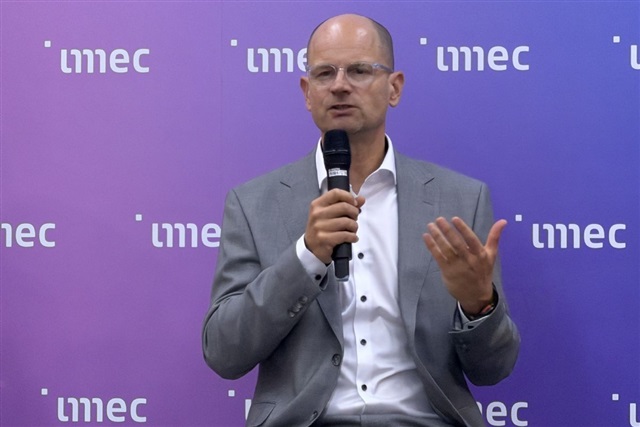
Imec CEO Patrick Vandenameele said at SEMICON Taiwan 2026 that the Belgian research center is broadening its c…
Alphabet's AI Overviews now reach over 2.5 billion monthly users through Google Search, and its ad business ge…
Visual Studio Code 1.135 now includes an experimental 'Rubber Duck' feature that lets developers request a sec…

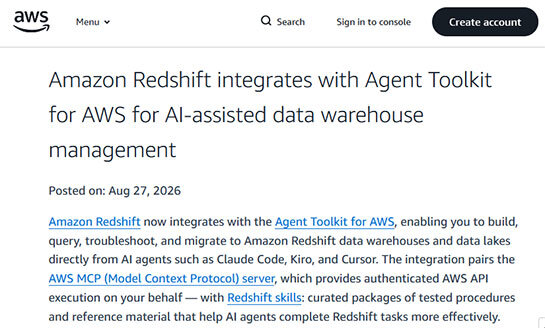
Amazon Web Services (AWS) has integrated its fully managed data warehouse service, Amazon Redshift, with Agent…
Sonos announced a new app update with generative AI features, a new soundbar called the Beam Ultra, and its se…