What happened
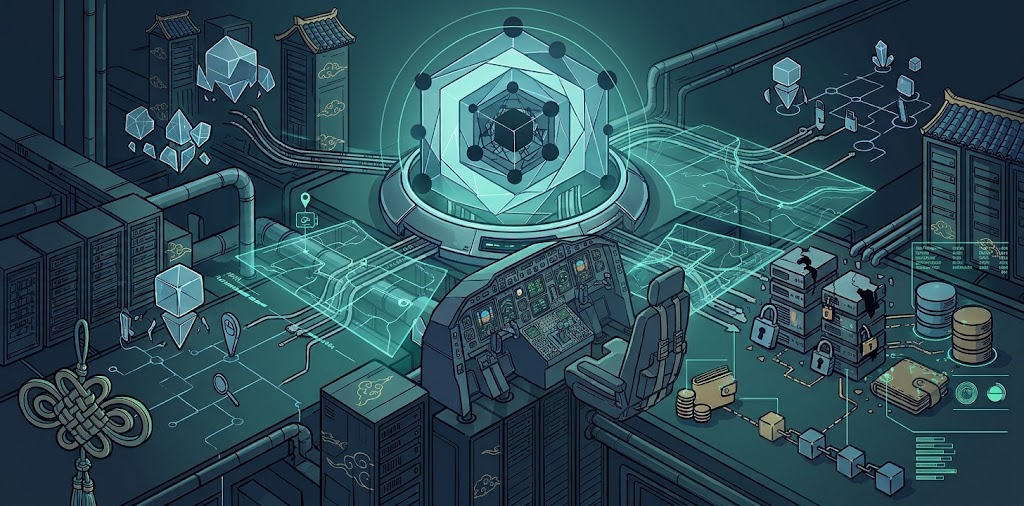
Check Point Research found 1,608 live ARTEX consoles and artifacts from 10 misconfigured ones; one operator's Deepseek Flash agents pulled more than 300 .p12 certificates from 10 signing shops over two weeks for $700–$1500 in tokens.
Why it matters
Agents ran almost fully autonomously with minimal operator prompting, so attackers without deep technical skill can now run broad, financially motivated campaigns at speed — and only three stolen certificates passed validation.
WHO IT HITSSecurity teams defending web applications, iOS app-signing operations, crypto payment backends and gaming account platforms now face high-volume, persistent automated probing rather than occasional manual attacks.
Summaries like this, every morning.
ARTEX was originally released as an open-source penetration-testing platform meant for authorized security work. After the tool was observed in attacks against South Korean banks, its developer made the project closed-source on October 8th, but maintained forks and backups kept it publicly available to threat actors. Following the deletion of the original repository on September 8, the number of newly created ARTEX command-and-control servers spiked in mid-October, coinciding with prominent public reporting about the project.
The operator-console artifacts Check Point Research obtained show how little human input these campaigns require. In the gaming account theft campaign, for example, agents pointed at thirteen credential-server sites recovered more than 190,000 sets of credentials for Honor of Kings alone, of which roughly 3.3% — about 6,000 accounts — tested as still valid. In the crypto campaign, agents did find real vulnerabilities, including an unauthenticated web API that leaked AWS S3 credentials and allowed write access to a bucket serving iOS app landing pages, but the original manifest was later restored by the bucket owners and the attacker's wallet stayed at $0.
The infrastructure data points to relatively unsophisticated hosting choices: 882 of the live servers, or 54%, were hosted in the US, followed by Hong Kong at 295 and China at 103. Because the systems run in default configurations with default tools, the barrier to entry appears low — a factor that may make broad, opportunistic attacks more common for defenders to handle (this last point is an inference from the observed defaults).
Pick your industry and the AI tools you use, and get news related to your work every day.
Free · 30 seconds with Google · unsubscribe anytimeWhat is AIToday? →
Ask AI anything about this article. The AI reads this article, earlier AIToday articles, and Wikipedia, and cites its sources. Q&As are published on this page for other readers too.
Alignable's Eric Groves writes that Meta brought its Muse agent to small businesses in September, while Anthro…

In Verge testing, NYT Cooking's AI assistant rewrote a One-Pot Chicken and Rice With Ginger recipe around the…

At Fal.Con in Europe on Nov

Nous Research fine-tuned Alibaba's Qwen3.8-27B on 53 million tokens to create Arete-27B, which reduced its pro…
In the "Into the Unknown" benchmark, nine AI agents produced 135 submissions on 15 open research tasks from te…
Owen Queen and James Zou re-tested 50 cited LLM claims across 20 models, finding 44% expired, 34% weakened, 16…