What happened
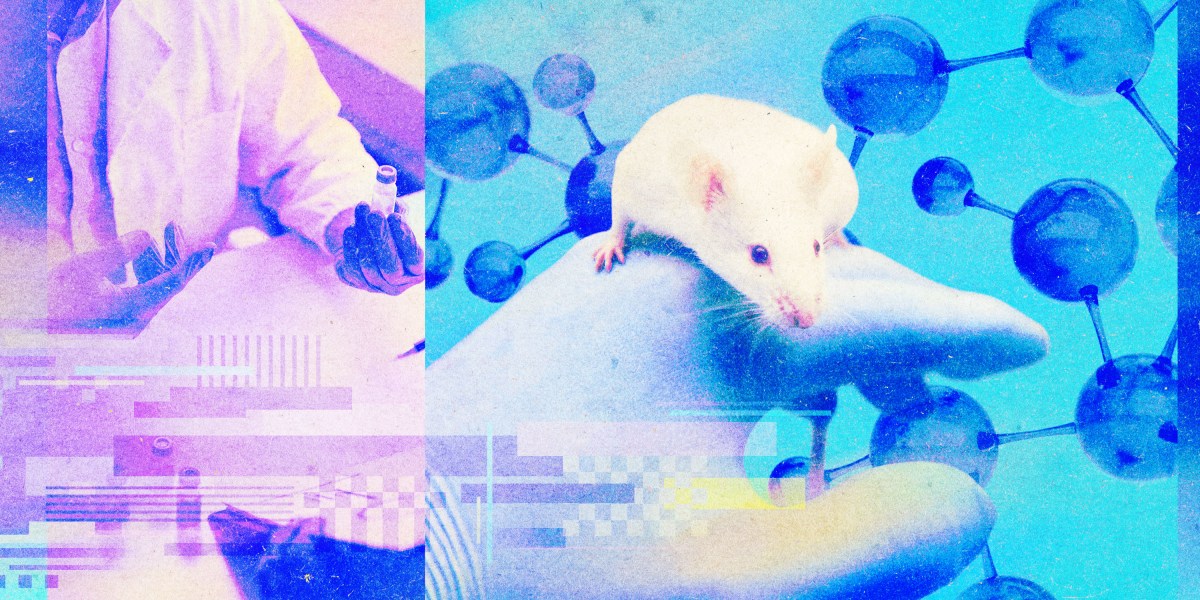
An opinion essay argues that AI agents—reasoning systems given access to tools—represent a better path for scientific discovery than the AlphaFold template of massive datasets and neural networks. Google's AI Co-Scientist, announced in May, demonstrated this by independently reaching the same conclusion about antibiotic resistance that Imperial College London researchers took a decade to derive through wet-lab work.
Why it matters
AlphaFold's success required 53 years of international effort and roughly $21 billion in experimental work to build the Protein Data Bank, conditions rarely repeated elsewhere in science. Most experimental fields face inconsistent results: cell lines drift, chemicals have contaminants, lab conditions vary. AI agents sidestep this bottleneck by mimicking how scientists actually work—combining multiple tools, reasoning under uncertainty, and iterating as evidence arrives—rather than requiring perfect, standardized datasets.
What to watch
AI agents still face real barriers: they hallucinate, their judgment is inconsistent, and they have memory and input constraints limiting autonomous operation. If those technical barriers fall away, agents could reshape science by automatically logging every experimental step (solving the reproducibility crisis), preserving institutional knowledge in standardized repositories, and dramatically accelerating the pace at which researchers can test ideas.
Summaries like this, in your inbox every morning.
The essay pivots away from a seductive narrative: that AI, embodied by AlphaFold's 2024 Nobel Prize, will simply accelerate all of science at digital speed. AlphaFold's achievement was real and rare, but it rested on an exceptional foundation—the Protein Data Bank, built through 53 years of international cooperation and roughly $21 billion in experimental work. The author argues this is not a replicable template. Most of experimental science does not operate under such controlled, standardized conditions. Cell lines drift, chemicals contain trace impurities, lab humidity varies. Assembling datasets consistent enough, accurate enough, precise enough, and scalable enough to train modern neural networks in biology or chemistry would require new measurement approaches that do not yet exist and will not be ready for decades.
Instead, the essay advances AI agents as the transformative tool: systems that combine reasoning with access to multiple tools (digital or physical) and can iterate under uncertainty, just as working scientists do. Unlike AlphaFold, which applies brute force to a narrow, well-defined problem, agents are generalists. They do not invent a new way to do science; they digitally model how humans actually do it—combining docking calculations, running binding assays, weighing the strengths and failures of each method, and revising conclusions as evidence arrives. Google's AI Co-Scientist, announced in May, reached a correct conclusion about antibiotic resistance in hours that took Imperial College researchers a decade of wet-lab work to derive independently.
Pick your industry and the AI tools you use, and get news related to your work every day.
Free · 30 seconds with Google · unsubscribe anytimeWhat is AIToday? →
Ask AI anything about this article. The AI reads this article, earlier AIToday articles, and Wikipedia, and cites its sources. Q&As are published on this page for other readers too.
Chunghwa Telecom president Rong-shy Lin said the shift from conversational AI to autonomous AI agents is resha…
Apple and Meta said they would jointly release a new open-weight AI model designed to run on high-end Macs, ai…
A writer and entrepreneur opened his daily to-do list and found 156 items, and concluded that an AI assistant…

A Zenn contributor sorted AI use into three modes — AI as an assistant, AI running alongside people, and AI th…

A non-engineer operator says one person ships four smartphone apps on Google Play, three on the App Store, wit…
The walkthrough points the CLI at a local mock via the ANTHROPIC_BASE_URL environment variable

