
What happened
Japan's Internal Affairs and Communications Ministry and the Ministry of Economy, Trade and Industry published the AI事業者ガイドライン(第1.2版) on 2026年3月31日, adding AI agent definitions and risks like unintended orders, file deletion, and external attacks.
Why it matters
The guidelines are not legally binding, but trading partners and audit firms reference them when checking a company's AI management setup, so firms may be asked to show agent-level controls.
Summaries like this, every morning.
The guidelines arrive as agent-building tools have become common in ordinary departments. Microsoft Copilot Studio and Dify let business-side staff create agents, which makes it hard for IT to know who built an agent, what it connects to, and who maintains it. When a creator transfers or leaves, an agent with permissions can remain without an owner. That gap is the backdrop for the guidelines' focus on giving each agent its own ID and a named responsible person.
Alongside Japan's guidelines, other frameworks are moving in the same direction: Singapore's IMDA published Model AI Governance Framework for Agentic AI on 2026年1月22日, and the EU agreed in May 2026 to delay applying high-risk AI obligations. International standards and vendor tooling include ISO/IEC 42001, NIST AI RMF, and agent management tools from Microsoft, Amazon, and Google. For Japanese companies, the practical link is that public guidelines can serve as the stated basis when internal rules are reviewed by management or auditors.
Pick your industry and the AI tools you use, and get news related to your work every day.
Free · 30 seconds with Google · unsubscribe anytimeWhat is AIToday? →
Ask AI anything about this article. The AI reads this article, earlier AIToday articles, and Wikipedia, and cites its sources. Q&As are published on this page for other readers too.
At Expedition 2026, Snowflake unveiled a Business Ontology framework that gives organizations shared approved…

OpenAI hired former US Army secretary Dan Driscoll for a new national security role, two months after he resig…

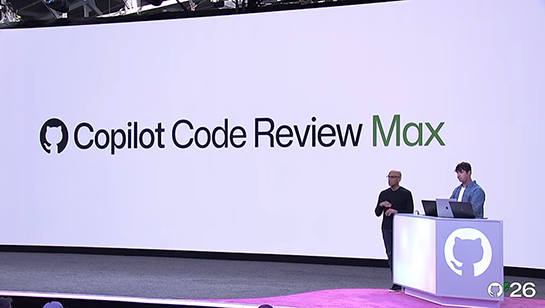
GitHub announced Copilot Code Review Max at GitHub Universe 2026, adding a new 'Max' effort level alongside 'L…
A San Francisco federal judge blocked Perplexity's Comet browser from ordering on Amazon; on Aug

A preprint led by Renmin University of China describes CoworkOS, an agent harness its authors call "highly com…

Pew Research found 8 percent of US adults used AI chatbots for midterm candidate and policy information, while…