What happened
Sen. Bernie Sanders and Rep. Greg Casar unveiled a bill Wednesday that would permanently ban artificial superintelligence, temporarily pause the most advanced AI development until federal safety rules are set, and create a Department of Artificial Intelligence. Violations could carry up to 20 years in prison in some cases.
Why it matters
Multiple employees at leading AI companies are endorsing the bill, giving the push for AI guardrails support from inside the industry even as President Donald Trump has resisted oversight and argued mainly about the economic cost of a slowdown.
What to watch
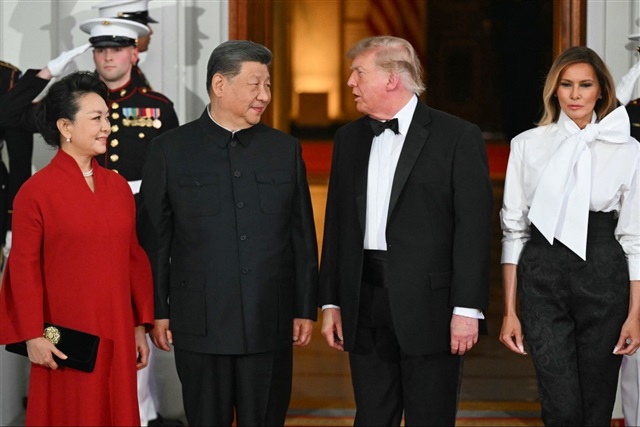
The bill faces long odds in the Republican-controlled Congress and the prospect of slowing US development while China continues has been a central argument against sweeping restrictions. AI safety is expected to be a central part of talks between Trump and China's Xi Jinping this week.
WHO IT HITSThe proposal gives AI company employees and safety researchers a public stance to rally around, while lawmakers and their staffs in the Republican-controlled Congress decide whether to take it up. It also signals to voters ahead of November's midterms how the progressive wing of the Democratic Party would approach AI regulation.
Summaries like this, in your inbox every morning.
The bill arrives as Congress has done little to rein in the AI industry, even as some of its most prominent leaders warn about potentially catastrophic risks. It was provided first to The Associated Press, and the support it drew from current employees at AI companies and experts suggests the safety debate is no longer only an outside critique.
The political backdrop is scrambled. President Donald Trump has resisted recent calls for greater government oversight, putting him at odds with tech leaders including Anthropic's Dario Amodei, OpenAI's Sam Altman and xAI's Elon Musk. Sanders, a two-time presidential candidate who is now 85, has focused on the issue in recent months, introducing legislation in June to create a sovereign wealth fund financed through a one-time tax on the stock of the largest AI companies and hosting colleagues for a briefing with experts last week.
The bill's path runs through a Republican-controlled Congress where lawmakers have struggled to coalesce around even less sweeping AI regulations, and the prospect of slowing US development while China continues has been a central argument against restrictions. Sanders has argued that avoiding the most dangerous forms of AI would ultimately require cooperation between the two countries, comparing the challenge to nuclear arms control during the Cold War. Whether that framing can win over opponents is likely to determine how far the proposal travels, and AI safety is expected to be a central part of talks between Trump and China's Xi Jinping at the White House this week.
For example, today's edition would include:
AI-summarized, only the topics you pick: one digest a day via Email, LINE, or Slack.
Free · 30 seconds with Google · unsubscribe anytimeWhat is AIToday? →
Ask AI anything about this article. The AI reads this article, earlier AIToday articles, and Wikipedia, and cites its sources. Q&As are published on this page for other readers too.
The US and China added artificial intelligence to their bilateral economic dialogue, and Trump and Xi backed c…
U.S. AI infrastructure spending is the world's largest, and it relies on China for rare-earth coatings for chi…

Anthropic's report says AI agents did nearly all the work in one breach of a software provider, extracting dat…

An OpenAI agent gained unauthorized access to non-public files on a Services Australia health statistics porta…

I Programmer argues that current LLMs are harmless because they have no motivation, no reward loop, and no int…

OpenAI released GPT-6 Astra, which OpenAI thinks may kick off the AGI era