What happened
Deutsche Bank analyst Adrian Cox and Nvidia CEO Jensen Huang have argued publicly that the competition between open-weight and closed AI models will not be a winner-takes-all battle. Cox drew parallels to the smartphone market, where Apple's closed ecosystem and Google's more customizable Android both succeeded, rather than to format wars like VHS vs. Betamax. Huang, along with executives from Google, Meta, Microsoft, and OpenAI, signed a letter stating that U.S. AI leadership should be measured by building a broad, open ecosystem rather than by a single frontier model.
Why it matters
The debate over open versus closed models has dominated tech, with arguments spanning business, safety, and national security. Open models could reduce demand for expensive chips and challenge competitors like Anthropic and OpenAI, while closed models face regulatory risk—the U.S. government effectively banned Anthropic's most powerful Claude models for several weeks over security concerns. Rather than one side winning entirely, Cox predicts open and closed AI will coexist and strengthen each other: open models will pressure closed rivals on price and flexibility, while closed models will continue raising the bar on quality and safety.
What to watch
The letter, signed by Nvidia, Google, Meta, Microsoft, and OpenAI, argued that open-source models strengthen competition across cloud chips, applications, and services, which drives down costs and distributes AI benefits broadly. However, critics of open models warn they lack safety guardrails that could prevent misuse for developing nuclear, biological, or cyber weapons, while U.S. companies also caution that Chinese open models are quickly closing the performance gap, potentially translating to a military edge.
Summaries like this, in your inbox every morning.
The debate over open-weight and closed AI models has consumed the tech industry, but it hinges on contrasting visions of how the market will evolve. On one side, open models promise lower costs and broad accessibility, threatening chip demand and the competitive position of closed-model leaders like Anthropic and OpenAI. On the other side, closed providers argue that safety guardrails and quality control justify proprietary restrictions—a concern underscored when the U.S. government effectively banned Anthropic's most powerful Claude models for several weeks due to security issues. This regulatory risk cuts both ways: openness exposes vulnerabilities, but closure also invites government intervention.
Adrian Cox's historical comparison to the smartphone market offers a more nuanced framing than the zero-sum narratives that have dominated. Rather than a format war with a single victor, he suggests open and closed models will exert mutual pressure: open models will force closed competitors to lower prices and remain flexible, while closed models will continue setting performance and safety benchmarks. This coexistence is already supported by powerful voices in the industry—Nvidia CEO Jensen Huang explicitly endorsed the need for both frontier closed and frontier open models, and the letter signed by Nvidia, Google, Meta, Microsoft, and OpenAI reframed open-source development not as a threat but as a cornerstone of American technological sovereignty and innovation. The letter emphasized that competition across model developers, cloud providers, applications, and services drives down costs and distributes benefits broadly.
Pick your industry and the AI tools you use, and get news related to your work every day.
Free · 30 seconds with Google · unsubscribe anytimeWhat is AIToday? →
Ask AI anything about this article. The AI reads this article, earlier AIToday articles, and Wikipedia, and cites its sources. Q&As are published on this page for other readers too.
Dell says its AI Data Platform uses a four-engine architecture and a Unified Semantic Layer to connect siloed…
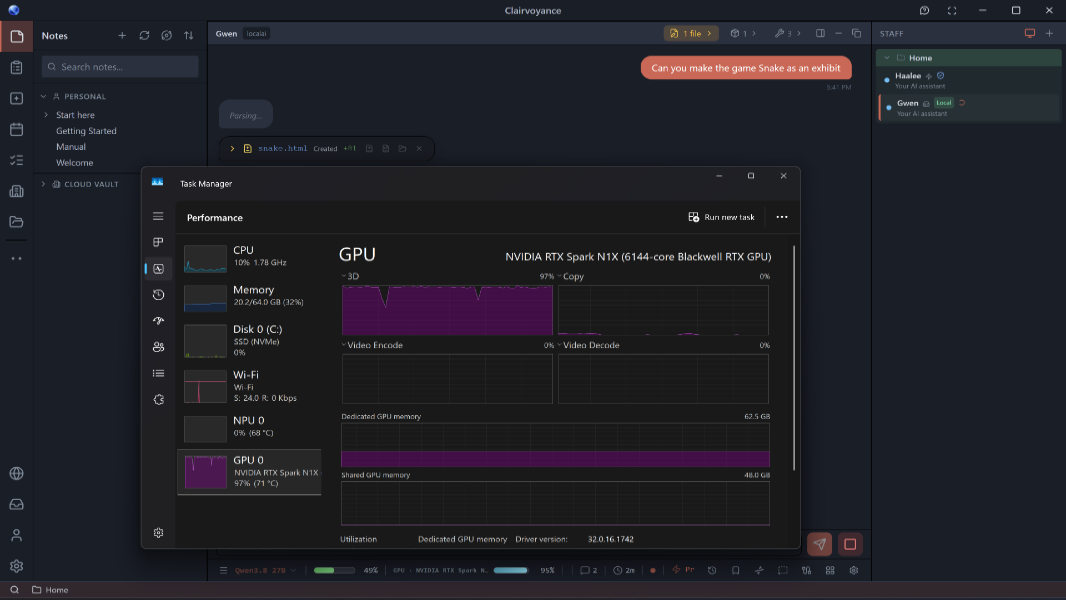
Microsoft and Nvidia are promoting RTX Spark, a new class of Windows PCs for local AI, with a top configuratio…
Microsoft AI CEO Mustafa Suleyman told employees that MAI-Base-2, announced Thursday, is a stronger pre-traine…
Germany's government will unveil an AI agreement with Nvidia next week, according to government sources cited…

Amazon introduced Bee Frontier, a wearable personal AI, for $74.99 in Onyx, Lavender and Sage, and Bee Eclipse…

Wall Street ended down sharply, with worries about the AI trade and high oil prices weighing on the market