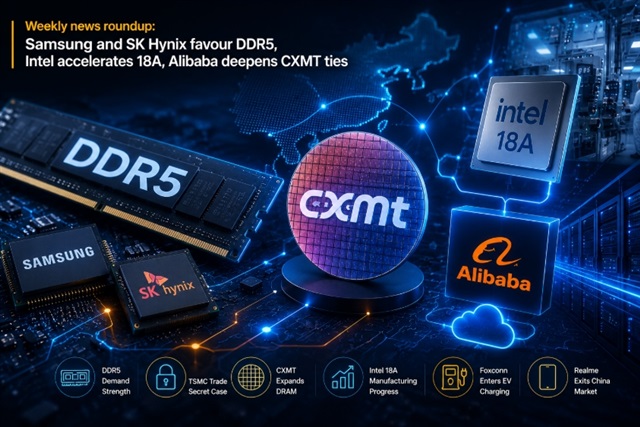
What happened
Samsung Electronics and SK Hynix are moving flexible DRAM capacity toward server DDR5 production while maintaining committed HBM output, as 64GB DDR5 RDIMMs now generate more revenue per wafer and conventional DRAM margins exceeded HBM by over 15% in 1Q26. Meritz Securities estimates suppliers met only 75–80% of demand in 2H26, potentially falling to the 60% range in 2027.
Why it matters
The shift reflects a fundamental repricing in memory markets—DDR5 is becoming more profitable than the higher-margin HBM (high-bandwidth memory) that powers AI servers. This reallocation could tighten AI infrastructure supply at a moment when cloud providers and chipmakers are racing to expand capacity, since the two largest non-Chinese DRAM makers are now partly redirecting output away from HBM.
What to watch
Meritz Securities forecasts that suppliers will meet only 60% of DRAM demand in 2027, signaling potential continued tightness. Samsung also awarded KRW49.85 billion and KRW8.6 billion in DRAM tester contracts to Exicon and Neosem respectively, indicating capital deployment in test capacity to support higher volumes.
Summaries like this, in your inbox every morning.
Memory demand outpaced supply throughout 2026, with DRAM and HBM both commanding premium margins as cloud providers and AI chipmakers compete for capacity. The fact that DDR5 servers now return more per-wafer revenue than HBM—historically the highest-margin memory product—signals a structural shift in datacenter architecture demand. Rather than a shortage of memory appetite, the reallocation reflects where customers are buying: cloud platforms prioritizing conventional server DRAM over the specialist bandwidth memory that powers GPU clusters. Samsung and SK Hynix's decision to flex capacity toward DDR5 while "maintaining committed HBM output" suggests they are optimizing the mix rather than abandoning HBM entirely, but the margin signal is clear. If suppliers can only satisfy 60% of total demand in 2027, the question becomes whether that shortfall concentrates in DDR5, HBM, or both—and whether customers with longer lead times or stronger negotiating power (like hyperscalers with long-term contracts) secure their portion first.
For example, today's edition would include:
AI-summarized, only the topics you pick — one digest a day via Email, Slack, or Discord.
Free · 30 seconds with Google · unsubscribe anytimeWhat is AIToday? →
Ask AI anything about this article. Q&As are published on this page for other readers too.
This comparison of Arm Holdings and SK Hynix concludes SK Hynix is the better stock to buy
Taiwan's listed semiconductor equipment, components, and solutions suppliers are growing at nearly twice the p…
ExKey laid out three barriers for smaller firms adopting AI: trouble judging which tasks to AI-ify, hard AI hi…
Abeam Consulting and Notion are promoting an effort to shift companies to AI-driven operations and organizatio…

Generative Partners began offering "AX BPO" in September 2026, a BPO service that handles exceptions, visual c…

Stella Holdings began offering AI Boost in September 2026 to support AI adoption and DX at small and midsize b…