What happened
CesiumAstro closed a $730 million Series D led by Janus Henderson at a valuation exceeding $4.5 billion, and announced Synchronicity, a 737-satellite AI-enabled communications constellation.
Why it matters
The funding gives CesiumAstro capital to build and operate its own integrated satellite network rather than only supplying space communications technology, a shift the company said would let it deploy capabilities in space that evolve with changing mission requirements.
WHO IT HITSDefense and government communications teams that rely on satellite connectivity, as well as commercial operators needing flexible multi-band coverage, are the audiences CesiumAstro's expanded manufacturing and constellation plans appear aimed at.
Summaries like this, every morning.
CesiumAstro's move from supplier to network operator rests on a technology stack it has assembled largely in-house, spanning custom semiconductors, active phased-array antennas, software-defined payloads, processors, spacecraft, mission software and communications terminals. That vertical integration, as founder and CEO Shey Sabripour described it, is the basis for designing silicon, payload, spacecraft and ground terminals as one system rather than as separate parts. The company has also filled gaps through three acquisitions completed over the preceding 12 months: Jariet Technologies brought millimeter-wave radio-frequency system-on-chip technology used in satellite communications, electronic warfare and radar; 1Aardvark strengthened mission software, algorithms and systems engineering for defense applications; and Vidrovr added real-time multimodal signal analysis supporting automated satellite operations, radio-frequency optimization and intelligent edge computing.
The Synchronicity plan follows the successful launch of CesiumAstro's first satellite, Element-1, in October 2026. Element-1 began on-orbit operations after launch and demonstrated the company's communications payloads, active phased-array technology, onboard computing systems and spacecraft engineering. It is the first deployment in an eight-spacecraft Element program, with seven additional launches secured for the next phase. That program is intended to validate technologies for more advanced communications, sensing and autonomous space operations, which the company can then draw on for the larger constellation.
Alongside the satellite work, CesiumAstro announced a $500 million investment over five years to expand its Austin-area headquarters and manufacturing infrastructure, including the acquisition of approximately 270,000 square feet of advanced manufacturing space for electronics production, spacecraft integration, engineering and testing. The company expects the investment to create 550 jobs and expand its Austin-area workforce to more than 1,000 employees by 2030. It is also investing in engineering, manufacturing and operational capabilities across Colorado, California, Alabama, Florida and the Washington, D.C. region, with international operations in the United Kingdom, Germany, Switzerland, Taiwan, Singapore and Japan. Janus Henderson portfolio manager Aaron Schaechterle said the investment was originated through the Janus Henderson Ascent platform, created to provide private market capital to companies and support them on the journey from private to public markets.
Pick your industry and the AI tools you use, and get news related to your work every day.
Free · 30 seconds with Google · unsubscribe anytimeWhat is AIToday? →
Ask AI anything about this article. The AI reads this article, earlier AIToday articles, and Wikipedia, and cites its sources. Q&As are published on this page for other readers too.
UBS strategist Matthew Carter said investors should spread AI exposure beyond a few tech giants, and UBS raise…

A stock screen highlighted Taiwan Semiconductor Manufacturing and Tokyo Electron among 3 AI infrastructure sha…
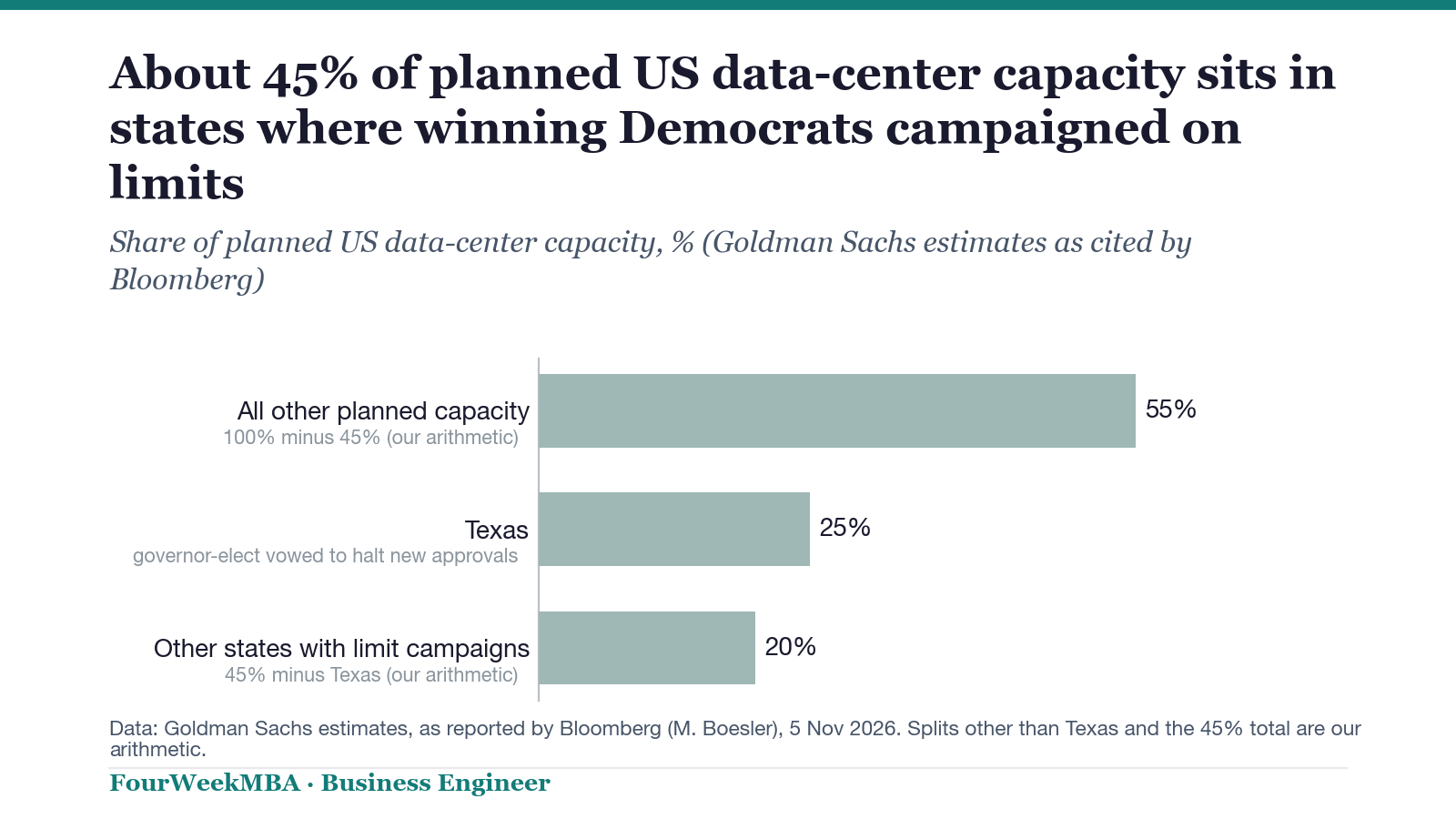
Deutsche Bank economist Brett Ryan told Bloomberg that data-center moratoriums could prevent the AI buildout f…
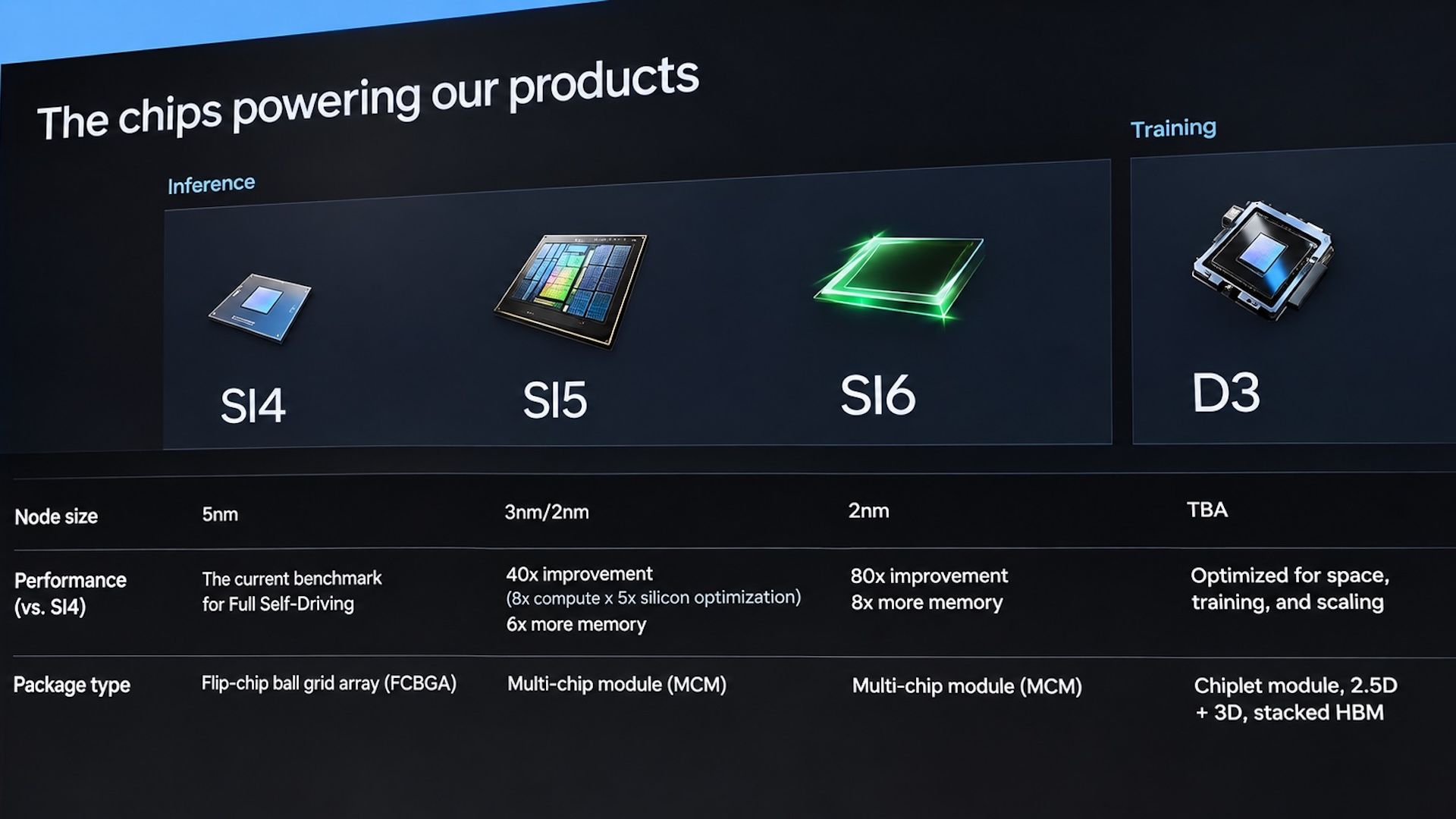
Tesla unveiled a chip roadmap under 'SI' (Super Intelligence) branding, saying its SI6 inference accelerator w…
Mastercard joined a $15m Series A round for firmly, an AI shopping agent firm, becoming a payments partner as…

Isomorphic Labs president Max Jaderberg said at Bloomberg Tech in London on Nov