What happened
In October 2025, Expedia, Booking.com, and TripAdvisor launched AI-powered integrations inside ChatGPT using the Model Context Protocol (MCP)—a shared infrastructure layer that standardizes how AI agents connect to external data and systems. Anthropic open-sourced MCP in November 2024, and by late 2025 support had landed across most major AI platforms.
Why it matters
The protocol reduces integration complexity from an N×M problem (custom code for every pairing) to N+M (one server, one client). However, current deployments still hand off to external platforms for payment processing and booking confirmation—MCP currently delivers discovery and comparison, not end-to-end transactions. For travel data providers, the shift means developers building AI agents (not end travelers) are now the primary customer, fundamentally changing how data businesses should position themselves.
What to watch
Data quality and format matter more in an AI-native world. Anthropic research showed naive implementations can consume 150,000 tokens for tasks better architecture handles in 2,000 tokens—a 98% reduction in cost and latency. Data providers who deliver structured, LLM-ready context (not raw data dumps) will be easier and cheaper to integrate, and that technical advantage will become a sales argument.
Summaries like this, in your inbox every morning.
The October 2025 ChatGPT integrations mark a tangible shift in how travel data and AI interfaces connect, but they also reveal the limits of current deployment. Expedia, Booking.com, and TripAdvisor launching AI-powered search inside ChatGPT demonstrated that MCP production use is real; however, each integration still requires a handoff to external platforms once real money or contractual commitment enters the picture. The technical reasons—PCI compliance for payments, legal agreements for booking confirmation, liability for errors—are structural, not accidental. This boundary matters because it clarifies what MCP actually solves: the discovery and recommendation layer, not the transactional layer. The authoritative data layer (schedules, availability, pricing) remains foundational.
Underlying this shift is a cost problem that will shape competitive positioning. Anthropic's research showing that naive implementations consume 150,000 tokens where better-designed systems consume 2,000 tokens reveals a 98% reduction in cost and latency available to providers who structure their data for how AI agents actually consume it. A global flight database loaded in full is expensive and unnecessary; an agent planning a multi-city trip needs a scoped subset with intelligent defaults and reasoning-friendly metadata. This distinction—between raw API exposure and LLM-ready context—is transitioning from a technical preference to a sales argument.
The commercial relationship is also reshaping. In the October 2025 demonstrations and in the broader MCP architecture, the developers building specialized agents (the Flight Agent, the accommodation agent, the itinerary synthesizer) are the direct users of data APIs. The end traveler is several steps removed. This inverts decades of travel distribution logic, where online travel agencies captured the consumer relationship and data providers supplied the back end. MCP's core value is disintermediation—airlines can expose APIs directly to agents, new entrants can compete on data quality rather than distribution muscle—but the outcome depends on who controls the agent layer. If OTAs dominate the consumer-facing interface, the old dynamic could reassert itself; if not, data quality and agent-ready formatting become the primary moat.
Pick your industry and the AI tools you use, and get news related to your work every day.
Free · 30 seconds with Google · unsubscribe anytimeWhat is AIToday? →
Ask AI anything about this article. The AI reads this article, earlier AIToday articles, and Wikipedia, and cites its sources. Q&As are published on this page for other readers too.
Dell says its AI Data Platform uses a four-engine architecture and a Unified Semantic Layer to connect siloed…
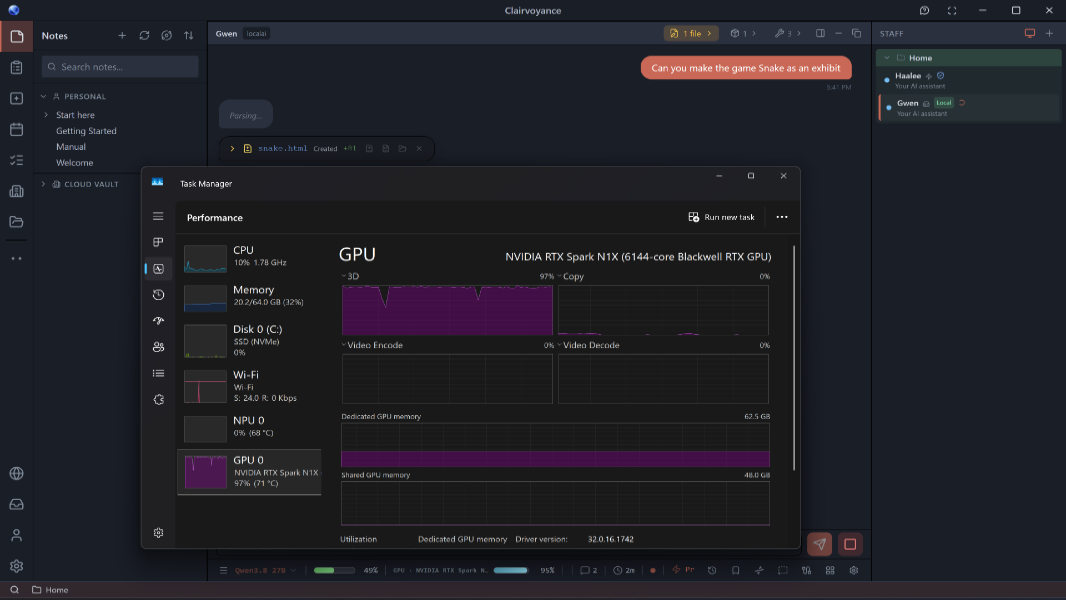
Microsoft and Nvidia are promoting RTX Spark, a new class of Windows PCs for local AI, with a top configuratio…
Microsoft AI CEO Mustafa Suleyman told employees that MAI-Base-2, announced Thursday, is a stronger pre-traine…

Germany's government will unveil an AI agreement with Nvidia next week, according to government sources cited…

Amazon introduced Bee Frontier, a wearable personal AI, for $74.99 in Onyx, Lavender and Sage, and Bee Eclipse…

Wall Street ended down sharply, with worries about the AI trade and high oil prices weighing on the market