What happened
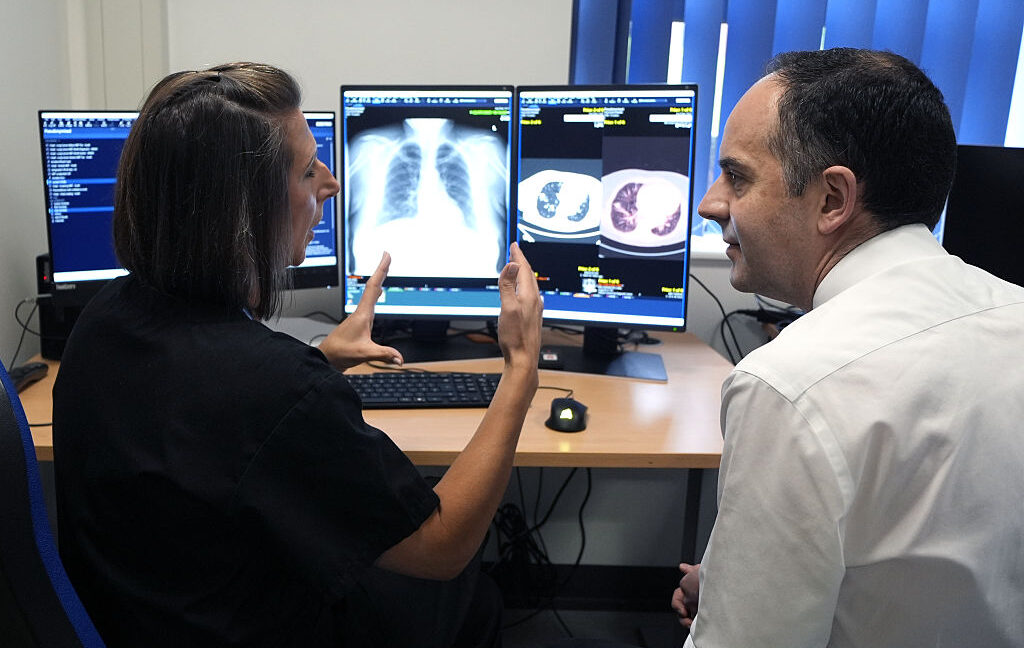
In 2016, AI pioneer Geoffrey Hinton predicted computers would replace radiologists within five years. The prediction hasn't come true; the field's ranks are growing, with practitioners expected to increase by 26% or more over the next three decades.
Why it matters
As of early 2026, about three-quarters of the 1,400 AI-enabled medical devices cleared by the FDA were for radiology. AI can match or exceed human performance on some tasks, but the big question is how to combine technical precision with human experience to improve accuracy for patients.
What to watch
Radiologists are learning to collaborate with AI, balancing automation bias and complacency. One study found even experienced radiologists saw drops in mammography accuracy under incorrect AI predictions, and over a quarter of physicians in a 2026 AMA survey reported no AI training.
Summaries like this, in your inbox every morning.
Geoffrey Hinton's 2016 prediction that computers would replace radiologists within five years has not come to pass, and the field is actually growing, with practitioner numbers expected to rise by 26% or more over the next three decades. However, his prescience about AI's role is evident: radiology is now the medical specialty with the most AI-enabled devices, with about three-quarters of the 1,400 FDA-cleared AI devices focused on it.
The core challenge is not whether AI can outperform humans on average—it can on some tasks—but how to integrate machine precision with human judgment. Radiologists must evaluate each AI decision, but neural networks are 'black box' systems that don't reveal their reasoning, making it harder to know when to overrule them. The article highlights the risks of automation bias (over-trusting AI) and automation complacency (accepting false negatives), and notes that even experienced radiologists can see drops in accuracy when influenced by incorrect AI predictions.
Experts like Nina Kottler suggest monitoring radiologist-AI agreement rates and providing training so physicians understand when AI might be wrong. Yet a 2026 AMA survey shows training is lacking. As Curtis Langlotz puts it, radiologists who use AI will replace those who don't—but the optimal human-machine team is still a work in progress.
Pick your industry and the AI tools you use, and get news related to your work every day.
Free · 30 seconds with Google · unsubscribe anytimeWhat is AIToday? →
Ask AI anything about this article. The AI reads this article, earlier AIToday articles, and Wikipedia, and cites its sources. Q&As are published on this page for other readers too.
A Zenn contributor sorted AI use into three modes — AI as an assistant, AI running alongside people, and AI th…

A developer released agent-guardrails, a one-script Python standard-library plugin that guards Bash, Write, Ed…
A Qiita article compared automated red-teaming methods for LLM apps — GCG, PAIR, and TAP — using mock implemen…

In a webinar hosted by French Mathematical Society president Isabelle Gallagher, Fields Medal winner Hugo Dumi…
Anthropic said on October 15 it has started giving METR's six staff company devices, office space and access t…
NVIDIA published a blog post titled "AI Security Is an Engineering Problem - How to Solve It at Every Layer of…