What happened
Meta Platforms released Muse Glimmer, a 30-billion-parameter AI model with open weights, on Aug. 10. As of Aug. 25, it had not released the weights for its more powerful flagship model, Muse Spark 1.2.
Why it matters
Unlike OpenAI and Anthropic, Meta doesn't rely on subscriptions or APIs to monetize AI models. Instead, it uses AI to improve ads and recommendations on Facebook and Instagram, which already showed results: in Q2, AI improvements boosted Facebook ad clicks by 8.3% and ad conversions by 15.7%.
What to watch
Meta's capital spending for 2026 is now expected to be $130 billion to $145 billion, up from the initial $115 billion to $135 billion. The company also has $81.6 billion in noncancelable commitments due in 2027 and another $68 billion in data center leases starting in 2027-2028.
Summaries like this, in your inbox every morning.
Meta's decision to open-source a less powerful model while keeping its flagship closed suggests a careful balance between transparency and competitive advantage. The company's core monetization is not through selling AI models, but through enhancing its ad and recommendation systems on Facebook and Instagram. Early results are encouraging, with AI improvements leading to an 8.3% increase in ad clicks and a 15.7% rise in ad conversions in Q2. This strategy could justify heavy spending on AI infrastructure, but the company's capital expenditures are rising sharply, with 2026 expectations now at $130 billion to $145 billion. Depreciation is also climbing, up 40% year over year, which could pressure future margins. Meta's valuation appears reasonable at around 16.8 times expected 2027 earnings, but the company faces the challenge of ensuring that AI investments continue to lift revenue per user, especially in lower-monetization markets like Asia-Pacific, where much of its ad growth is coming from. If spending remains high without corresponding revenue gains, the stock may struggle.
Pick your industry and the AI tools you use, and get news related to your work every day.
Free · 30 seconds with Google · unsubscribe anytimeWhat is AIToday? →
Ask AI anything about this article. The AI reads this article, earlier AIToday articles, and Wikipedia, and cites its sources. Q&As are published on this page for other readers too.
Hewlett Packard Enterprise stock is down 5% at $55.87
The Motley Fool argues Amazon is the AI company of the two, since AWS was just 21% of first-half 2026 revenue…

Google Deepmind's Gemini 4 Argon scored 97.5 percent on ARC-AGI-3 at a cost of $4,800, second only to GPT-6 As…
Cammarata reinterprets InceptionV1's cat-car neuron as a V-shape detector, not two unrelated concepts

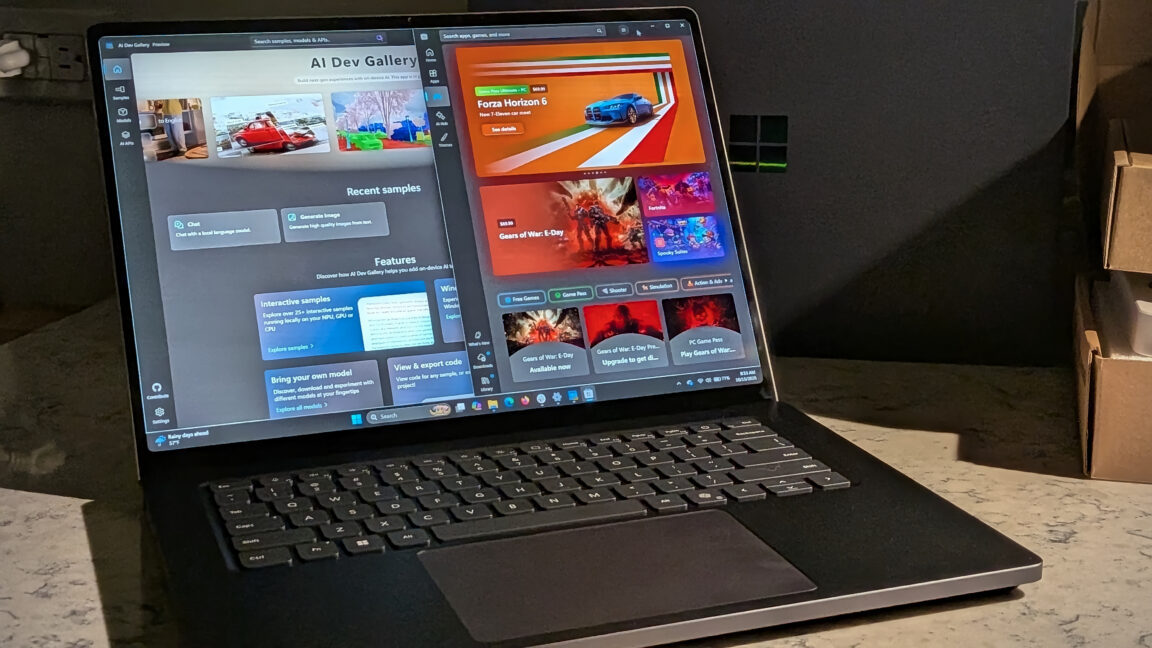
Microsoft's Surface Laptop Ultra, using Nvidia's RTX Spark platform, starts at $2,599 (up to $5,899)
Meta's new commercial terms, effective October 30th, appear to let it crawl and train AI on content from websi…