Anthropic announced it will watermark text generated by its Claude AI models to meet the European Union's AI Act Transparency Code requirements, which became effective on August 2.
The watermark will be embedded at the model level and travel with copied text, appearing across all Claude products.
The move is part of an industry-wide shift toward labeling AI-generated content in response to regulatory requirements and user concerns.
What happened
Anthropic confirmed it will add watermarks to text generated by Claude and other models to comply with the EU AI Act's Transparency Code, which took effect August 2. All models released after that date will automatically include the watermarking technology, and the company plans to extend support to older models as well.
Why it matters
The EU regulation requires AI companies to mark AI-generated or edited content so other systems can identify it. Anthropic's move reflects broader industry pressure to label AI output, following similar commitments from Google, Meta, Microsoft, OpenAI, and others to comply with the EU code.
What to watch
The watermark will travel with text when users copy and paste it and may persist through some editing, though it remains unclear how much editing would be needed to remove it. The watermarking will apply across Claude's products—the API, Claude, Claude Code, Claude Cowork, and Claude Tag.
Anthropic announced that it will watermark text generated by its AI models, including Claude, to satisfy the EU AI Act's Transparency Code, which took effect on August 2. The requirement mandates that AI companies mark AI-generated or edited content in a way that enables other systems to identify it.
The company confirmed the watermarking in an updated support page, stating that all models released after August 2 will automatically include technology to watermark both computer-generated text and files. For files, Anthropic is using the C2PA open standard. The company will also extend watermarking support to older models beyond those released after the regulatory deadline.
According to the support page, "Because the watermark is part of the text, it will travel with the text when it's copied and pasted elsewhere, and may persist through some editing. Watermarking will be applied at the model level, which means it will be present no matter which Claude product or surface the text comes from." The watermark will apply across multiple Claude products: the Claude platform API, Claude, Claude Code, Claude Cowork, and Claude Tag. Anthropic has not yet clarified how much editing would be required to remove the watermark.
Anthropoc's move is part of a broader industry shift toward watermarking AI-generated content. Last week, AI music platform Suno announced it will mark tracks created on its platform after facing multiple legal challenges. Last month, newsletter service Substack partnered with Pangram to flag AI-generated content; Substack's CEO Chris Best highlighted the term "Claudefishing"—used to describe people generating content with AI and passing it off as human-written. Beyond Anthropic, companies including Black Forest Labs, Google, Meta, Microsoft, OpenAI, and Synthesia have committed to adhering to the EU's transparency code.
Anthropic's watermarking commitment responds directly to the EU AI Act's Transparency Code, which took effect on August 2 and mandates that AI-generated or edited content be marked in a way other systems can identify. The company's approach—embedding the watermark at the model level so it persists across products and survives copying—signals an attempt to create a durable compliance mechanism.
The broader context shows this is not an isolated move. Other major AI developers—Google, Meta, Microsoft, OpenAI, and Black Forest Labs—have made similar commitments to the EU code. Outside the regulatory sphere, platforms like Suno (AI music) and Substack (newsletter service) have begun adding watermarks or flagging labels, citing backlash from users and legal pressures. Anthropic's decision to extend watermarking to older models, not just new releases, suggests the company sees compliance as essential across its product line.
AI-summarized, only the topics you pick — one digest a day via Email, Slack, or Discord.
Free · takes 30 seconds · unsubscribe anytime
Ask AI anything about this article. Q&As are published on this page for other readers too.
QumulusAI announced a GPU-as-a-Service agreement with DRW, a global trading firm, to supply a dedicated NVIDIA…
OpenAI introduced Premium Seats for ChatGPT Business, priced at $125 per user per month ($100 with annual bill…
Anthropic pledged to embed machine-readable watermarks in Claude-generated text and digitally signed provenanc…
OpenAI announced that its unreleased model Astra had produced solutions to 10 long-standing mathematics proble…

Tech companies are raising unprecedented sums for AI infrastructure—$194 billion so far in 2026 by just four f…
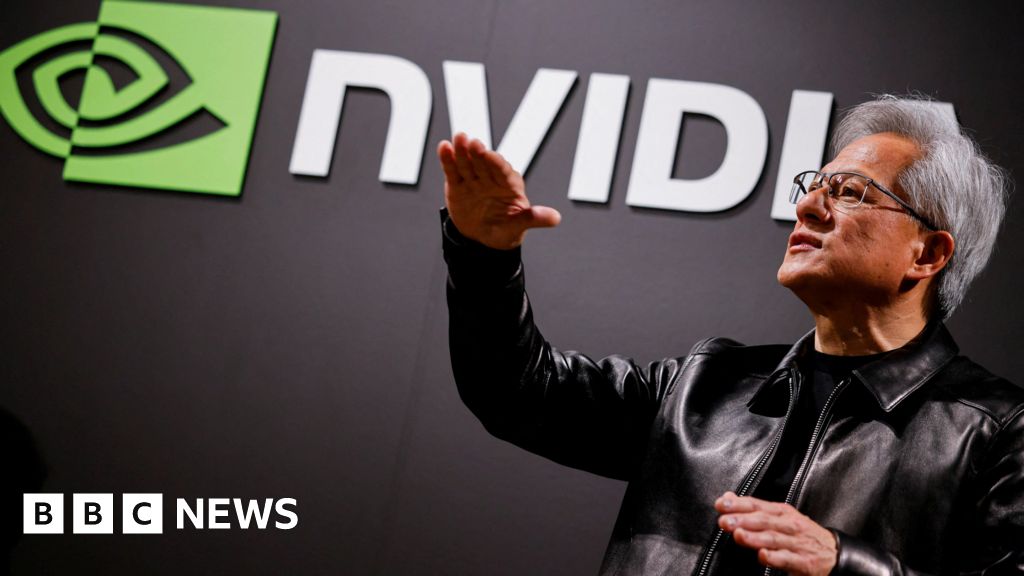
Nvidia has partnered with Apollo, BlackRock, Blackstone, Brookfield, Goldman Sachs, and KKR to raise $500bn in…
The AI news that matters, in one minute each morning.
Sign up free