What happened
The White House is discussing an executive order to manage open-source AI models, with regulation being tested and implemented with minimal oversight. A representative from Reflection AI argued for exemptions based on capabilities at a recent meeting, but Chinese open-source models such as DeepSeek currently have a substantial lead over other available open models.
Why it matters
The author predicts the most likely incoming action is to ban or indefinitely delay any open-weights model meaningfully above the capability level in the range of GPT 5.5, Claude Opus 4.8, or GLM-5.2, which should occur within the next 6 months. This would demolish the emerging U.S. open model economy built around inference companies, fine-tuning companies, and new products, affecting businesses relying on continued improvement and compute efficiency of open models.
What to watch
Two policy discussions are unfolding at once—distillation and frontier capabilities—that together represent talking points for potential regulation. The primary driver is that an open-weights model will soon reach the capabilities of Claude's Mythos model, and once flagged in a nascent White House AI model checker, the habit may be hard to unwind.
Summaries like this, in your inbox every morning.
The author frames the current moment as the most serious test of open-source AI's viability to date. While skepticism of open AI has cycled since ChatGPT's launch, this regulatory moment differs in that new forms of regulation are being tested and implemented with minimal oversight—making the threat materially real. The White House discussions reportedly focus on managing open models via executive order, with early discussion centered on Chinese-origin models and government uses, but the author notes this is how regulatory dominoes typically begin to fall.
The regulatory push sits at the intersection of two distinct policy conversations: distillation (the ability to extract and compress capabilities from proprietary models into open ones) and frontier capabilities (the question of how to handle open models at the general capability level of Claude's Mythos). The author argues these are very different in nature and necessity, but together they provide cover for a broader campaign to restrict open models. Critically, open models lack "the central economic champion" to represent their interests in the way proprietary AI companies can—leaving them vulnerable to regulation that serves incumbent competitors. The author points out that Anthropic's framing of distillation as a security threat conflates two separate risks: the genuine insecurity of current model APIs (which have been breached; even Anthropic's Mythos was accessed via Discord Sleuths despite being in private beta) and the technical complexity of distilling large open models. In this reading, Anthropic's policy advocacy—framed as safety-driven but consistent with a broader pattern of restricting competitor access—effectively asks for a wholesale ban on Chinese open-weights models, which would eliminate the emerging U.S. open model economy of inference, fine-tuning, and new products built on their continuous improvement. The author contends that conceding ground on distillation regulation would be a mistake and argues that the only coherent long-term policy distinguishes frontier-capability regulation from API security measures.
Pick your industry and the AI tools you use, and get news related to your work every day.
Free · 30 seconds with Google · unsubscribe anytimeWhat is AIToday? →
Ask AI anything about this article. The AI reads this article, earlier AIToday articles, and Wikipedia, and cites its sources. Q&As are published on this page for other readers too.
NVIDIA released Nemotron 3.5 Super VL, an open-weight model with 120 billion parameters that handles text, ima…

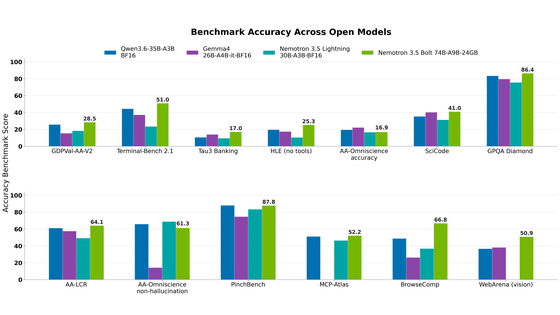
NVIDIA released Nemotron 3.5 Bolt 74B-A9B 24GB, an AI model for local agents that hits over 80 tokens per seco…
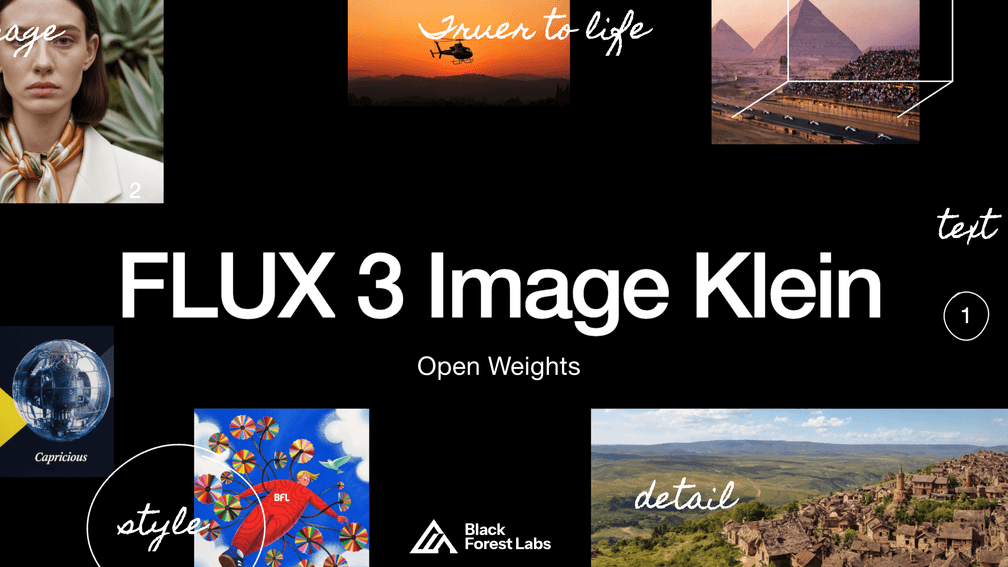
Black Forest Labs released FLUX 3 Image Klein as open weights on October 15, 2026 — a 5.6B-parameter model for…
PrismML released Ternary Bonsai 2 2B, 4B and 9B on October 15, 2026, remade from Qwen3.5 to process in three v…

Apple released MLX today, which runs the 816B-parameter Muse Spark Open on four Mac Studios at over 36 tokens…

Meta launched Muse Spark Open, an open-weight model with 816 billion parameters and a 1 million token context…