
What happened
Hugging Face CEO Clem Delangue stated that open source AI has grown significantly, with the company now used by roughly half the Fortune 500. He described Hugging Face as functioning like a GitHub for AI, where builders share and download open models and datasets.
Why it matters
Companies typically start with frontier APIs but shift toward open source models as they scale due to cost pressures. Delangue expressed concern that a handful of big companies could end up controlling everything, and highlighted that Chinese labs are producing the majority of open models being downloaded in the U.S.
What to watch
Delangue sees robotics as an especially urgent case for open, transparent AI because of how much a robot can see in a home and family life. He has also turned down a large investment from Nvidia, choosing capital efficiency over traditional Silicon Valley fundraising.
Summaries like this, in your inbox every morning.
Hugging Face has positioned itself at the center of a significant shift in how companies deploy AI. What began as a specialized platform for model sharing has evolved into critical infrastructure for roughly half the Fortune 500. The economics driving this shift are straightforward: frontier APIs—the expensive, closed systems offered by large AI labs—become prohibitively costly as companies scale their operations, creating a natural pull toward open source alternatives that offer greater control and lower per-unit costs.
Delangue's concern about consolidation reflects a genuine tension in the open source AI landscape. While openness itself is growing, the ability to create, train, and maintain sophisticated models remains concentrated in the hands of well-capitalized organizations. His observation that Chinese labs dominate the open models downloaded in the U.S. underscores how global competition is reshaping where open AI development happens. His decision to reject a large investment from Nvidia, despite the company's dominance in AI hardware, signals a deliberate strategic choice: Hugging Face is prioritizing independence and capital efficiency over rapid scaling through mega-funding rounds. This approach may allow the company to maintain its neutral-platform positioning even as the companies that build and use open models grow more powerful.
Pick your industry and the AI tools you use, and get news related to your work every day.
Free · 30 seconds with Google · unsubscribe anytimeWhat is AIToday? →
Ask AI anything about this article. The AI reads this article, earlier AIToday articles, and Wikipedia, and cites its sources. Q&As are published on this page for other readers too.
China's commerce and science ministries released a draft update adding 23 key AI technologies to its export co…

Vercel data published Thursday shows TypeSafe AI's Jev, a lightweight decision model for choosing among predet…

Reflection AI introduced Beam, an open-weight model for agentic coding and long-horizon tasks, with 501 billio…

Apple and Meta said they would jointly release a new open-weight AI model designed to run on high-end Macs, ai…

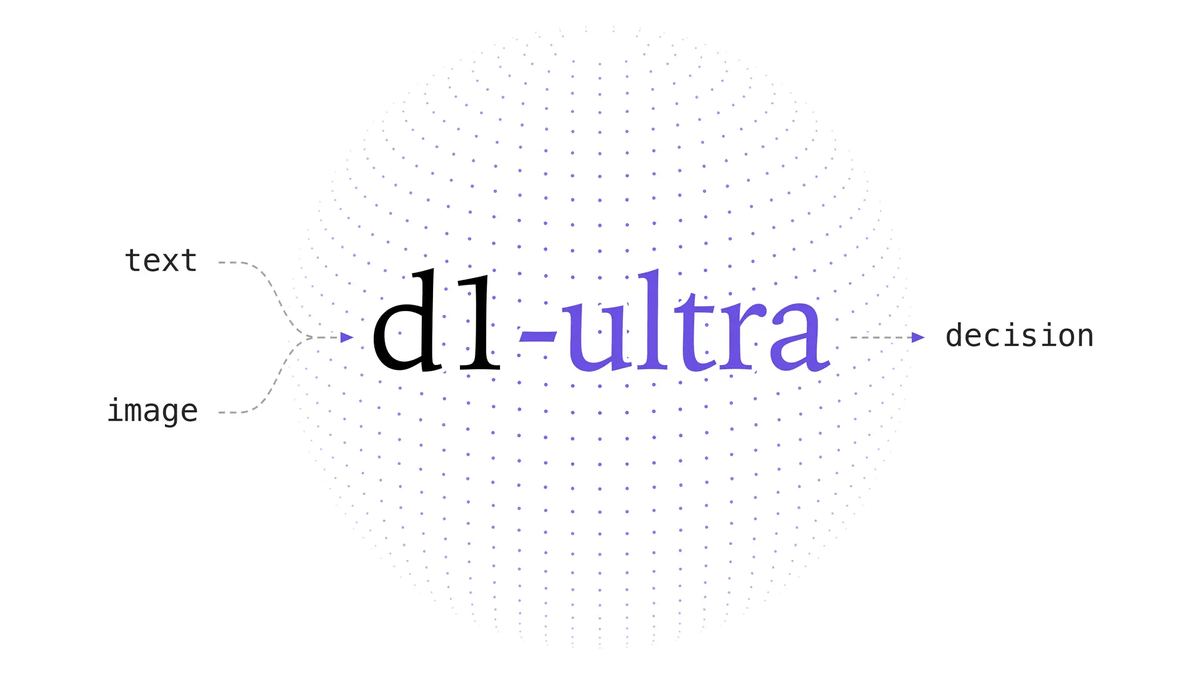
Liquid AI released d1-ultra on October 15, 2026, an upgraded open-weights decision model that averaged 76.7 ac…
NVIDIA released Nemotron 3.5 Super VL, an open-weight model with 120 billion parameters that handles text, ima…