Chinese AI developer Z.ai unveiled GLM-5.3, an open-source large language model that set records on coding and cybersecurity benchmarks. The model performed 50% better than its predecessor on Z.ai's internal coding-agent test and outperformed Anthropic's Claude Mythos 5 on CyberGym, a cybersecurity benchmark measuring code vulnerability detection.
Z.ai says GLM-5.3 has found over 2,400 vulnerabilities in 269 software projects, with roughly half rated medium severity or higher.
The model is available now via Z.ai's GLM Coding Plan subscription and will be released on Hugging Face under an open-source license within two weeks.
What happened
Z.ai released GLM-5.3, an open-source large language model built on the same architecture as its July-released GLM-5.2 (753 billion parameters, 1 million token context window) but with more extensive post-training. GLM-5.3 achieved the highest score of any open-source model on Terminal Bench 3.0 for command-line scripting and performed 50% better than GLM-5.2 on Z.ai's internal coding-agent benchmark.
Why it matters
The model excels at finding code vulnerabilities—it outperformed Anthropic's Claude Mythos 5 on CyberGym, a cybersecurity benchmark—and has already discovered more than 2,400 vulnerabilities across 269 software projects, with about half rated medium severity or higher. For developers and security teams, this means access to an open-source tool trained on complex, multi-day coding tasks that can identify real-world flaws, including ones in decades-old code.
What to watch
GLM-5.3 is available now through Z.ai's GLM Coding Plan subscription service, and the company plans to release the model's weights on Hugging Face under an open-source license within two weeks. Z.ai trained the model using sandbox environments mimicking real developer workstations and automated reward-signal generation via purpose-built AI agents, a methodology that may shape how other teams approach long-horizon task training.
Ask the AI about this article →
AI-summarized, only the topics you pick — one digest a day via Email, Slack, or Discord.
Free · takes 30 seconds · unsubscribe anytime
Ask AI anything about this article. Q&As are published on this page for other readers too.
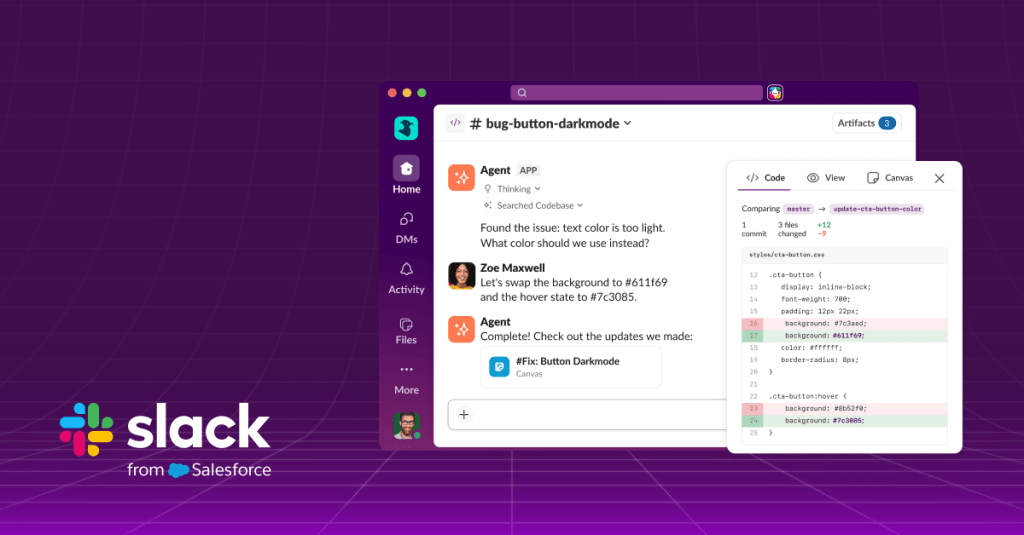
Slack introduced Slack Code, a new feature that lets teams collaborate with AI coding agents (Claude, Devin, G…
Cisco is transforming its digital customer experience (DCX) strategy by embedding AI throughout customer journ…

Mastercard CEO Michael Miebach introduced "Agent Pay" last April, a payment framework that allows AI agents to…
SpaceX closed a $60 billion acquisition of Cursor, a popular code editor with over 50,000 companies in its use…

Enterprise AI teams are now running a median of three orchestration platforms (software that coordinates AI ag…

Adobe announced general availability of audio generation capabilities in Firefly, its creative AI suite