What happened
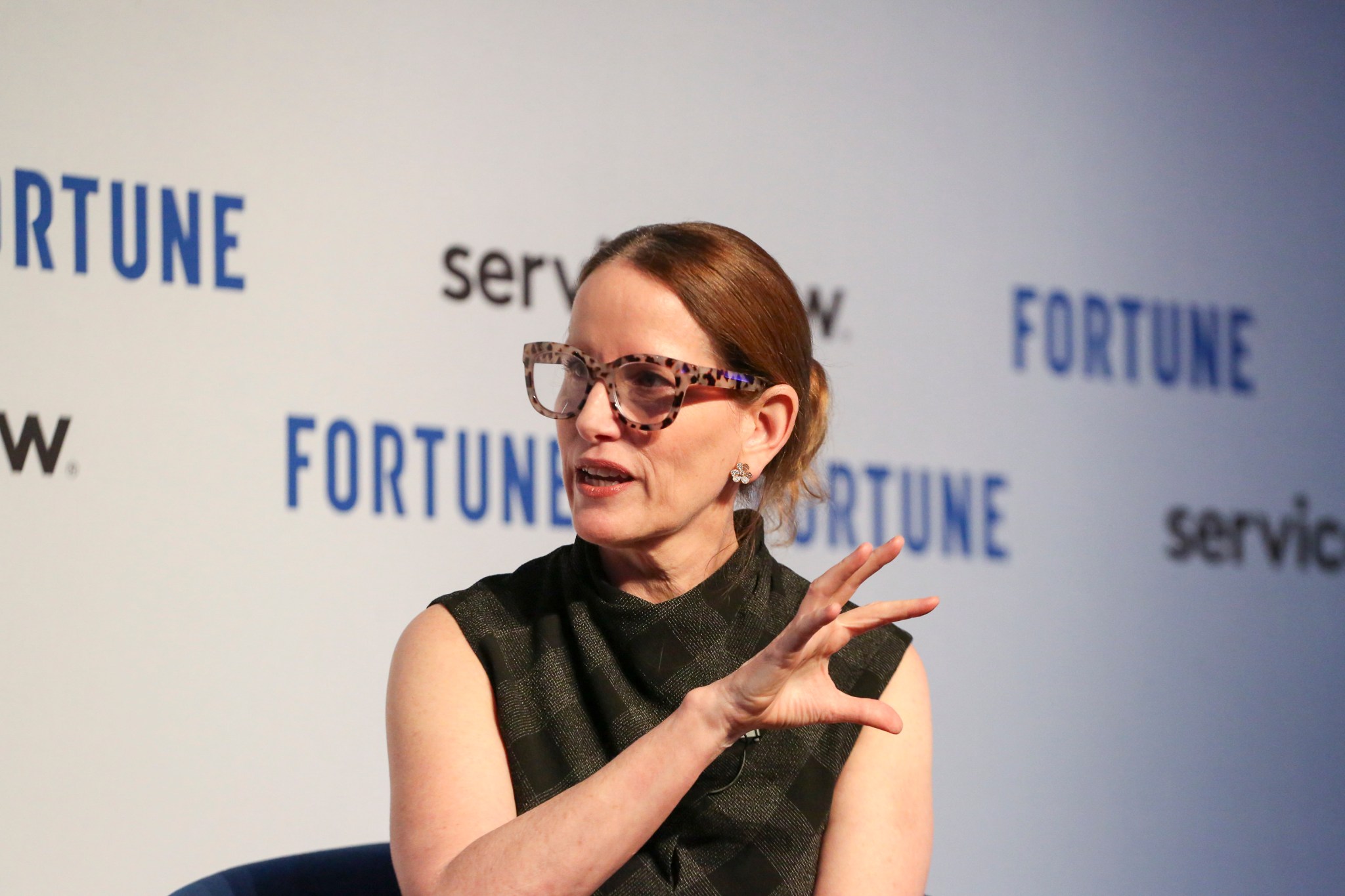
At Fortune's AIQ Summit, ServiceNow's Diana David said the widest gap in its Enterprise AI Maturity Index is talent, with 57% of pacesetters investing in AI upskilling versus 4% of others.
Why it matters
That gap suggests pacesetters pull ahead less through technology than through people, and David described their edge as operational discipline and transformation, not just tools.
What to watch
ServiceNow plans to add agentic AI to next year's AIQ, and David said she can't promise there won't be another dip after scores rebounded to 51 this year.
WHO IT HITSThis lands on HR and learning-and-development leaders who design AI training, since 42% of employees in the report say they aren't getting enough AI training. It also concerns executives weighing AI budgets, after earlier spending without productivity gains.
Summaries like this, in your inbox every morning.
ServiceNow's index started in 2024, and David said the early assumption was that scores would only climb. Instead the average fell from 44 to 35, a drop Kahn placed several years into the generative AI boom, before rebounding to 51 this year. David attributed the dip to AI noise that had not yet filtered into company value.
The gap David describes runs alongside a broad experiment already underway: about 59% of surveyed companies are past the pilot phase, but only 9% run agentic, autonomous, multi-step workflows that aren't checked by a human at every step. Among pacesetters that share is 36%, against 2% of others. Meanwhile, 59% of organizations lack long-term HR plans for AI, and 42% of employees say they aren't getting enough AI training. The report puts pacesetters' average ROI at 160%.
David's prescription, rather than a top-down redesign, is to set a vision, align data, choose workflows, assign ownership and iterate, with ServiceNow's AI Control Tower offered as one way to see across an organization. Whether that discipline translates into the commercial value she wants next year's AIQ to measure, and whether the rebound to 51 holds, is the open question for the executives she is addressing.
Pick your industry and the AI tools you use, and get news related to your work every day.
Free · 30 seconds with Google · unsubscribe anytimeWhat is AIToday? →
Ask AI anything about this article. The AI reads this article, earlier AIToday articles, and Wikipedia, and cites its sources. Q&As are published on this page for other readers too.
CrowdStrike and CoreWeave are partnering to combine CrowdStrike's security data and adversary expertise with C…
NetApp's Sandeep Singh said its hybrid cloud tools with autonomous controls, delivered through NetApp Console…

IBM Research's Brian Belgodere said the two companies co-engineered identity management and workload controls…
Volantis raised US$88 million in Series A funding to develop an AI inference architecture that uses photonic i…

Hitachi and Fanuc announced a strategic Physical AI partnership on September 30, 2026, with internal testing s…

Suno, the AI music generator, launched a feature called Speech that turns typed text into spoken words with ma…