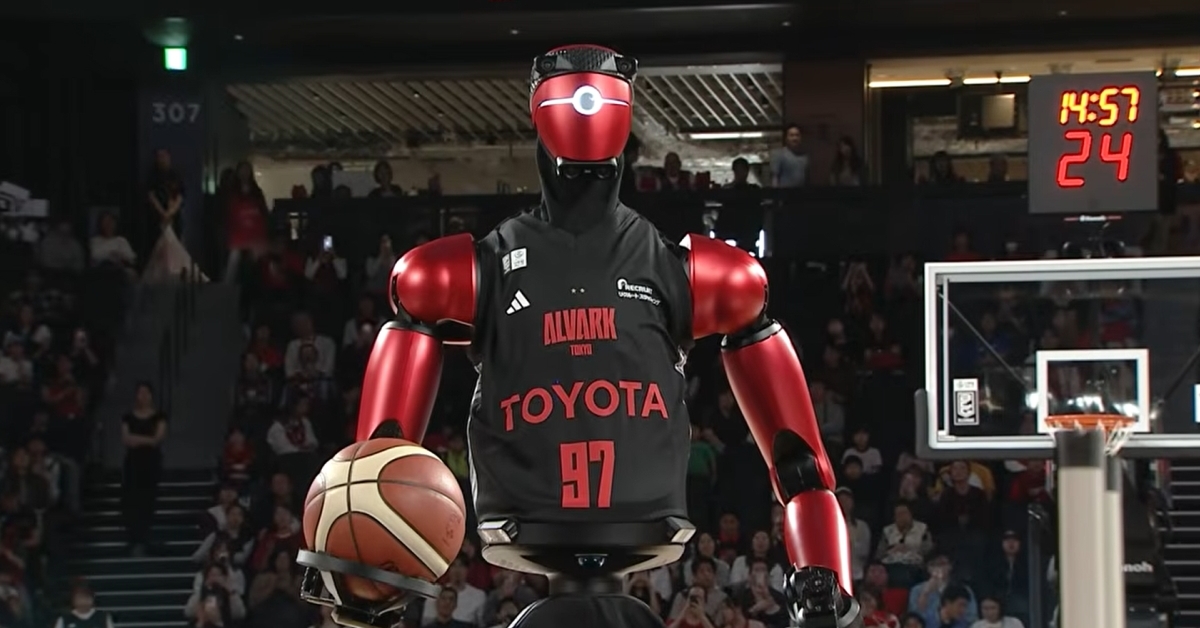
What happened
On July 23, 2026, Intel held an AI solutions showcase featuring new Intel Core Ultra Series 3 processors (codenamed Panther Lake) alongside physical AI and humanoid robot demonstrations. The same day, a panel including MUFG Bank, Preferred Networks (PFN), and Toyota's AI Venture Center discussed the business and societal prospects of physical AI and humanoids.
Why it matters
Physical AI — machines that combine AI with hardware and software to act in the real world — is being positioned as a potential growth driver for the Japanese economy. MUFG frames it as addressing a critical gap: while Japan leads in hardware, AI-powered robot solutions remain constrained by software and data availability. For financial institutions and manufacturers, understanding how humanoids might reshape labor markets and create new business models is becoming strategically important.
What to watch
Humanoid deployment timelines remain uncertain; current work focuses on narrow use cases (warehouse logistics, inspection, hazardous environments) rather than general-purpose robots. Japan's AI robot sector is targeting a 3% global share by 2040, but the path from prototype to scalable humanoid deployment — and who captures economic value — remains an open question.
Summaries like this, in your inbox every morning.
The July 23, 2026 Intel showcase and MUFG–PFN–Toyota panel reflect growing recognition that physical AI (the integration of AI with hardware and real-world sensors) represents a strategic frontier for Japan's tech and financial sectors. MUFG's perspective highlights a structural asymmetry: Japan has long-standing expertise in robotics hardware, but the software, data, and AI capabilities needed to make robots economically viable and deployable at scale remain nascent. This gap is significant because humanoids and autonomous machines could address Japan's acute labor shortage — a demographic challenge the panel notes could reduce the Japanese workforce by nearly one-third by 2050 if unaddressed.
However, the panel also emphasizes uncertainty about how humanoid adoption will unfold. Current real-world deployments are confined to specific, controlled environments (warehouses, inspection tasks, hazardous zones) where the robot's task is narrowly defined. Broader capabilities — general-purpose navigation, manipulation in unstructured environments, and the soft skills required for human-robot collaboration — remain research challenges. PFN's framing distinguishes between "language AI" (which excels at generating text) and "robot AI," underscoring that the skills that make large language models successful do not automatically translate to physical systems. The panel's discussion of software and data as Japan's strategic bottleneck suggests that success will depend not just on hardware innovation, but on ecosystem partnerships and data-sharing frameworks that allow Japanese companies to compete globally.
Pick your industry and the AI tools you use, and get news related to your work every day.
Free · 30 seconds with Google · unsubscribe anytimeWhat is AIToday? →
Ask AI anything about this article. The AI reads this article, earlier AIToday articles, and Wikipedia, and cites its sources. Q&As are published on this page for other readers too.

