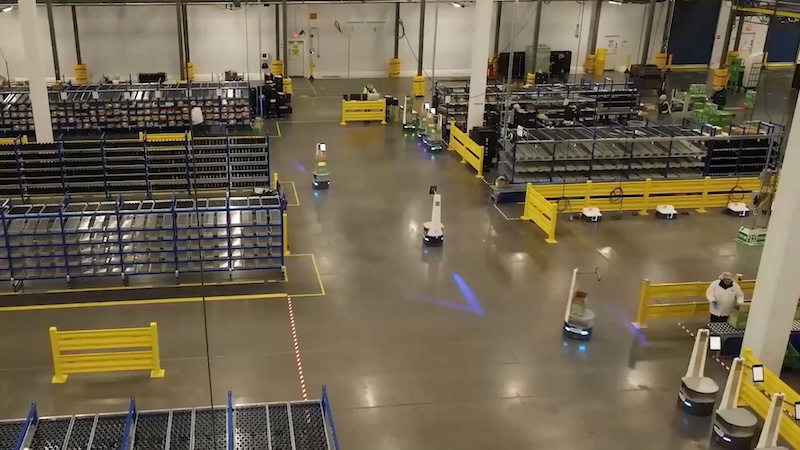
Locus Robotics has deployed automated mobile robots in HelloFresh's cold-storage fulfillment facilities, allowing the meal kit company to expand product variety from 100 SKUs to 500 SKUs.
Custom-engineered for cold environments, the robots complete order cycles in under 4 minutes on average, significantly outpacing traditional logistics benchmarks and offering HelloFresh a more flexible, fault-tolerant alternative to fixed conveyor systems.
What happened
Locus Robotics warehouse automation, adapted for cold storage, enabled HelloFresh's Factor brand to expand chilled fulfillment from 100 SKUs to 500 SKUs. Factor deployed 13 robots in July 2025, then added 26 more within three months, with plans to support EveryPlate fulfillment later this year.
Why it matters
Temperature-controlled fulfillment is operationally demanding; Locus robots completed order cycles in 3 minutes and 36 seconds on average, compared with typical third-party logistics benchmarks of 30-minute, 60-minute, or multi-hour windows. This speed and capacity expansion enables HelloFresh to offer greater meal variety without the inflexibility and single-point-of-failure risk of fixed conveyor systems.
What to watch
Locus Robotics developed a heated motor enhancement and charging modifications to ensure reliable operation inside chilled environments, where battery efficiency typically degrades. The company now supports approximately 12,000 square feet of HelloFresh's chilled fulfillment space across two high-speed meal kit picking lines.
Ask the AI about this article →
HelloFresh initially evaluated a larger integrated automation system involving two additional providers but chose to begin with a focused proof of concept using Locus Robotics alone. This phased approach helped the team move faster, reduce upfront cost, and gain hands-on experience in a live chilled fulfillment environment before expanding. The decision proved sound: the pilot's strong early performance in both execution consistency and reliability demonstrated that the platform could handle the precision and speed demands of temperature-controlled meal kit fulfillment.
The deployment also solved a structural weakness in HelloFresh's existing operations. Traditional fixed conveyor systems create a single point of failure that can disrupt fulfillment flow; by contrast, the Locus mobile robots offer a more flexible model that fits within existing operations and reduces that risk. Brad Mesloh, associate director of strategic design at HelloFresh, highlighted that the implementation was "extremely smooth," with most testing completed virtually before go-live and final validation taking only a few days—much quicker than legacy systems. This speed of deployment, combined with the robots' compact footprint and simple picking interface, appears to have made the transition operationally feasible for a high-volume, high-variety, temperature-controlled business model.
For example, today's edition would include:
AI-summarized, only the topics you pick — one digest a day via Email, Slack, or Discord.
Free · takes 30 seconds · unsubscribe anytimeWhat is AIToday? →
Ask AI anything about this article. Q&As are published on this page for other readers too.
K-Safety Expo 2026 will be held at BEXCO in Busan from September 2–4, featuring AI, robots, sensors, and conne…

Skild AI has introduced S1, its flagship robot foundation model, which lets robots learn new, complex tasks by…
BHP, the world's largest mining company by market capitalization, has deployed AI across its operations

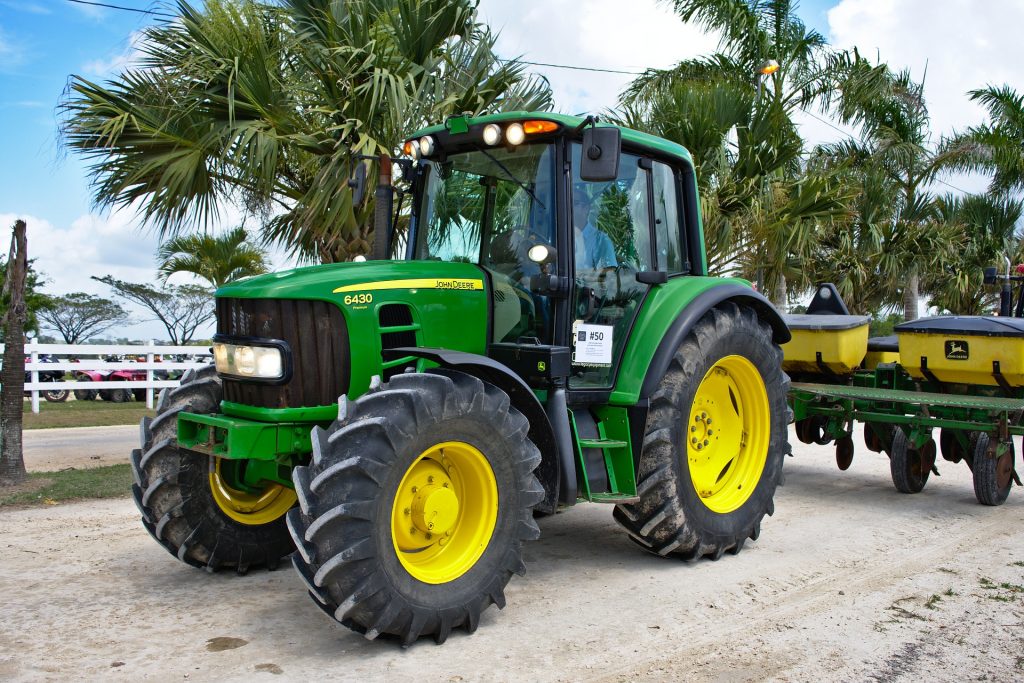
John Deere announced a three-year, $10 million research and development partnership with ag-tech company Reser…
On July 16, 2026, NVIDIA announced that 22 Japanese companies and organizations have expressed intent to join…
Panasonic HD has established a new AI and robotics research and development division, and CAIO Sakaba is leadi…