What happened
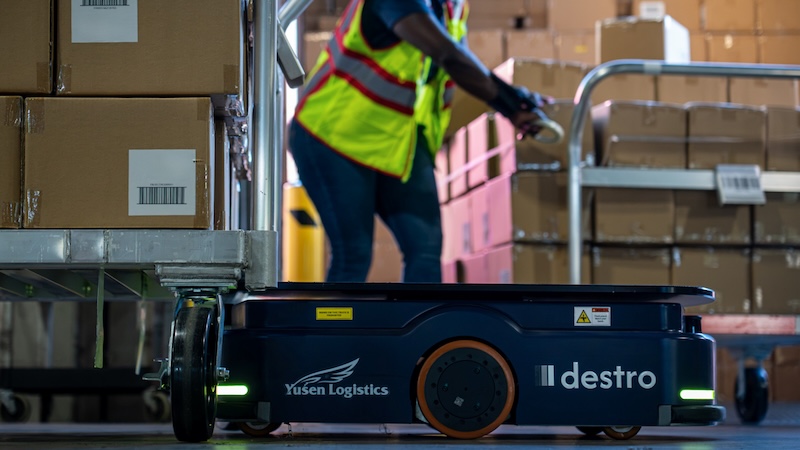
Yusen Logistics Americas has begun deploying Destro AI's platform to coordinate warehouse operations in real time, starting with cart movements in its transload operations. The technology analyzes warehouse conditions and optimizes work assignments for both employees and autonomous mobile robots.
Why it matters
Transload operations—moving freight through receiving, staging, dock, and shipping—are among logistics' most demanding workflows. Real-time coordination across people, equipment, and material movement is critical for speed and accuracy as volumes and labor availability shift. The platform provides operational visibility to support faster decisions and safer operations.
What to watch
Yusen plans to evaluate additional automation capabilities including pallet movement and AI-powered workflow verification as the collaboration evolves, as part of its broader strategy to expand intelligent automation across its logistics network.
Summaries like this, in your inbox every morning.
Yusen Logistics' deployment reflects a broader shift in warehouse automation toward human-robot collaboration rather than full replacement. Transload operations—the movement of freight through receiving, staging, dock, and outbound phases—demand real-time responsiveness to changing volumes and labor conditions, making them particularly difficult to automate without intelligent coordination. By embedding Destro AI's platform, Yusen is addressing this gap: the technology continuously monitors warehouse conditions and dynamically assigns tasks, allowing the operation to maintain both speed and flexibility. Rick Brunelle, director of automation at Yusen, frames this as "automation helping our people work smarter," signaling that the value lies not in removing humans but in amplifying their effectiveness through real-time data and coordination support. The initial focus on cart movements is a typical phased approach—proving value on a specific, measurable workflow before expanding to pallet movement and verification systems, which have higher complexity and interdependencies.
Pick your industry and the AI tools you use, and get news related to your work every day.
Free · 30 seconds with Google · unsubscribe anytimeWhat is AIToday? →
Ask AI anything about this article. The AI reads this article, earlier AIToday articles, and Wikipedia, and cites its sources. Q&As are published on this page for other readers too.
Chunghwa Telecom president Rong-shy Lin said the shift from conversational AI to autonomous AI agents is resha…
CoreWeave fell 5% in premarket trading Friday and was on track to finish the week down 15%, after rebounding f…
Apple and Meta said they would jointly release a new open-weight AI model designed to run on high-end Macs, ai…

Investors put $38.5 billion into Asian startups in Q3, per Crunchbase data

A longtime Anthropic investor told Fortune he expects shares priced around $1.8 trillion, below the company's…
In Q2, billionaires or their funds sold six 'Magnificent Seven' AI stocks