What happened
PlusAI says it has reached 93.4 percent Safety Case Readiness in the first half of 2026, up from 90.1 percent in the second half of 2025, as it works toward commercial deployment of factory-built autonomous trucks equipped with its SuperDrive system in 2027. The company also raised Remote Assistance Free Trips (journeys completed without remote operator intervention) to 85.2 percent, from 79 percent, and Autonomous Miles Percentage to 99.8 percent, from 99.2 percent.
Why it matters
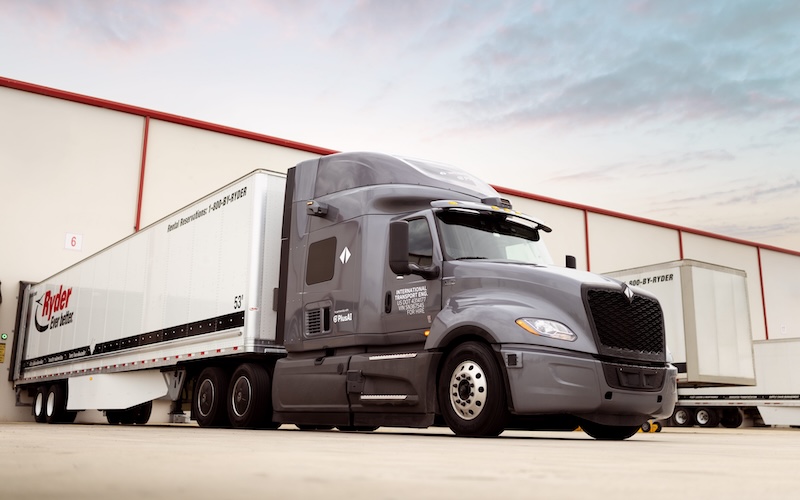
Safety Case Readiness measures progress toward completing the engineering evidence required for safe commercial deployment—a regulatory and operational threshold. PlusAI expects to reach 100 percent readiness in 2027 and is targeting more than 90 percent of trips without remote assistance before launch, which would represent a significant step toward autonomous trucking operations at scale. The company has expanded real-world trials with Ryder and International on the I-35 corridor in Texas and announced plans to introduce trucks in Southern Europe with Sesé and the Government of Aragon.
What to watch
PlusAI is targeting 2027 for commercial deployment of factory-built autonomous trucks. The company's strategy focuses on integrating its technology into trucks produced by established manufacturers (including Scania, MAN, International, Hyundai Motor Company, and Iveco Group) rather than retrofitting vehicles after production. The company has also released SuperDrive 6.0, adding night driving and construction-zone navigation capabilities.
Summaries like this, in your inbox every morning.
PlusAI's progress reflects the autonomous trucking industry's shift toward proving operational readiness through measurable metrics. Rather than simply claiming technical capability, the company is publishing transparent performance data every six months—a practice that underscores the regulatory and operational scrutiny autonomous vehicle developers now face. The jump from 90.1 percent to 93.4 percent Safety Case Readiness over six months, combined with improvements in autonomous driving percentage and remote-assistance-free trips, suggests the company is tracking toward its 2027 goal, though the final gap to 100 percent readiness remains open.
PlusAI's commercialization strategy diverges from some competitors by focusing on factory integration rather than retrofitting. The company is embedding its SuperDrive system into trucks built by established manufacturers—Scania, MAN, International, Hyundai Motor Company, and Iveco Group—rather than modifying vehicles after they leave the assembly line. This approach may reduce production complexity and certification timelines. Real-world validation is expanding through trials with logistics operators like Ryder and Sesé, and the addition of night driving and construction-zone navigation in SuperDrive 6.0 suggests the system is being hardened for broader operational conditions.
Pick your industry and the AI tools you use, and get news related to your work every day.
Free · 30 seconds with Google · unsubscribe anytimeWhat is AIToday? →
Ask AI anything about this article. The AI reads this article, earlier AIToday articles, and Wikipedia, and cites its sources. Q&As are published on this page for other readers too.
JR Central announced the S0系 on October 16, its first full model change since the N700S, with commercial servi…
A Qiita article compared automated red-teaming methods for LLM apps — GCG, PAIR, and TAP — using mock implemen…

In a webinar hosted by French Mathematical Society president Isabelle Gallagher, Fields Medal winner Hugo Dumi…
Anthropic said on October 15 it has started giving METR's six staff company devices, office space and access t…

NVIDIA published a blog post titled "AI Security Is an Engineering Problem - How to Solve It at Every Layer of…

At the Most Powerful Women Summit, Marissa Mayer said anyone who claims to know how AI will play out is 'eithe…