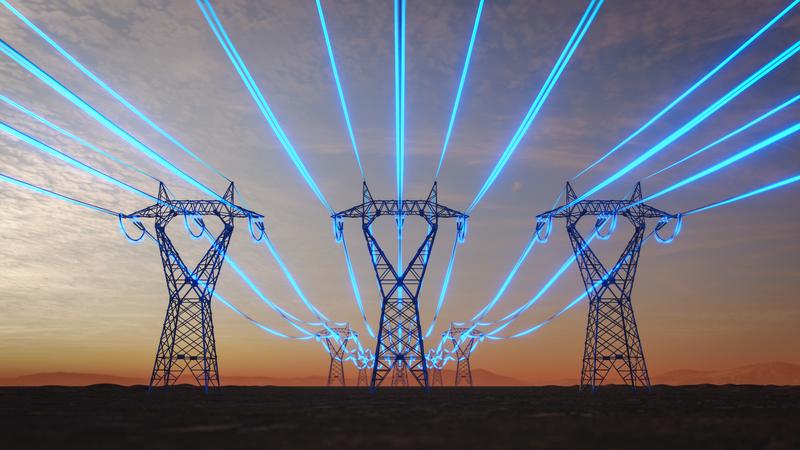
GE Vernova and PPL are both benefiting from surging power demand driven by AI data centers and the global energy transition, but they serve different investor needs. GE Vernova, which supplies turbines and electrical equipment, saw orders jump 71% in Q1 FY 2026 with a backlog of $163 billion(約26兆円), reflecting urgent demand from data centers building on-site power plants. PPL, a traditional regulated utility, offers steadier income through dividend growth of 4% to 6% annually and is investing $23 billion(約3.7兆円) through 2029 to upgrade transmission infrastructure, but its slower timeline makes it less attractive to those betting on immediate AI-driven power growth.
Summaries like this, in your inbox every morning.
Sign up free →What happened
GE Vernova reported FY 2025 revenue of $38.1 billion(約6.1兆円) (up 8.9%) and net income of close to $4.9 billion(約7800億円) (net margin 12.8%, up from 4.4% prior year). The company's electrification segment received more orders in Q1 FY 2026 than in all of FY 2025, with total orders jumping 71% and backlog surging to $163 billion(約26兆円). PPL, a regulated utility serving 3.6 million customers, posted FY 2025 revenue of nearly $9.0 billion(約1.4兆円) (up 6.9%) and net income of close to $1.2 billion(約1900億円) (net margin 13.1%).
Why it matters
AI data centers require immediate high-voltage power solutions and on-site generation that GE Vernova supplies via turbines and electrical equipment—solving a bottleneck PPL's multi-year grid upgrades cannot address fast enough. PPL's traditional utility model offers predictable, regulated returns and dividend growth (4% to 6% annually, 3.2% yield) suited to income investors, while GE Vernova's surge in orders and service backlog signals stronger near-term growth as data center demand accelerates.
What to watch
GE Vernova's service backlog has already surpassed its equipment backlog, signaling recurring revenue durability. PPL plans to invest $23 billion(約3.7兆円) between 2026 and 2029 with projected annual rate base growth of 10.3% and annualized earnings per share growth of 6% to 8% through 2029. GE Vernova's forward P/E of 37.0x and P/S ratio of 7.6x are significantly higher than PPL's 18.3x P/E and 3.0x P/S, reflecting their different risk and growth profiles.
The global power system is under strain from two converging forces: the transition to renewable and clean energy and the explosive electricity appetite of artificial intelligence data centers. GE Vernova and PPL have emerged as two dominant beneficiaries, but they represent fundamentally different business models and investment theses for 2026.
GE Vernova operates as a diversified technology and service company across three segments: Power (gas turbines), Wind (turbines and services), and Electrification (transformers, switchgear, circuit breakers, and transmission equipment). The company's installed base is massive—roughly 7,000 gas turbines and 59,000 onshore wind turbines worldwide—generating steady recurring service revenue. In FY 2025, revenue grew 8.9% to $38.1 billion(約6.1兆円), and net income reached close to $4.9 billion(約7800億円), translating to a net margin of roughly 12.8%, a sharp jump from 4.4% in FY 2024. This margin expansion reflects the company's ability to extract more profit from every sales dollar as it scales. The balance sheet is robust: almost nil debt-to-equity, a current ratio of approximately 1.0x, and nearly $3.7 billion(約5900億円) in free cash flow during FY 2025, giving the company flexibility to fund growth without external financing. Most significantly, the electrification segment's order momentum in Q1 FY 2026 exceeded all of FY 2025, with total company orders jumping 71% and backlog surging to $163 billion(約26兆円). The company's service backlog has already surpassed its equipment backlog, signaling durable, recurring revenue with high margins extending into the future.
PPL is a regulated utility holding company serving roughly 3.6 million customers across Pennsylvania, Kentucky, Virginia, and Rhode Island with electricity and natural gas. In FY 2025, revenue totaled nearly $9.0 billion(約1.4兆円) (up 6.9% year over year) and net income close to $1.2 billion(約1900億円), yielding a net margin of roughly 13.1%. As a regulated utility, PPL's earnings are more predictable than a manufacturing firm—closely tied to government-approved rate increases and capital spending recovery. The company's balance sheet reflects its capital-intensive model: a debt-to-equity ratio of approximately 1.3x and a current ratio of roughly 0.9x. Notably, PPL reported negative free cash flow of around $1.4 billion(約2200億円) in FY 2025, a common outcome for utilities undertaking heavy capex to lock in higher future rate bases. Between 2026 and 2029, PPL plans to invest $23 billion(約3.7兆円) in transmission and distribution infrastructure, with projected annual rate base growth of 10.3%. The company targets annualized earnings per share growth of 6% to 8% through 2029 and 4% to 6% annual dividend growth, with a current dividend yield of 3.2%.
The investment thesis diverges sharply. Data centers and industrial facilities cannot simply plug into existing power grids; they require high-voltage transmission lines and distributed power sources. Because power demand is outstripping supply and data centers are in a rush, they increasingly seek on-site generation that GE Vernova supplies via massive turbines and electrical distribution equipment. GE Vernova's electrification segment also manufactures critical equipment like transformers, switchgear, and high-voltage direct current transmission substation solutions. With companies already booking factory slots through 2030, GE Vernova is capturing immediate, urgent demand at premium order levels. PPL, despite spending billions to upgrade the grid, serves utilities and regulators—not the data center operators themselves—and the traditional utility timeline measured in years cannot match the data center construction pace measured in months. From a valuation perspective, PPL appears more conservative: a forward P/E of 18.3x and P/S of 3.0x compared to GE Vernova's 37.0x P/E and 7.6x P/S. The higher multiples on GE Vernova reflect market pricing of near-term order execution and service backlog visibility. For income-focused investors seeking steady, regulated returns and growing dividends, PPL is the choice. For growth investors betting on immediate AI-driven power demand and technology adoption, GE Vernova's order surge and backlog depth offer a more direct play.
The power boom reshaping the utility landscape stems from two forces: the global energy transition toward cleaner power and the massive, urgent electricity demand from artificial intelligence data centers. GE Vernova and PPL occupy opposing positions in this shift—one as a technology and service provider, the other as a traditional regulated utility—each suited to different investor profiles and time horizons.
GE Vernova's financial trajectory reflects this positioning. The company's net margin expanded dramatically from 4.4% in FY 2024 to 12.8% in FY 2025, signaling operational leverage as it scales. Its installed base of roughly 7,000 gas turbines and 59,000 onshore wind turbines generates recurring service revenue, and the recent full integration of Prolec GE has strengthened its control over electrical equipment manufacturing. The explosive growth in Q1 FY 2026—orders up 71%, backlog to $163 billion(約26兆円)—reflects an acute market need: data centers cannot wait years for grid upgrades and are instead building on-site generation using GE Vernova's turbines and electrical distribution solutions.
PPL's appeal lies in regulatory predictability and capital deployment at scale. As a utility serving 3.6 million customers across four states, PPL earns revenue from government-approved rates tied to infrastructure investment. The $23 billion(約3.7兆円) capital plan through 2029 positions it to capture recurring revenue from grid upgrades, but the timeline assumes regulators will permit rate increases to recover those costs. PPL's negative free cash flow of $1.4 billion(約2200億円) in FY 2025 is structurally normal for utilities in heavy capex cycles—the bet is that rate base growth and approved returns will eventually exceed spending. For income investors prioritizing steady dividend growth (4% to 6% annually) over capital appreciation, PPL's stability and 3.2% yield are attractive. For growth-oriented investors betting on the immediate power shortage and data center acceleration, GE Vernova's forward P/E of 37.0x and P/S of 7.6x reflect market confidence in near-term order conversion and service backlog execution.
No comments yet. Be the first to share your thoughts!
Log in to join the discussion





Get curated AI news from 200+ sources delivered daily to your inbox. Free to use.
Get Started FreeFree · takes 30 seconds · unsubscribe anytime
1 minute a day. The AI essentials.
200+ sources · Email / LINE / Slack
