What happened
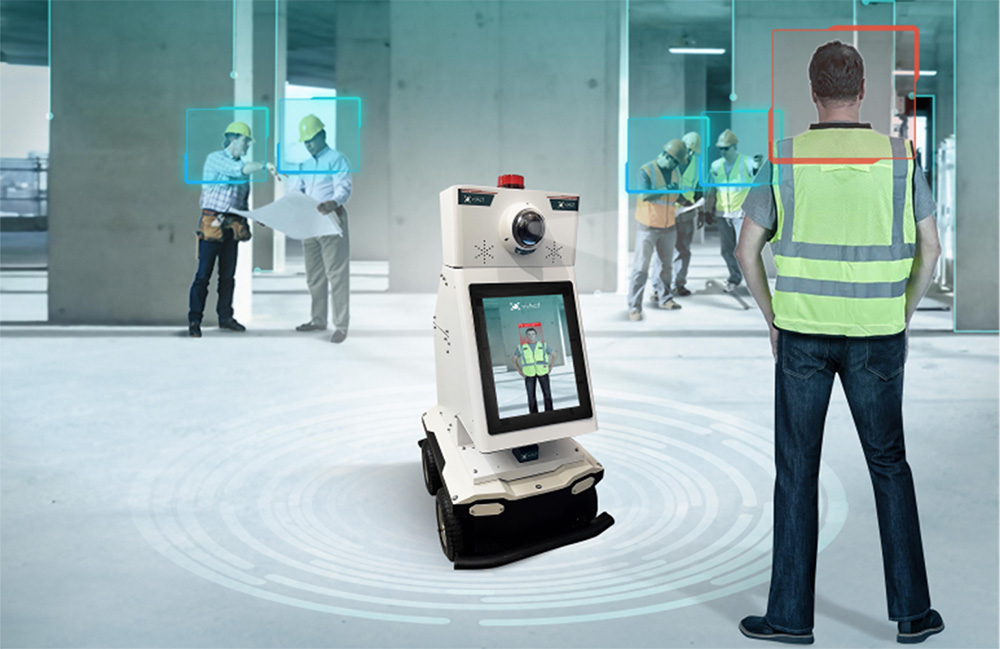
Vision AI is emerging as a site-wide safety layer for construction, analyzing live video from cameras and drones to monitor worker-machine interactions in real time.
Why it matters
Unlike onboard robot sensors that see only locally, vision AI provides a common operational picture, addressing risks like struck-by incidents that kill over 100 U.S. workers annually.
What to watch
The next step is integrating agentic AI to reason across data sources and recommend actions, with edge processing to enable low-latency response without cloud reliance.
WHO IT HITSConstruction site supervisors and safety managers gain a real-time, site-wide view to make faster, informed decisions, while robotics teams must integrate vision AI to handle dynamic zones shared with workers.
Summaries like this, every morning.
Construction sites are integrating autonomous equipment, drones, and robots, but the article argues that safety depends on more than machine capability. It requires a shared awareness of the entire dynamic environment, which individual robot sensors cannot provide. This is where vision AI steps in as a site-wide perception layer, analyzing feeds from existing cameras and drones.
The challenge is acute in shared zones, like a 20-acre site where crews and autonomous compactors operate together. Risks are highlighted by OSHA's "Fatal Four," with struck-by incidents killing over 100 workers annually. Evolving standards like ANSI/RIA R15.08 reflect the need for robots to adapt to dynamic environments, moving beyond fixed paths.
The future points to integrated agentic AI that can reason across data and trigger actions, with edge processing for low latency. The success of this technology hinges on whether it can truly bridge the gap between human workers and autonomous machines, providing the continuous perception needed for safe coexistence.
Pick your industry and the AI tools you use, and get news related to your work every day.
Free · 30 seconds with Google · unsubscribe anytimeWhat is AIToday? →
Ask AI anything about this article. The AI reads this article, earlier AIToday articles, and Wikipedia, and cites its sources. Q&As are published on this page for other readers too.
Sony Innovation Fund Senior Investment Director Kei Furukawa said the fund has backed roughly 220 startups wor…

Pew Research Center data shows one in five teenagers from families earning under $30,000 do all or almost all…

The listing bundles AIニュース posts from Oct 20–24, 2026, including PHP2Shell bringing down sites, OpenAI's AI br…

The Fifth Circuit vacated the injunction blocking Mississippi's House Bill 1193 and reassigned the case from J…
Anthropic published srt (sandbox-runtime) on npm under Apache-2.0, wrapping native OS primitives: sandbox-exec…

A vulnerability dubbed PHP2Shell, dormant for over 10 years in the PHP language used by about 70% of websites…