What happened
OpenAI and Molecule.one used GPT-5.4 with the Maria AI lab system to improve a difficult Chan-Lam coupling reaction. The system proposed using TEMPO as an additive, raising the mean yield from 16.6% to 25.2% across 10,080 reactions.
Why it matters
The reaction creates carbon-nitrogen bonds, which are common in medicines. Making it more reliable for primary sulfonamides could help chemists make and test more drug-like molecules, as synthesis is often a major bottleneck in drug discovery.
What to watch
Independent labs must now reproduce the results at bench scale, where 11 of 14 substrate pairs showed higher yields. The key question is whether the method works across a broader range of molecules and conditions.
Summaries like this, in your inbox every morning.
OpenAI has been extending its models into scientific discovery, with prior work in mathematics, physics, and biology. This project moves into medicinal chemistry, a domain where AI ideas must survive contact with real-world laboratory equipment and noise. The work paired GPT-5.4 with Molecule.one's Maria system, showing how a large language model can generate novel and surprising hypotheses.
The result is concrete: a higher-yielding protocol for a challenging reaction. Yet the authors are careful to note its limits. The method does not yet generalize to other reactions or manufacturing scales. Human experts remain essential for steering and validation, and the yield estimates come from a high-throughput platform.
The real test lies ahead. Independent replication and broader substrate testing will determine if this is a genuinely useful advance or a lab-specific artifact. The outcome hinges on whether the effect observed across 10,080 microliter-scale reactions holds up in the hands of other chemists working with diverse molecules.
Pick your industry and the AI tools you use, and get news related to your work every day.
Free · 30 seconds with Google · unsubscribe anytimeWhat is AIToday? →
Ask AI anything about this article. The AI reads this article, earlier AIToday articles, and Wikipedia, and cites its sources. Q&As are published on this page for other readers too.
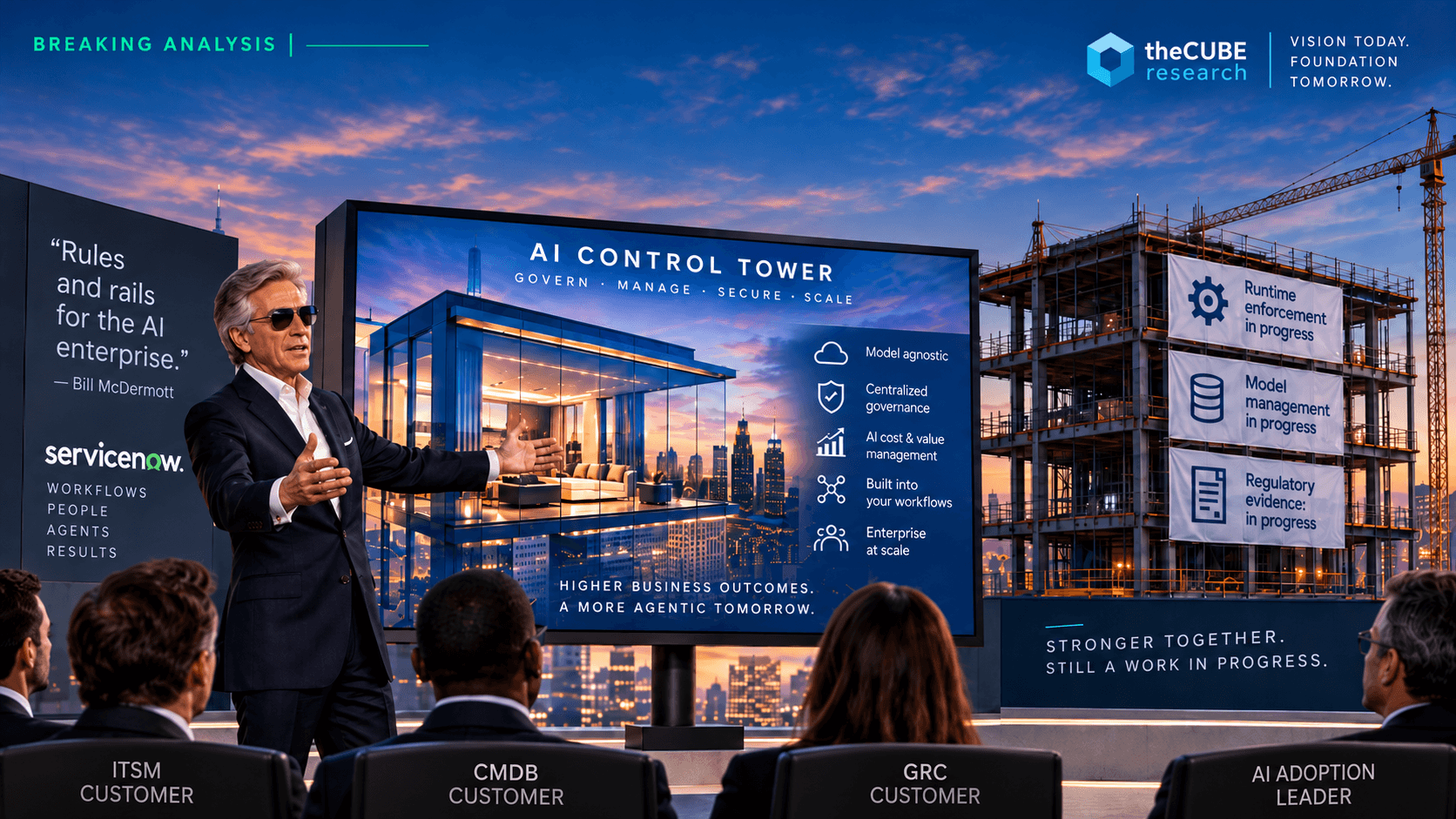
In 15 in-depth interviews with existing ServiceNow customers, 14 said AI Control Tower's runtime enforcement w…
Anthropic's Claude solved a 25-year-old cryptography mystery in under 30 minutes, finding the unexplained seed…

Anthropic CEO Dario Amodei said he spends a third, maybe 40%, of his time making sure the company's culture is…

Users of Meta's Muse, xAI's Grok, OpenAI's Dots and Instinct report blocks on top sites
Meta removed language from its commercial terms that experts said allowed scraping news sites to train its AI…
Bank of America strategist Sebastian Raedler said 12-month forward hyperscaler capex expectations rose from $3…