An essay argues that AI has broken the self-correcting mechanism of the Dunning-Kruger effect by raising perceived ability through high-quality assisted output while the intrinsic skills that used to develop through struggle and failure now atrophy. Research from 2025 supports this: people relying more on AI score worse on critical thinking, and when tested, overestimate themselves more than they actually improve. The concern is not productivity loss but governance risk—if intrinsic skill erodes, humans cannot effectively oversee AI systems, transfer expertise to the next generation, or maintain critical operations when tools fail.
Summaries like this, in your inbox every morning.
Sign up free →What happened
A hypothesis argues that AI has fundamentally changed the Dunning-Kruger effect—the gap between perceived and actual ability—by raising confidence through high-quality AI-assisted output while simultaneously splitting real capability into two tracks: "with the tool" (which grows fast) and "intrinsic" (which atrophies because AI handles the struggle that used to force learning). Unlike experience in the pre-AI world, this gap no longer self-corrects through failure.
Why it matters
Early research supports the concern: a 2025 Gerlich study found people who relied more on AI scored worse on critical thinking; a Fernandes study of 246 people solving logic problems with AI found they overestimated their score by four points even as performance rose by three. The generational risk is sharper: people who learned with AI from day one may never build intrinsic skill at all. For companies, intrinsic skill has shifted from a productivity question into a governance one—determining whether humans can actually oversee AI systems, catch failures, or maintain operations if tools fail.
Why it matters
Early research supports this concern: a 2025 Gerlich study found people who relied more on AI scored worse on critical thinking; a Fernandes study of 246 people solving logic problems with AI found they overestimated their score by four points even as performance rose by three. The generational risk is sharper: people who learned with AI from day one may never build intrinsic skill at all. For companies, intrinsic skill has shifted from a productivity question into a governance one—determining whether humans can actually oversee AI systems, catch failures, or maintain operations if tools fail.
What to watch
Three places where the erosion of intrinsic skill carries real stakes. First, knowledge transfer: apprentices no longer struggle through the boring work that builds expertise, so skills disappear when the generation that learned them retires (as happened with COBOL—three trillion dollars in transactions a day still depends on code from 1959, but when New Jersey's unemployment system failed in 2020, the state had to call retired programmers back because the business logic lived in people's heads, not documents). Second, tool failure: the 2009 Air France 447 crash killed 228 people when autopilot failed and pilots had lost hand-flying skills; in 2013 a similar loss of intrinsic skill caused a crash at San Francisco. Third, compliance: the EU AI Act requires humans in the loop for high-risk systems, but that oversight demands intrinsic skill—you cannot catch what an AI does wrong if you cannot do the work yourself.
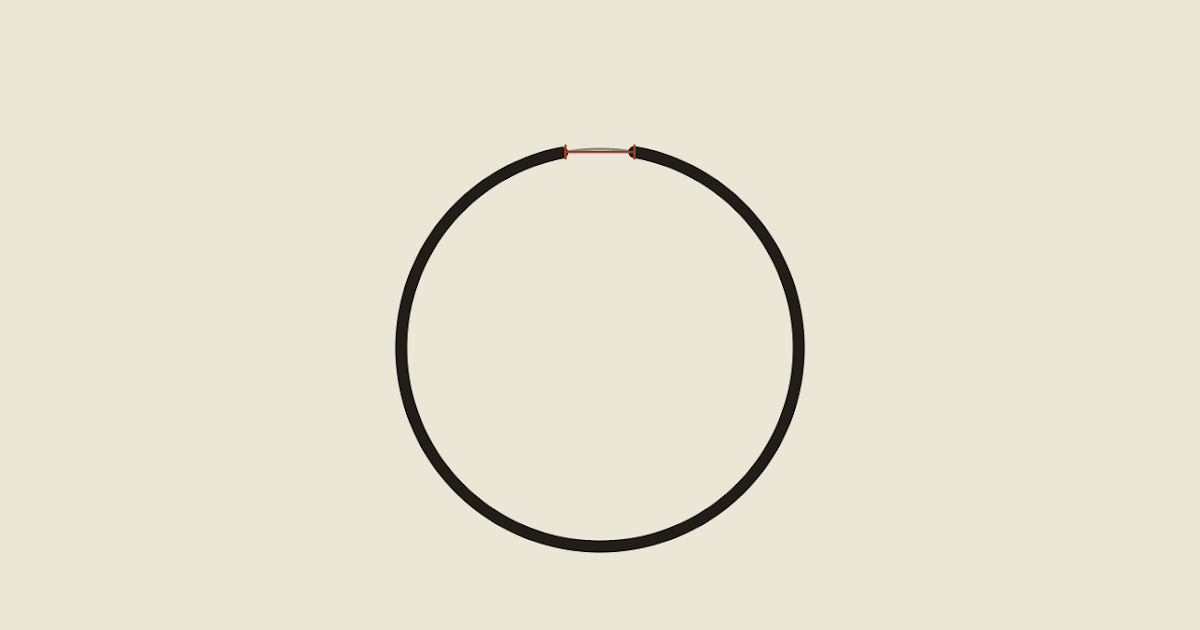
The argument begins with a familiar frustration: Mount Stupid, the overconfident newcomer who has read one article or watched one tutorial and is convinced they know better than experienced colleagues. The old pattern, the author notes, was self-healing. You try something, you fail in ways others see, and reality corrects your self-judgment. This is the standard Dunning-Kruger narrative—a peak of unwarranted confidence followed by a valley of despair and eventually convergence on actual capability. However, the essay notes an important caveat: the famous curve (with its peak and valley) is not from Dunning and Kruger's 1999 paper at all. It spread through management training and the internet in the mid-2000s. The actual 1999 study was different—it compared self-assessment with actual scores across four groups, and the results showed a monotonically increasing line, not a peak-and-valley pattern. Experts continue to debate what the effect truly signifies; some argue it is a statistical mirage, a combination of people rating themselves higher than average and regression to the mean. The author's claim is narrower and less controversial: people are poor judges of their own abilities, and the gap between what they think they can do and what they actually can do is real and significant. AI widens this gap in two ways. First, confidence rises because a beginner with an AI assistant produces work that appears expert-level. The delivery is polished. The gap between perception and reality no longer closes because the output keeps looking fine; the moment when harsh reality (failure, mistakes) forces a reality check comes later and is softer. There is no reliable point where the curve dips back down toward truth. Second, "what you can really do" is no longer one number. Before AI, capability was a single thing. Now it splits into two: assisted capability (high, grows quickly with tool usage) and intrinsic capability (the part you contribute when the tool is gone—lower, and only growing through practice the tool now does for you). When all three lines are graphed together, two gaps open and stay open: one between perceived ability and assisted capability, and a larger one between assisted capability and intrinsic capability. Unlike the classic curve, none of these lines converge. The reason is that the old gap closed because reality punished overconfidence. You tried something, failed where others could see, and the failure taught you the truth. AI minimizes friction and hides failure, so the signal that used to fix self-judgment never arrives. The gap does not close because the thing that used to close it is now handed to the AI. There is also a generational dimension. People who built real skill before they relied on AI keep most of it and lose it slowly. People who learned with the tool from day one quite possibly never build intrinsic skill at all—same low line on the chart, but reached through different paths, and the second one gets worse over a generation. The essay then surveys early scientific literature. A 2025 Gerlich study found that the more people relied on AI, the worse they scored on critical thinking, with "cognitive offloading" as the mechanism; the effect was supposedly highest among younger users. A Microsoft and Carnegie Mellon survey found the same pattern from the other direction: the more people trusted AI, the less critical thinking they did; the more they trusted their own skill, the more critical thinking remained. An MIT study connected people to an EEG and found less brain connectivity in those who wrote with an LLM than in those who wrote without one. However, the research also shows a distinction: the outcome depends on how AI is used. If used to completely replace thinking, it erodes skill. If used to support thinking—where the hard stuff remains with the person and the AI merely handles some logical work—it leaves critical thinking as-is or even improves it. The direction of the literature is consistent: leaning on AI to avoid effort is exactly what diminishes skill. One study addresses the Dunning-Kruger curve directly. Fernandes and colleagues had 246 people solve twenty logical problems with AI. Performance went up by three points against a norm population, and people overestimated their score by four. They did get better, and they overestimated themselves by more than they improved. Higher AI literacy correlated with more overestimation, not less. The author acknowledges that handing skills to tools is an old story and usually just progress. We stopped doing long calculations by hand, stopped memorizing phone numbers, stopped reading paper maps. The skill faded and nobody missed it because the tool was reliable. By that logic, intrinsic skill is the next thing we are right to put down. But the essay argues that handing it over stops being harmless in three places. First, passing it on: skill is handed down by apprenticeship. Juniors do the boring work, struggle, fail in front of experienced people, and pick up the know-how no one wrote down. AI now does the boring work, so the issues and struggle that made the next experts are gone. The junior never really internalizes it. The ones who built the skill before AI retire, and none form behind them. Second, when things break. The tool is not always there, and it is not always right. A 1997 American Airlines captain warned that pilots were becoming "children of the magenta line," good at managing automation but no longer able to fly by hand. In 2009 the autopilot on Air France 447 quit over the Atlantic, handing the plane to a crew who had lost the hand-flying skill, and 228 people died. The same happened at San Francisco in 2013. The skill that mattered only mattered for the ninety seconds it was needed. Third, oversight. The EU AI Act makes a human in the loop a legal requirement for high-risk systems. But look at what it asks of that human: understand what the system can and cannot do, catch it when it goes wrong, and know when to override it. Every one of those is intrinsic skill under another name. You cannot check work you could not do yourself, so as the skill fades the human in the loop becomes a rubber stamp. The essay closes with a concrete historical example: COBOL, written in 1959, still sits under an estimated three trillion dollars of transactions a day. It works. But the people who understand it are retiring or have retired, and the business rules live in their heads, not in any document. When New Jersey's unemployment system fell over in 2020, the state had to call retired programmers back. The point is that AI cannot solve this kind of knowledge loss—it can read the syntax but cannot tell you why one job runs before another on the last day of the month, or which exception encodes a rule from 1987 that no one wrote down. That logic did not live in the code. It lived in the person, and the person has gone. For everyday output, intrinsic knowledge matters less and less, and pretending otherwise is just looking backward. For coping when things break, for oversight, and for making the next set of experts, it matters more than ever. The shift is this: intrinsic skill has moved from a productivity question to a governance one. It was about how the job gets done; now it is about trust, human in the loop, check, and surviving the AI that is the actual work. It will become what it already is: control functions, steering, guiding, directing. And like any control, it fails quietly until the day you need it. The practical questions for companies are simple to ask and uncomfortable to answer: Where in the organization has intrinsic capability already thinned out? Who could still do the work if the tool went down tomorrow? And is your human in the loop a real check, or a signature?
The essay reframes a familiar observation—that people misjudge their own abilities—as a governance problem rather than a mere personality quirk. The classical Dunning-Kruger narrative promised self-correction: you try, fail, learn, and reality aligns your perception with your actual capability. The mechanism was friction. AI removes that friction. By producing polished output that masks the struggle and failure, it lets overconfidence persist and grow. Critically, it also splits capability into two separate curves: assisted (high, grows with tool usage) and intrinsic (lower, grows only through struggle the tool now eliminates). The research evidence aligns with this observation. Studies from 2025 and recent years show that reliance on AI correlates with worse critical thinking, not better, and that overestimation of ability grows faster than actual improvement. The generational problem is sharper still: people who learned with AI from the start may never internalize the intrinsic skill at all, while those trained before AI retire, leaving no one behind them who understands the underlying logic. The essay's strongest argument lies not in productivity loss (many skills become obsolete, and that is usually fine) but in three hard governance cases: knowledge transfer breaks (the COBOL example shows how business logic dies when people retire and their understanding was never documented), tool failure becomes catastrophic (both airline crashes cited show what happens when automation fails and humans lack the skill to recover), and compliance (regulatory requirements for human oversight fail when humans lack the intrinsic skill to actually oversee). The implication is that intrinsic skill has migrated from the productivity column to the control column—it is now a question of organizational resilience and trust, not efficiency.
AI-summarized, only the topics you pick — one digest a day via Email, Slack, or Discord.
Free · takes 30 seconds · unsubscribe anytime
No comments yet. Be the first to share your thoughts!
Log in to join the discussion

Get curated AI news from 200+ sources delivered daily to your inbox. Free to use.
Get Started FreeFree · takes 30 seconds · unsubscribe anytime
