What happened
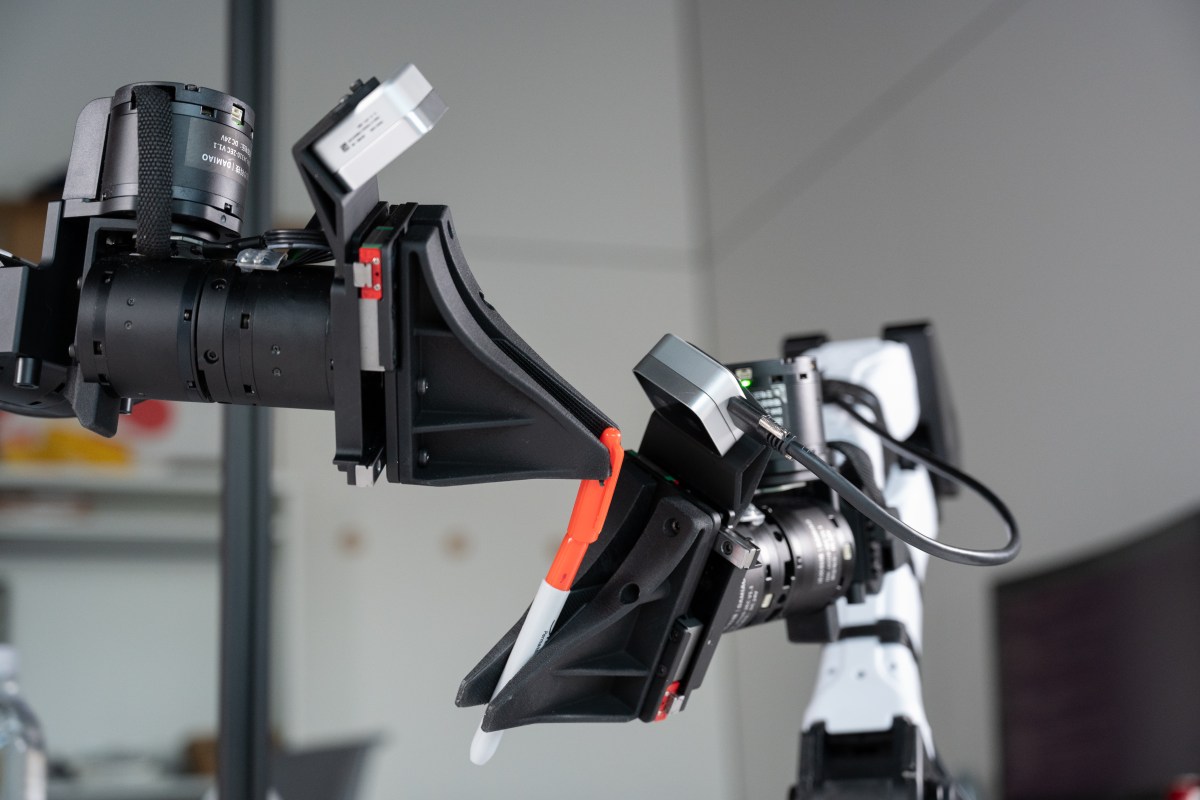
XDOF emerged from stealth with $70 million(約110億円) in funding from Thrive Capital, Spark Capital, a16z, Lux, and WndrCo. The company, founded by Philipp Wu, Fred Shentu, and Nemo Jin, is building data pipelines, collection tools, and annotation systems for robot learning. It is already working with 20 customers, including several frontier AI labs, and has partnered with UC Berkeley's AI Research lab to release a dataset called ABC, which includes 130,000 trajectories of robot manipulation data, 300 hours of simulation, and 100 hours of evaluations.
Why it matters
Unlike large language models trained on publicly available text, robots require high-fidelity physical interaction data that barely exists today. Frontier AI labs recognize they need this data but face a practical choice: build massive in-house data collection operations (requiring hundreds of thousands of square feet of warehouse space, hundreds of robots, and trained operators worldwide) or outsource to specialized infrastructure firms. XDOF is betting that labs will choose outsourcing, positioning data pipelines as the next critical bottleneck in AI development.
What to watch
XDOF plans to work across three tiers of data collection—teleoperation on actual deployment robots, general teleoperated robot data via low-cost systems like GELLO, and egocentric data from wearable sensors worn by humans. The company intends to hire and train teleoperators and data operators globally, making execution on labor-intensive operations a key determinant of whether it can serve the scale frontier labs require.
Ask the AI about this article →
For example, today's edition would include:
AI-summarized, only the topics you pick — one digest a day via Email, Slack, or Discord.
Free · takes 30 seconds · unsubscribe anytimeWhat is AIToday? →
Ask AI anything about this article. Q&As are published on this page for other readers too.
CBTS Technology Solutions LLC launched Forge Agents, a platform that turns a plain-language job description in…

Imec CEO Patrick Vandenameele said at SEMICON Taiwan 2026 that the Belgian research center is broadening its c…
Alphabet's AI Overviews now reach over 2.5 billion monthly users through Google Search, and its ad business ge…
Amazon Web Services (AWS) has integrated its fully managed data warehouse service, Amazon Redshift, with Agent…
Visual Studio Code 1.135 now includes an experimental 'Rubber Duck' feature that lets developers request a sec…
Sonos announced a new app update with generative AI features, a new soundbar called the Beam Ultra, and its se…