What happened
Attending roughly five sessions at the AI Expo in Hakata, the writer heard companies repeatedly raise two shared problems: weak coordination between departments and knowledge tied to individual employees.
Why it matters
In the writer's reading, these two problems feed each other, and the answer comes down to whether a company knows how to use AI — those that don't may end up paying more for outside AI tools.
What to watch
The writer's conclusion is a personal judgment, not a survey, so the claim rests on one attendee's impressions of five sessions. Watch whether companies build solutions in-house or buy outside tools.
WHO IT HITSThis lands on business and operations teams inside companies — particularly sales staff whose client notes never reach other departments, and specialist employees whose know-how stays personal. It also matters to instructors and internal trainers looking for ways to solve problems their own company already has.
Summaries like this, in your inbox every morning.
The writer went in with a practical goal: as an instructor, to find inspiration that could solve problems inside their own company, and to pick up better ways of using tools for day-to-day work improvement. What they found instead was a pattern repeated across sessions. Departments not coordinating, and know-how concentrating in individual people, came up again and again — something the writer connects to earlier experience at a job-change event their company exhibited at, and to a coffee-industry event called SCAJ from their barista days. The writer treats the two problems as linked: when information stays inside one department, others never notice the opportunity, and when knowledge stays with one person, it is hard to pass on.
The proposed fix, as the writer frames it, is not a specific product but a capability. Companies that already know how to use AI can build their own tools in-house and find solutions themselves; companies that don't end up using tools made by those that do. The writer warns this can cost more than paying directly for something like Gemini, Claude or Codex, and comes with limited customization plus the effort of getting it accepted inside the company — including the persuasion, and possibly the disagreement, that brings.
The stakes therefore seem to hinge less on which AI service a company picks than on whether it can develop solutions for itself. The writer's case rests on one attendee's impressions across about five sessions rather than any formal survey, so whether this pattern holds more broadly is likely something readers would need to test against their own workplace.
Pick your industry and the AI tools you use, and get news related to your work every day.
Free · 30 seconds with Google · unsubscribe anytimeWhat is AIToday? →
Ask AI anything about this article. The AI reads this article, earlier AIToday articles, and Wikipedia, and cites its sources. Q&As are published on this page for other readers too.
NetApp and Iterate.ai are packaging the AIPod Mini with Iterate's Generate platform and an embedded LLM, so en…

DIGITIMES estimates global AI server shipments will exceed 2.5 million units in 2026, including 2.37 million h…

Google Cloud revenue grew 82% to $24.77B on Alphabet's TPU-powered stack, while NVIDIA's revenue rose 105.8% a…

European AI-focused startups raised $23 billion in the first half of 2026, up 130% year over year and 55% of t…
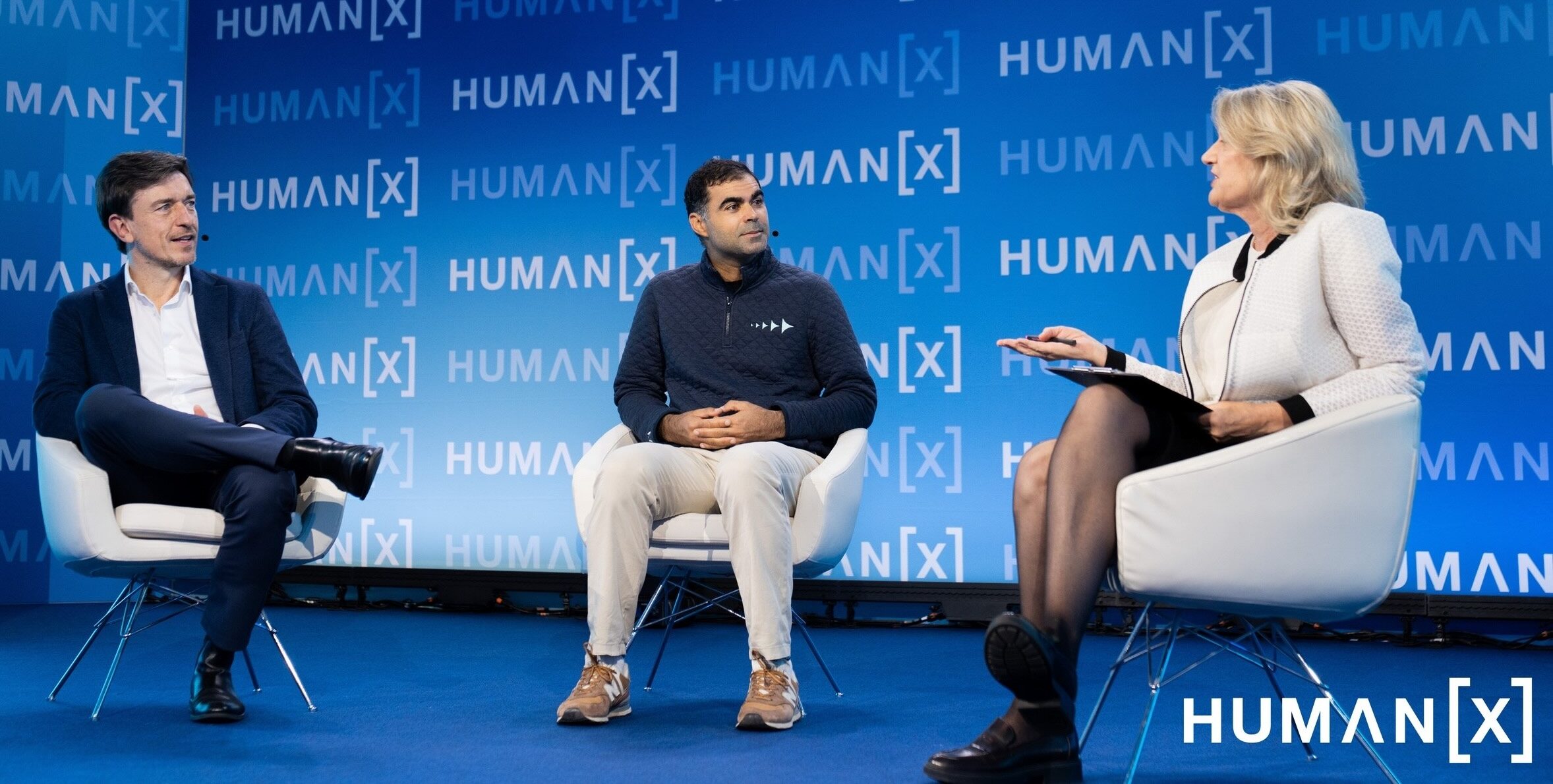
At Fortune's AIQ Summit, Bank of America's Hari Gopalkrishnan said the bank evaluates AI across 16 risk dimens…

The SEC revealed cases where fund advisors allegedly sold investors pre-IPO shares of SpaceX, OpenAI and other…